Mkpoikana Udoma
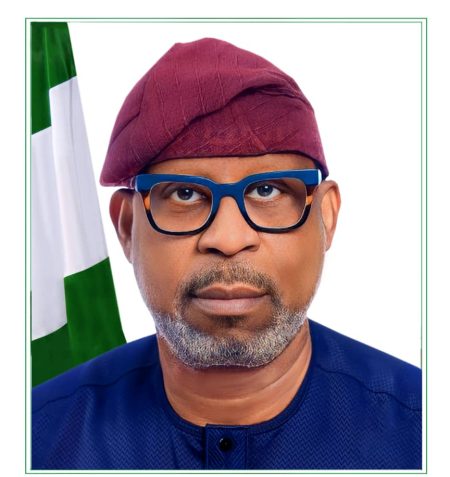
Port Harcourt — Nigeria’s Minister of Solid Minerals Development, Dr. Dele Alake, has issued a bold call to African nations to stop the export of raw minerals and instead embrace value addition as a path to true industrialization, job creation, and continental self-reliance.
Speaking at the 4th edition of the African Natural Resources and Energy Investment Summit, AFNIS 2025 in Abuja, Alake declared that the time has come for Africa to “rewrite its history” and take control of its natural wealth, warning that continuing to export unprocessed minerals would mean forfeiting jobs, industrial growth, and “absolute economic sovereignty.”
Held at the Banquet Hall of the State House, the summit brought together leaders, investors, and stakeholders from across the mining, energy, and finance sectors to chart a new course for Africa’s extractive industries under the theme, “Harnessing Local Content for Sustainable Development.”
The Minister said, “This is the paradox we must confront. Africa has been a supplier of raw materials for too long, and in doing so, we’ve forfeited jobs, industrial growth, and absolute economic sovereignty. That must end.”
Dr. Alake emphasized the critical importance of domestic processing of Africa’s minerals, stating:
“The actual value of our minerals lies not in the dust and rock, but in the refined products, batteries, alloys, steel, and technologies that emerge when we process them ourselves.”
Citing over 40 types of mineral resources in Nigeria including lithium, gold, tin, coal, and rare earth elements, the minister said the country is now aggressively pushing reforms aimed at formalizing the mining sector and boosting domestic value addition.
“This campaign is the raison d’être for the formation of the Africa Minerals Strategy Group, the influential association of mining ministers which I chair. At our last inter-ministerial meeting, we resolved to further regulate the export of raw minerals by insisting on processing them before export.”
He further revealed that the Africa Minerals Strategy Group has adopted two continental classification frameworks: the African Mineral and Energy Resources Classification and Management System and the Pan-African Resources Reporting Code, designed to promote transparency and efficiency in Africa’s mining value chain.
Quoting the late Congolese leader, Patrice Lumumba, Alake declared: “Africa will write its own history. And let us ensure it is a history of dignity, of enterprise, of transformation. Here in Abuja, let us raise our collective voice, commit to real change, and begin building a future powered by African minerals, fueled by African energy, and led by African resolve. Nigeria stands ready. Let us move forward, together.”
Also speaking at the summit, Nigeria’s Minister of Power, Chief Adebayo Adelabu, echoed the urgency of localizing the continent’s energy and industrial ecosystems.
“Local content must not remain a policy slogan. It must be a measurable lever for economic growth, industrial capacity, and energy security. It must translate to jobs, supply chains, technical skills, and retained value.”
He noted that as global energy systems move toward decentralization, digitization, and decarbonization, Nigeria is aligning its grid modernization efforts accordingly.
“Nigeria’s goal is not just to make our grids larger, but to make them smarter, more stable, and climate-resilient.”
In his welcome address, the Ministry’s Permanent Secretary, Engr. Faruk Yusuf Yabo, described AFNIS 2025 as a “catalyst for Africa’s transformation,” saying the continent was at a pivotal moment of moving “from potential to purpose, from resource-rich to value-driven, and from dependence to self-determined development.”
“The theme of this year’s summit is both timely and compelling. We are envisioning a future where mineral wealth is refined, processed, and utilized on African soil, where energy ecosystems are smart and equitable, and where local talent is empowered.”
CEO of Tour Exploration, Mr. Segun Lawson, a co-sponsor of the summit, commended the Nigerian government for providing accurate geological data to support investment decisions, while Kenyan Cabinet Secretary for Mining and Blue Economy, Hassan Ali Joho, called for deeper continental cooperation.
“It’s time African countries work together to create jobs and wealth that will transform our people and our continent,” Joho stated.