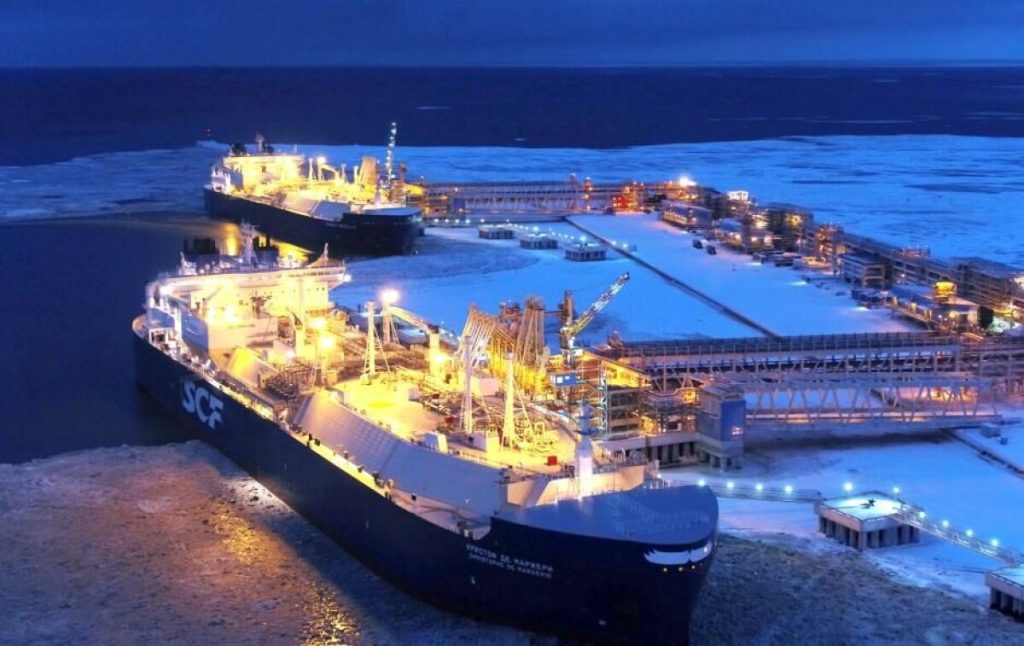
- 96.7% of Yamal LNG exports arrived at EU ports between January and May 2026
- From January to May 2026, 8.37 million tonnes of Yamal LNG were delivered to EU ports, a 17.9% increase compared to the same period in 2025.
- In May 2026, 23 out of 25 Yamal LNG cargoes arrived at EU ports, totalling 1.7 million tonnes, or 92% of all Yamal exports that month. This was 20.7% higher than in May 2025.
- The EU’s short term contract ban has had no visible effect so far. Short term contracts concluded between 17 June 2025 and 18 March 2026 appear to remain valid, potentially weakening the measure.
- A Yamal LNG tanker called at an EU port every 1.3 days on average.
Berlin — New Kpler data analysed by Urgewald shows that EU imports of Russian LNG from the Yamal project have risen sharply in 2026, despite the EU’s stated aim to phase out Russian fossil fuels and new restrictions on short-term Russian LNG contracts.
From January to May 2026, 8.37 million tonnes of Yamal LNG were delivered to EU ports, a 17.9% increase compared to the same period in 2025.
In May 2026 alone, 23 of 25 Yamal LNG cargoes arrived at EU ports, totalling 1.7 million tonnes, or 92% of all Yamal LNG exports that month. This was 20.7% higher than the volume delivered to EU ports in May 2025.
While short-term contracts signed before 17 June 2025 were banned as of 25 April 2026, new Russian LNG import contracts were banned as of 18 March 2026. However, short-term contracts concluded between 17 June 2025 and 18 March 2026 are still valid. As a result, this measure has had no effect on Yamal LNG flows to Europe so far. It raises serious questions about the effectiveness of the EU’s short-term contract ban.
Responding to the analysis, Sebastian Rötters, sanctions campaigner at Urgewald, said: “EU imports of LNG from the Russian Arctic are still rising. The short term contract ban has had no visible effect so far, because a timing gap in the rules weakens its impact. That is disappointing, as the current circumstances seem favorable for ending the war by seriously increasing pressure on Russia.”
Europe remains the main destination for Yamal LNG
Between January and May 2026, 96.7% of Yamal LNG exports went to the EU. Only 4 cargoes, totalling 282,248 tonnes, went to China.
In total, 114 Yamal LNG cargoes arrived at EU ports in the first 5 months of 2026. This means a tanker from Yamal called at an EU port every 1.3 days on average.
Across the same period, an average of 55,448 tonnes of Yamal LNG reached EU ports every day. Based on an average TTF price of €38.2 per MWh, this is equivalent to approximately €29 million per day.
Spain becomes biggest importer in May
Spain was the largest EU importer of Yamal LNG in May 2026, for the first time since July 2024.
Spain received 8 Yamal LNG cargoes in May, totalling 586,279 tonnes. Across the first 5 months of 2026, Spain imported 2.13 million tonnes of Yamal LNG in 29 cargoes, a 45% increase compared to January to May 2025.
Zeebrugge remains the most important EU terminal
In May 2026, the Belgian terminal received 6 Yamal LNG cargoes, totalling 439,766 tonnes. From January to May 2026, Zeebrugge received 31 Yamal LNG cargoes, up from 25 cargoes in the same period in 2025.
Urgewald is calling on the EU to accelerate its phase-out of Russian LNG and to use all available means to prevent Russian LNG exports from Yamal and other export terminals.