Precious Anga
Lagos — Nigeria’s crude oil production growth plans have suffered a setback after the country lost five active drilling rigs within one month, raising fresh concerns about future oil output and government revenue.
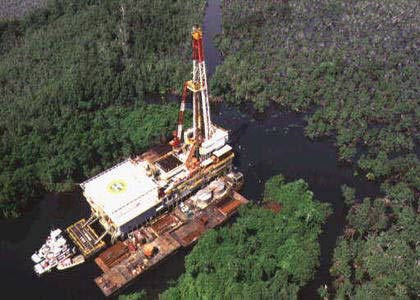
Data released by the African Energy Council (AEC) showed that the number of active rigs operating in Nigeria fell from 17 in March 2026 to 12 in April 2026. The decline comes at a time when the Federal Government is targeting crude oil production of 1.84 million barrels per day (bpd) to support revenue projections contained in the 2026 budget.
The reduction in rig activity is significant because drilling rigs are required to develop new wells, sustain production from existing fields and replace declining output from mature assets. A lower rig count often translates into fewer new wells and slower production growth.
According to the AEC, Nigeria produced about 1.48 million bpd in April, leaving a gap of approximately 360,000 bpd below the government’s budget benchmark.
The Council noted that while the Nigerian Upstream Petroleum Regulatory Commission (NUPRC) reported 31 active rigs during the period, figures published by the Organisation of Petroleum Exporting Countries (OPEC) placed the number at 12. It explained that the difference may be linked to how both organisations classify operating rigs, with some rigs possibly being counted while on standby or inactive status.
Despite the discrepancy, the Council stated that both sets of data point to declining drilling activity in the country’s upstream petroleum sector.
The report showed that Nigeria’s rig count has been falling for three consecutive years. The country recorded 15 active rigs in 2024, 13 in 2025 and 12 in April 2026, indicating that investment in drilling has failed to keep pace with production ambitions.
The AEC warned that the decline threatens Nigeria’s ability to increase crude oil production over the medium term. It stated that several wells that should have been drilled in recent years were not developed, reducing the volume of new production available to offset natural decline from ageing oil fields.
The Council also estimated that Nigeria has lost more than $3.1 billion in potential oil revenue as a result of declining drilling activity and production constraints.
According to the report, many of Nigeria’s producing oil fields are between 40 and 50 years old and require continuous investment to sustain output. Without additional drilling campaigns, workover programmes and field redevelopment projects, production from these assets is expected to continue declining.
The report identified crude oil theft, pipeline vandalism and insecurity in the Niger Delta as major factors discouraging investment in drilling operations. Operators continue to face high operating costs and production disruptions, forcing some companies to delay or scale back development programmes.
The Council also linked the slowdown to reduced investment following the divestment of several international oil companies from onshore assets. While indigenous operators have acquired many of these assets, the transition process has affected drilling schedules and development plans.
In addition, delays in regulatory approvals, licensing processes and implementation of key provisions of the Petroleum Industry Act (PIA) have slowed investment decisions across the sector.
The development comes as Nigeria faces growing fiscal pressure. Oil revenue remains one of the government’s largest sources of income, and lower production could further widen revenue gaps at a time when public debt continues to rise.
Data from the Debt Management Office showed that Nigeria’s public debt increased from ₦152.40 trillion in June 2025 to ₦153.29 trillion by September 2025. The Federal Government also raised about ₦2.69 trillion from the domestic bond market during the first quarter of 2026.
To reverse the decline, the African Energy Council called on the Federal Government to accelerate implementation of fiscal incentives contained in the Petroleum Industry Act, improve security around oil infrastructure and fast-track approvals for upstream projects.
The Council also urged regulators to support indigenous operators acquiring divested assets and create conditions that will attract fresh investment into drilling and field development activities.
For Nigeria, where crude oil exports remain the primary source of foreign exchange earnings, restoring drilling activity w