Mkpoikana Udoma
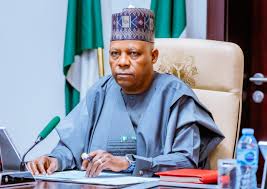
Port Harcourt — Vice President Kashim Shettima has declared that Nigeria’s ambition to build a $1 trillion economy will be driven by investments, enterprise growth, and coordinated economic reforms rather than government spending, as he urged investors to take advantage of emerging opportunities in the country.
Speaking at the opening of the Invest Lagos 3.0 Summit in Lagos, Shettima said the country’s economic future depends on creating an environment where capital, innovation, and productive enterprises can thrive.
The Vice President identified Lagos State as the clearest example of how sub-national leadership can accelerate national economic transformation, describing the state as Nigeria’s foremost economic gateway and one of Africa’s most influential centres for commerce and investment.
“Nigeria’s ambition of building a one-trillion-dollar economy is driven by enterprise, investment and coordinated reforms across all levels of government,” Shettima said.
Addressing policymakers, global investors, entrepreneurs, development institutions, and business leaders, the Vice President stressed that economic growth would only be achieved through private sector-led expansion supported by sound governance and policy consistency.
“Lagos is the livewire of our continent. Lagos is the furnace in which our ideas are tested against the discipline of execution. Lagos is the great doorway through which Nigeria continues to greet the future,” he stated.
According to him, Lagos has consistently demonstrated that economic progress is possible when visionary leadership is matched with institutional continuity and investor confidence.
Shettima credited President Bola Tinubu for laying the foundation of what he described as the Lagos development model, saying successive administrations had sustained reforms that transformed the state into a continental economic powerhouse.
“President Bola Ahmed Tinubu planted the tree whose shade has sheltered a succession of leaders committed to futurist ideas, institutional continuity and disciplined governance,” he said.
The Vice President also commended Governor Babajide Sanwo-Olu for sustaining Lagos’ growth trajectory and strengthening its position as a destination for local and foreign investment.
Speaking on the summit’s theme, “Lagos: The Business Gateway to Africa,” Shettima noted that cities are increasingly shaping global production systems, supply chains, innovation networks, and investment flows, adding that Lagos continues to attract investors because of its market access, infrastructure, talent pool, and financial opportunities.
He reaffirmed the Tinubu administration’s commitment to economic reforms, saying recent policy measures were designed to restore investor confidence, improve fiscal sustainability, and unlock large-scale private sector investments.
“We have taken difficult decisions because we understand that the economy of our dream cannot be built on illusions. It must be built on productivity, discipline, competitiveness, and the courage to create a climate in which enterprise can breathe,” he said.
The Vice President further highlighted Nigeria’s demographic advantage and strategic positioning under the African Continental Free Trade Area, AfCFTA, as critical drivers of future growth.
With Nigeria projected to become one of the world’s largest populations by 2050 and AfCFTA opening access to a market of over 1.4 billion people, Shettima said the country is well positioned to emerge as Africa’s leading production, logistics, innovation, and investment hub.
However, he cautioned that economic transformation cannot be achieved by the Federal Government alone, stressing the importance of collaboration among states, investors, and development partners.
Earlier, Lagos State Governor Babajide Sanwo-Olu said the summit reinforced Lagos’ reputation as an investment-ready destination, offering investors access to opportunities across multiple sectors of the economy.
He outlined his administration’s achievements in agriculture, health, transportation, energy, technology, trade, and human capital development, while assuring investors of a conducive business environment backed by growing federal support for sub-national economic development.
Also speaking, Minister of Finance and Coordinating Minister of the Economy, Taiwo Oyedele, said the Tinubu administration’s reforms were already yielding results, citing the resurgence of Lagos as a leading model of sub-national economic growth in trade, commerce, and investment.
Other speakers, including Commonwealth Secretary-General Shirley Botchwey, AfCFTA Secretary-General Wamkele Mene, and representatives of Afreximbank and the Commonwealth Enterprise and Investment Council, highlighted Lagos’ growing role as a gateway for African trade, investment, innovation, and entrepreneurship.