Mkpoikana Udoma
Port Harcourt — After four decades of dormancy, Nigeria’s long-discovered HI gas field has finally been unlocked, thanks to bold policy reforms through the Petroleum Industry Act, PIA, and the Presidential Executive Order 40, that have reignited investor confidence in the nation’s energy sector.
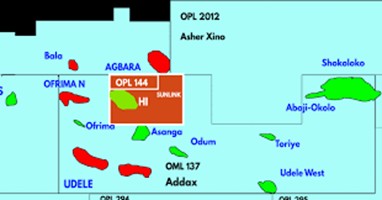
Shell Nigeria Exploration and Production Company Limited recently announced a $2 billion Final Investment Decision, FID, for the HI offshore gas field (OML 144), a resource discovered in 1985 but left undeveloped for decades due to fiscal and regulatory challenges.
The project, located in 100 metres of water about 50 kilometres offshore Bayelsa State, is expected to produce 350 million standard cubic feet of gas per day, mmscfd, by 2028, strengthening feedgas supply to Nigeria LNG Train 7 and boosting domestic gas availability.
President Bola Ahmed Tinubu hailed the announcement as a testament to the success of his government’s energy reforms, saying: “This major FID announcement by Shell, their second in one year, is a clear validation of our wide-ranging reform efforts and a signal to the world that Nigeria is fully open for business and investment.”
Special Adviser to the President on Energy, Olu Arowolo Verheijen, said the project’s revival was enabled by Presidential Directive 40, a key policy that introduced a competitive fiscal framework for Non-Associated Gas in onshore and shallow offshore fields.
“With the HI FID, we are bringing to life a field discovered forty years ago. Directive 40 has finally unlocked what was once stranded potential,” Verheijen said. “This is proof that with the right incentives and policy clarity, Nigeria can convert its vast gas resources into growth, jobs, and cleaner energy.”
Shell’s Upstream President, Peter Costello, said the company was pleased to be part of Nigeria’s energy resurgence. “This announcement demonstrates our continued commitment to Nigeria’s energy sector, with a focus on Deepwater and Integrated Gas. The HI project will help Shell grow our leading Integrated Gas portfolio while supporting Nigeria’s ambition to become a major player in the global LNG market.”
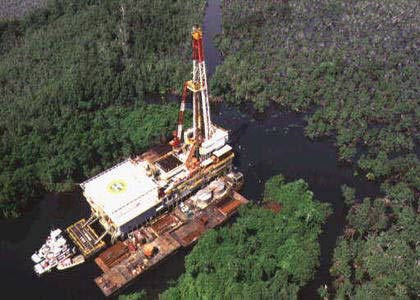
Once operational, the project will feature a wellhead platform with four wells, a subsea pipeline to Bonny Island, and an onshore gas processing plant to feed the NLNG facility.
The HI gas field’s revival marks one of the first tangible outcomes of post-PIA reforms, showing how long-dormant assets can be unlocked under a stable and competitive investment regime.