 – and a critical investment opportunity
Cape Town, South Africa — South Africans are once again seeing relief at the pump, with the latest fuel price cuts delivering the cheapest petrol in roughly four years. The reductions – around 65 cents per liter for petrol and more than 50 cents for diesel – continue a downward trend that began earlier in 2026, when falling crude prices and currency strength combined to lower pump prices nationwide.
While the immediate benefits are tangible – cheaper transport, easing inflationary pressure and support for businesses – the underlying drivers reveal a more fragile reality. South Africa’s fuel costs remain shaped primarily by global oil markets and exchange-rate movements rather than domestic energy resilience.
Currency dynamics are particularly influential. The rand strengthened sharply through 2025, gaining nearly 13% against the U.S. dollar – its best annual performance in more than a decade – supported by improved fiscal sentiment and rising commodity prices. This momentum has continued into 2026 with periodic surges in precious-metal prices and global risk appetite. These shifts can lower refined-fuel import costs, but they also highlight South Africa’s continued dependence on external forces.
Structural weaknesses across the country’s fuel supply chain reinforce this reliance. Refining capacity has declined significantly, leaving only a handful of operational crude refineries and forcing South Africa to import roughly three-quarters of its liquid fuel needs. Strategic reserves remain limited to less than a month of supply. In this context, price relief at the pump reflects favorable global conditions rather than meaningful progress toward energy self-sufficiency.
The longer-term risk becomes clearer when viewed alongside South Africa’s evolving gas outlook. Without new domestic production or import capacity, South Africa is projected to face a ‘gas cliff’ as early as 2026. Existing Mozambican pipeline gas is depleting, while interim extensions from Sasol serve only as a temporary bridge to future LNG imports. Without new domestic production, import terminals or pipeline expansion, the country could confront tightening supply just as demand for flexible, lower-carbon power grows.
“Natural gas – affordable, reliable and abundant across Africa – can transform economies by powering industry, creating jobs and delivering the energy security our people deserve,” states NJ Ayuk, Executive Chairman of the African Energy Chamber. “But this transformation requires urgent investment in domestic production, LNG infrastructure and regional partnerships. South Africa has the resources and the market demand; what matters now is turning opportunity into action.”
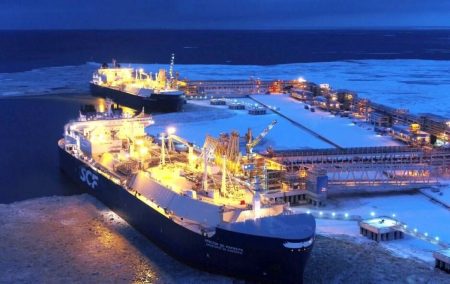
Recognizing this urgency, the government is fast-tracking LNG import infrastructure, including a floating storage and regasification unit in Mozambique expected by mid-2026 and a planned LNG terminal at Richards Bay targeted for 2027, alongside efforts to unlock offshore gas in the Orange Basin. Today, roughly 90% of South Africa’s natural gas is still imported via a single pipeline from Mozambique – an exposure that underscores the need for diversification and domestic development.
The regional context reinforces the opportunity. Major LNG projects such as Mozambique’s $20 billion development – now moving forward again with production targeted before the end of the decade – signal growing momentum for African gas as a pillar of energy security and industrial growth. For South Africa, connecting to this wave through infrastructure, investment and regulatory clarity could reduce currency risk, stabilize fuel costs and support a more resilient transition pathway.
African Energy Week (AEW) 2026 in Cape Town is expected to spotlight precisely this: energy security, infrastructure investment and pragmatic transition pathways that balance hydrocarbons with emerging low-carbon systems. The event serves as a continental platform for LNG financing, infrastructure partnerships and upstream gas development capable of closing supply gaps and accelerating practical energy transitions.
Fuel price volatility now exposes South Africa’s structural energy weaknesses, underscoring why short-term relief cannot substitute for long-term strategy. Cheaper petrol may ease pressure today, but without decisive progress on domestic gas production and LNG infrastructure, the country risks repeating the same cycle – relief when currencies strengthen, strain when they weaken and continued vulnerability in between.