Mkpoikana Udoma
Port Harcourt — The Nigeria Customs Service, NCS, Oil and Gas Free Trade Zone Command, has stepped up efforts to strengthen trade facilitation and boost Nigeria’s competitiveness as a regional oil and gas logistics hub through strategic industry engagements.
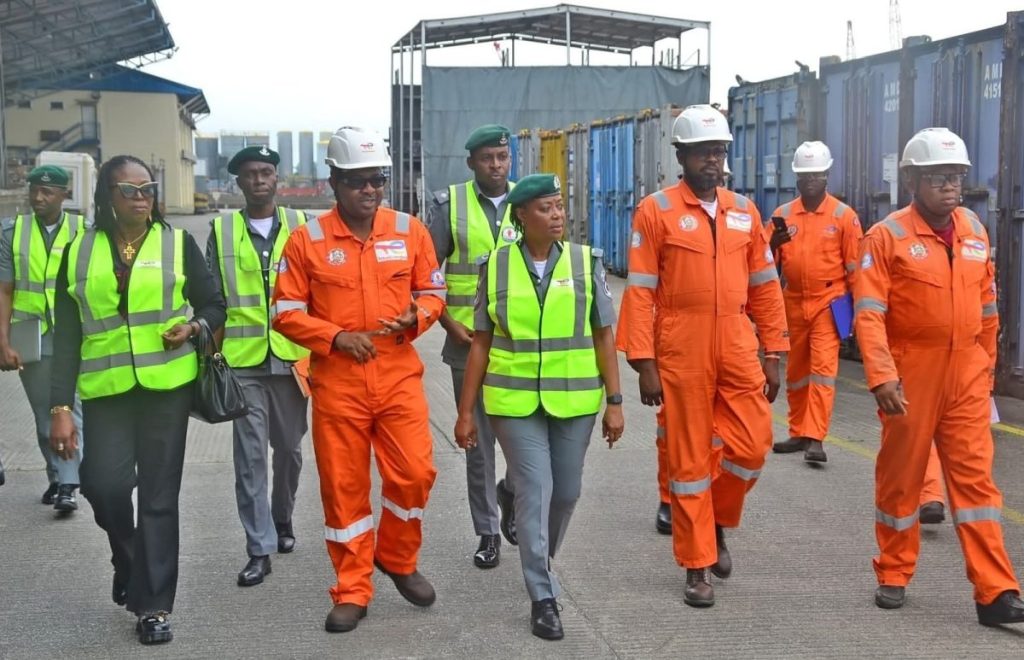
Customs Area Controller, Comptroller Immaculata Nyong, disclosed this after concluding a three-week facility tour of enterprises operating in the zone.
The exercise, which ran from July to August 2025, covered major players including Seplat Energy; ESSO Exploration and Production Nigeria FZE; TotalEnergies; Onne Multipurpose Terminal, OMT; West African Container Terminal, WACT; Technip FMC Nigeria Ltd; Baker Hughes; One Subsea Offshore Systems Ltd; Intels Nigeria Ltd; Oil Tools Africa Ltd; Titan Tubular Nigeria, FZE; Hamilton Technologies Nigeria Ltd; and Brawal Oil Service Ltd FZE.
Nyong, who was accompanied by senior command officers and officials of the Oil and Gas Free Zone Authority, said the tour underscored the Service’s renewed emphasis on collaboration and efficiency.
“Trade facilitation cannot be achieved in isolation. Our goal is to build synergy with enterprises in the Oil and Gas Free Zone, address concerns, and sustain an enabling environment for businesses to thrive,” she said.
During the engagements, operators briefed the Customs team on their activities while also raising operational concerns, particularly challenges associated with the B’Odogwu clearance system.
Responding, Nyong reassured stakeholders of the Service’s readiness to tackle bottlenecks and streamline processes.
“We are committed to resolving such issues and improving efficiency in line with the Comptroller-General of Customs’ mandate,” she noted.
She added that the command would sustain regular engagements with operators to ensure smooth operations and stronger compliance with trade regulations, stressing that efficiency in the free zone is critical to revenue generation and investor confidence.
Industry stakeholders welcomed the initiative, describing it as a positive step toward improving Nigeria’s competitiveness. Some operators commended the Service’s openness and active engagement, saying it would foster predictability in customs operations and strengthen the ease of doing business in the zone.
Nyong maintained that Customs’ proactive approach was not only about enhancing revenue but also about positioning Nigeria as a more attractive investment destination in the oil and gas logistics space.
“Our engagements are designed to balance regulatory oversight with trade facilitation. The Free Zone must continue to serve as a catalyst for growth, investment, and national revenue,” she said.