Mkpoikana Udoma
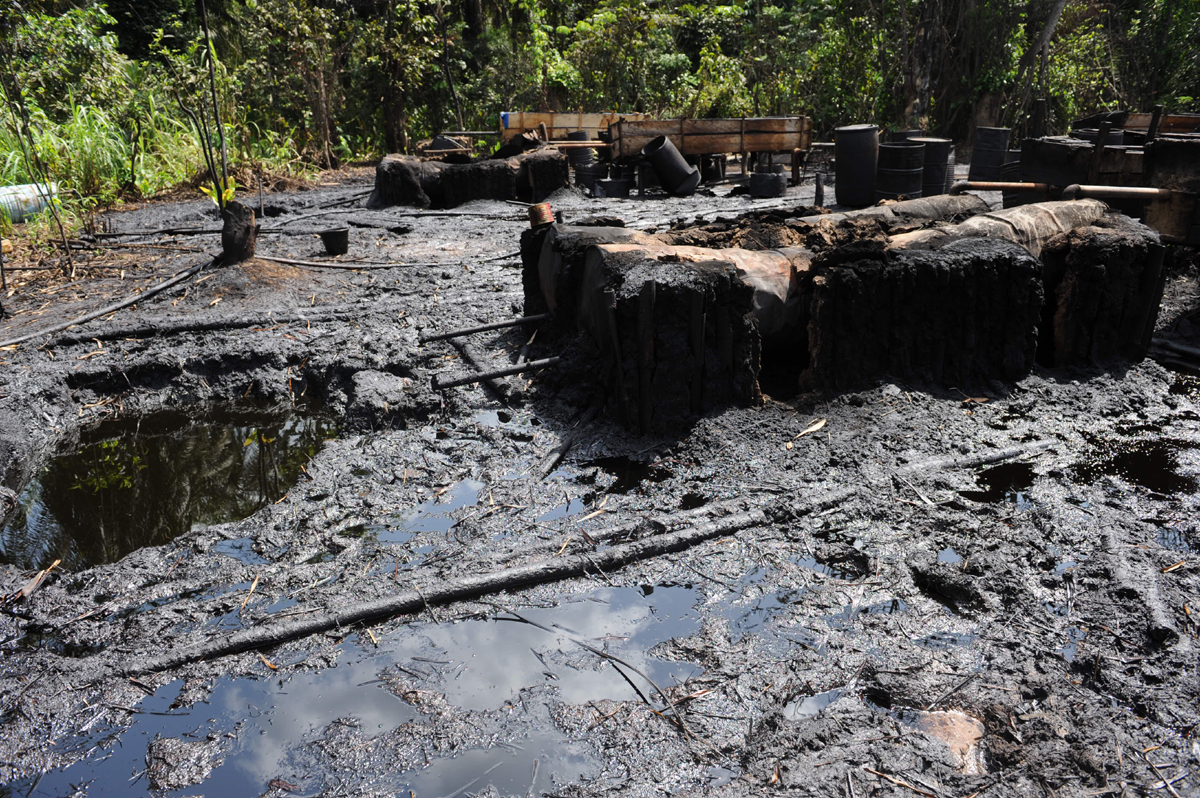
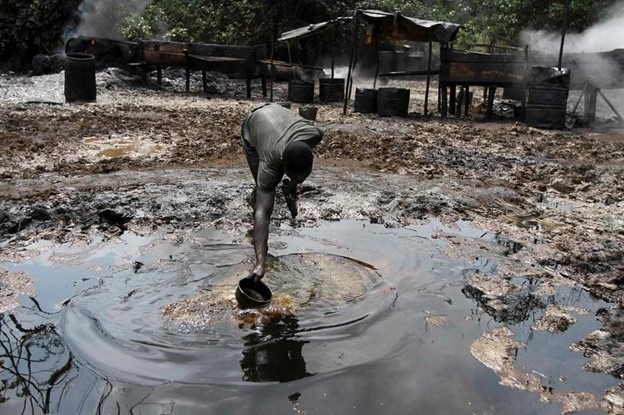
Port Harcourt — The International Working Group on Petroleum Pollution and Just Transition in the Niger Delta, IWG, has raised fresh concerns over the devastating health impacts of oil pollution in Bayelsa State, revealing that laboratory tests conducted across the state’s eight local government areas showed alarming levels of hydrocarbon contamination and cancer-causing metals in residents.
The group described the environmental and health situation in the oil-rich state as “highly traumatizing,” warning that prolonged exposure to polluted land, water and air has significantly reduced life expectancy and contributed to rising mortality rates.
Speaking during a courtesy visit to Governor Douye Diri at Government House, Yenagoa, the team’s leader, Professor Engobo Emeseh of the Faculty of Law, Aberystwyth University, United Kingdom, said findings from the Bayelsa State Oil and Environmental Commission Report revealed a deepening public health crisis linked to decades of oil pollution.
According to Emeseh, the International Working Group is currently carrying out sensitization campaigns on the health hazards associated with oil pollution, focusing on recommendations contained in the Bayelsa State Oil and Environmental Commission Report submitted in 2023.
She said blood samples collected from residents across Bayelsa’s eight local government areas indicated “very high levels of hydrocarbon pollution and carcinogenic metals,” which she said were responsible for increasing cases of illness and deaths.
“Average life expectancy in Bayelsa has reduced significantly as people are forced to live on contaminated land, air and water,” she stated.
Emeseh disclosed that members of the commission were deeply disturbed by the scale of environmental degradation uncovered during their investigations across the state.
“My colleagues and I, who were members of the expert working group, were quite traumatized at what we found in Bayelsa State. I think that is the right word, and we called our report an environmental genocide,” she said.
She recalled that the commission’s report was first presented at the House of Lords in the United Kingdom before being submitted to the Bayelsa State Government and later unveiled publicly in Abuja.
“When we presented our report based on the evidence that we gathered, having gone to all the LGAs in Bayelsa State and spoken to indigenes and key stakeholders, we saw firsthand the devastating impact of oil pollution on communities,” she said.
Emeseh commended the Bayelsa State Government for establishing what she described as the first subnational oil and environment commission in Nigeria, pledging that the IWG would continue working with relevant stakeholders to mitigate the health and environmental consequences of petroleum pollution.
Responding, Governor Douye Diri, represented by his deputy, Dr. Peter Akpe, described the Bayelsa State Oil and Environment Commission Report as a critical document for addressing environmental challenges in the state and the wider Niger Delta.
“The Commission’s report remains one of our important documents, especially concerning the environmental condition of our state and the wider Niger Delta. For us, it is not a closed chapter; it is a living document whose recommendations must continue to guide concrete actions,” Akpe said.
He thanked the International Working Group for sustaining advocacy efforts on environmental justice and public health, noting that the state government remained committed to implementing measures aimed at environmental remediation and improved healthcare delivery.
“We welcome your planned health research, interactions and engagements in the state. We assure you that we are totally in support and we equally expect to see positive results from your work,” he added.
Akpe also called on the Federal Government and international organisations to treat the issue of oil pollution in Bayelsa as a special case, stressing that the environmental challenges confronting the state require urgent and coordinated intervention.
The six-member delegation included Dr. Kathryn Nwajiaku-Dahou of ODI Global UK, Professor Michael Watts of the University of California, Dr. Isaac Osuoka and Professor Anna Zalik of York University, Canada, as well as Dr. Cautlin Strong of ODI Global, United Kingdom.