Precious Anga
Lagos — Nigeria’s 11 electricity distribution companies, DisCos, left ₦45.26 billion uncollected from customers in July 2026, despite billing consumers ₦250.79 billion during the month, according to data from the Nigerian Electricity Regulatory Commission, NERC.
The DisCos collected ₦205.53 billion, representing an 81.95 per cent collection efficiency and leaving 18.05 per cent of their monthly billings unrecovered.
The figures, contained in NERC’s July 2026 Factsheet, show a significant gap between the value of electricity received by DisCos, the amount billed to customers and the revenue ultimately collected.
Eko Disco recorded the highest collection efficiency in July, collecting ₦34.78 billion against ₦34.17 billion billed, translating to 101.78 per cent.
Benin Disco followed with 89 per cent, collecting ₦19.09 billion from ₦21.45 billion billed, while Yola recorded 88.92 per cent after collecting ₦3.36 billion from ₦3.77 billion billed.
Ikeja collected ₦34.73 billion from ₦39.54 billion billed, representing 87.85 per cent, while Ibadan recorded 85.97 per cent after collecting ₦24.45 billion from ₦28.33 billion billed.
Port Harcourt collected ₦18.03 billion from ₦21.29 billion billed, giving an 84.69 per cent collection efficiency, while Abuja recorded 81.03 per cent after collecting ₦35.62 billion from ₦43.96 billion billed.
The weakest collection efficiencies were recorded by Kaduna, Jos and Kano at 49.95 per cent, 52.70 per cent and 52.79 per cent, respectively.
The DisCos received electricity valued at ₦333.94 billion during the month but billed customers ₦250.79 billion, representing a billing efficiency of 75.10 per cent.
Of the amount billed, ₦205.53 billion was collected, while sector-wide revenue recovery efficiency stood at 74.91 per cent. NERC put the allowed average tariff at ₦130.15 per kilowatt-hour, compared with an actual average collection of ₦97.50/kWh.
The July performance follows a wider pattern of sizeable gaps between electricity billings and collections. In the first quarter of 2026, DisCos collected ₦597.56 billion from ₦756.93 billion billed, representing a collection efficiency of 78.95 per cent.
Quarterly data show that DisCos collected ₦630.93 billion from ₦795.06 billion billed in Q4 2025; ₦570.25 billion from ₦706.61 billion in Q3; ₦564.71 billion from ₦742.34 billion in Q2; and ₦553.63 billion from ₦744.27 billion in Q1 2025.
The collection shortfall comes amid continuing pressure on the electricity market from the gap between the cost of supplying power and revenue recovered from customers.
In June 2026, DisCos received electricity valued at ₦315.73 billion but collected ₦191.86 billion from customers, leaving a ₦123.87 billion gap between the value of power received and revenue recovered.
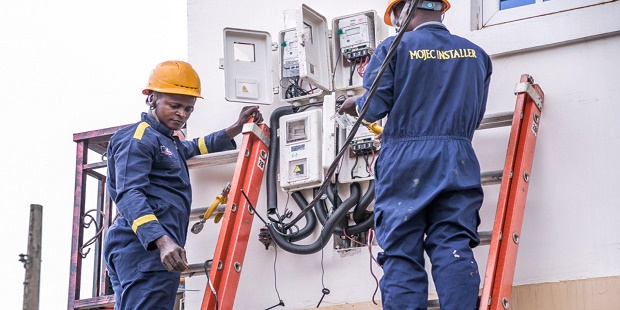
NERC has identified commercial and collection losses, inadequate metering, estimated billing, damaged infrastructure and weak payment discipline among factors affecting DisCo performance.
With the Federal Government holding off on another immediate electricity tariff increase, improvements in billing, metering and payment collection remain central to narrowing the sector’s revenue gap.
In December 2025, the Federal Government issued a ₦590 billion bond under the Presidential Power Sector Debt Reduction Programme to address outstanding obligations in the electricity market.
The July figures underline the continuing challenge for DisCos: while more than four-fifths of customer billings were recovered during the month, ₦45.26 billion remained unpaid.