Tanya Davidson
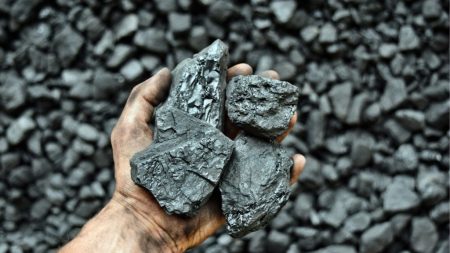
Port Harcourt — Nigeria will move to identify commercially viable mining projects and mobilise American investment under the mineral investment framework recently signed with the United States, Minister of Solid Minerals Development, Dr Dele Alake, has said.
Alake said the next phase of the agreement would focus on converting the government-to-government framework into specific projects, investments and business partnerships across Nigeria’s mineral value chain.
“Now comes the harder and more important work: moving from agreement to implementation. A signature is a promise, results are the proof,” Alake said at the signing ceremony in New York.
He said Nigeria would, in the coming months, identify viable projects and build partnerships capable of delivering measurable value to both Nigerian and American businesses.
“We will identify viable projects and build partnerships that create value for Nigerians and our US partners,” he said.
The framework, signed by Alake and US Deputy Secretary of State Christopher Landau at Nigeria’s Mission House in New York, covers geological data and exploration, mineral development and processing, infrastructure and technical capacity building.
The structure is intended to use the relationship between the two governments as a foundation for business-to-business transactions and investment across the mining value chain, rather than stop at diplomatic cooperation.
Alake said the implementation would also target Nigeria’s long-standing challenge of exporting minerals in raw form while value is created elsewhere.
“Nigeria cannot remain a source of raw materials while others capture most of the value,” he said.
“We want more local processing, quality jobs, stronger skills and greater opportunities for Nigerian businesses.”
Recall that Nigeria and the United States recently signed the framework to deepen American investment in Nigeria’s mineral sector, with the Federal Government putting the country’s mineral resources at about $700 billion.
The agreement was signed on the sidelines of the 81st United Nations General Assembly in New York and is aimed at strengthening cooperation around critical-mineral supply chains and attracting investment into Nigeria’s largely underdeveloped mining industry.
The $700 billion figure is an estimate by the Nigerian government of the value of its mineral resources, rather than the value of the investment committed under the agreement.
For Nigeria, Alake said the objective was to use the partnership to develop domestic processing capacity, technical skills and infrastructure while creating opportunities for indigenous businesses.
The US, meanwhile, is seeking more resilient and diversified sources of critical minerals used in technologies including electric vehicles and renewable-energy infrastructure.
Alake said the ultimate measure of the framework would be its ability to produce investments and economic activity on the ground.
“In the coming months, we will turn this framework into projects, investments and real results for our people,” he said.
He added that the initiative would support Nigeria’s efforts to diversify its economy and convert its mineral endowment into longer-term industrial and economic growth.