Oghenekevwe S Ovbije
Houston, TX — Nigeria’s gas infrastructure is expanding, but the true measure of success lies beyond steel and flow rates. Pipelines and processing plants, while critical, are not neutral assets. They shape the environment, displace communities, and determine whether economic growth is inclusive or extractive. The Niger Delta stands as a cautionary tale from displacement without consultation to decades-long environmental degradation caused by poorly maintained infrastructure. Without reform, Nigeria risks repeating history in its gas-led transition. A just energy future requires gas infrastructure that is socially responsible, environmentally sound, and technologically modern from day one.
Communities Must Not Be Afterthoughts
Community displacement and right-of-way (ROW) conflicts remain among the most frequent causes of gas project delays. In the South-South, local resistance has stalled or derailed critical pipeline projects due to poor consultation and inequitable compensation. To correct this, developers must adopt a community-first mindset. Land acquisition processes must be transparent, resettlement frameworks equitable, and engagement sustained beyond the planning phase. Community development agreements (CDAs) should move from being checkbox items to enforceable commitments, supported by measurable benefit-sharing outcomes. The goal is not simply to acquire land, but to earn social licenses.
Environmental Integrity as Core Design Principle
Gas has a role to play in Nigeria’s energy transition, but its infrastructure must be held to higher environmental standards. Frequent pipeline leaks, flaring of stranded gas, and accidental discharges have left ecosystems scared and communities exposed. The legacy of spills in places like Goi, Bodo, and Ogale remain unresolved, years after global media attention. Future midstream expansion must embed rigorous environmental safeguards into the design phase. Route selection should minimize ecosystem disruption. Emission tracking and flare mitigation systems must be standard. Restoration plans should be costed, implemented, and monitored. Infrastructure cannot be called sustainable if it leaves permanent damage in its wake.
Technology as an Equalizer
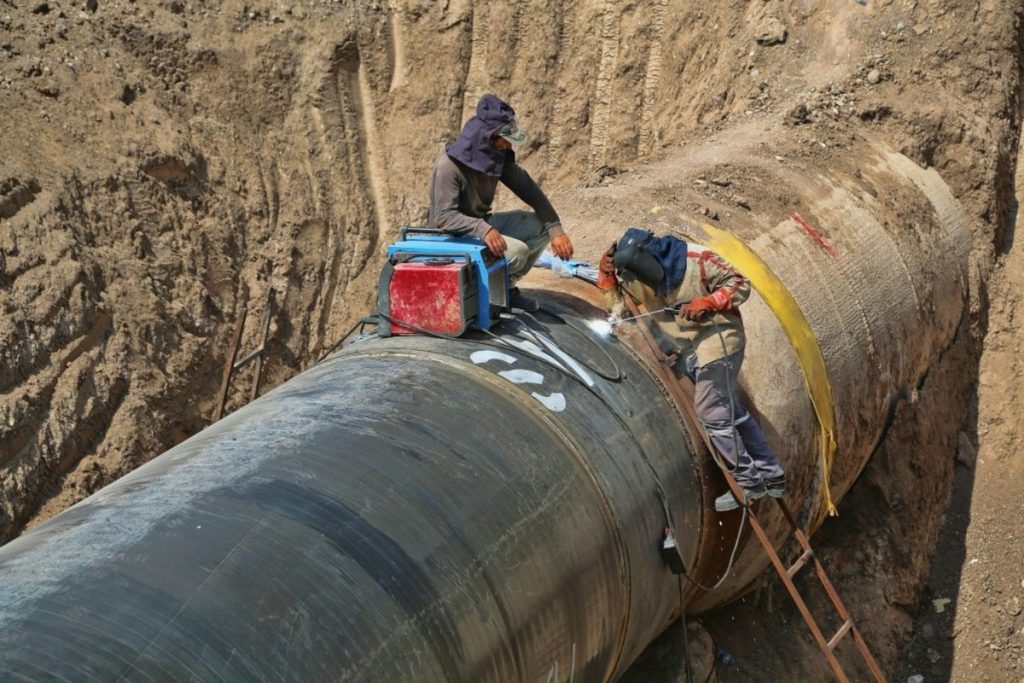
Advances in pipeline engineering and remote operations offer Nigeria a chance to leapfrog legacy mistakes. Smart sensors, Supervisory Control and Data Acquisition (SCADA) systems, and automated shut-off valves allow for real-time system monitoring and rapid response. These tools reduce the environmental and safety risks associated with delayed leak detection. Likewise, modular pipeline designs and small-scale gas processing units reduce land and ROW requirements, making them more adaptable to sensitive environments and compact settlements. These systems can serve off-grid industrial clusters or fast-growing peri-urban areas thus reducing the infrastructure burden while expanding access. Technology will not replace governance, but it can amplify Nigeria’s ability to build cleaner, more efficient gas systems.
Aligning with ESG Is Now an Investment Prerequisite
Environmental, Social, and Governance (ESG) compliance is no longer optional. Institutional investors and international partners increasingly demand verifiable ESG adherence before deploying capital. For Nigeria’s gas sector to unlock long-term private investment, it must treat ESG as a foundational strategy, not a reporting requirement. This includes standardized environmental impact disclosure, robust grievance mechanisms, and real-time data transparency across projects. Integrating ESG frameworks from the outset enhances bankability, reduces reputational risk, and ensures alignment with global decarbonization and social responsibility mandates.
Infrastructure for a Just Transition
As Nigeria accelerates gas deployment, it must rise to a higher standard one that balances economic urgency with human and ecological impact. The path to a just energy transition is not paved with emissions targets alone, but with infrastructure that respects people and protects places. Gas infrastructure can support national development only when it is grounded in integrity. It must be designed for durability, equity, and resilience delivering energy access without eroding the social or environmental fabric of the nation.