Precious Anga
Lagos — The rapid expansion of electric vehicles, EVs, driven by advances in battery and charging technology, is set to put further pressure on global petrol and diesel demand, with China’s largest new energy vehicle manufacturer BYD predicting a limited long-term future for conventional fuel-powered cars in its home market.
Li Ke, Executive Vice-President of BYD, said growing adoption of the company’s ultra-fast charging technology would accelerate the replacement of internal combustion engine, ICE, vehicles by EVs in China.
“In China, with the growing adoption of BYD’s flash-charging technology, I believe ICE vehicles have no future. That is very clear,” Li said in a television interview with overseas automotive media outlet Carwow.es.
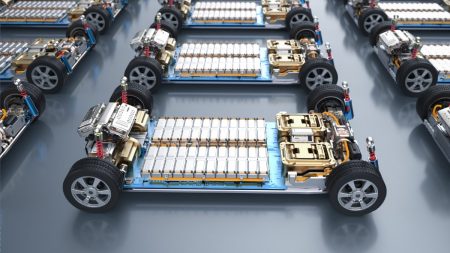
BYD’s second-generation blade battery fast-charging technology can charge a vehicle from 10 per cent to 70 per cent in about five minutes and reach near-full charge in nine minutes. The company had built 4,239 fast-charging stations by March and plans to increase the network to 20,000 by the end of 2026.
The company is also planning to introduce vehicles equipped with solid-state batteries in 2027, a development that could further improve EV range, charging speed and safety if the technology reaches large-scale commercial production.
Li acknowledged that the transition could take longer in overseas markets but maintained that the long-term direction was towards EVs replacing conventional fuel-powered vehicles. Strong overseas demand has already become an increasingly important contributor to BYD’s growth, with overseas revenue exceeding domestic revenue for the first time in the first half of the year.
BYD discontinued production of pure gasoline-powered passenger vehicles in March 2022, shifting its focus to battery electric vehicles and plug-in hybrid electric vehicles. The company’s expansion comes as China’s gasoline and diesel demand is projected to decline sharply this year, with elevated fuel prices accelerating substitution, according to state-controlled refiner Sinopec’s think-tank EDRI.
The scale and timing of BYD’s solid-state battery plans, however, remain important to the outlook. Li did not specify whether the 2027 vehicles would involve large-scale commercial production or limited pilot deployment. BYD had previously indicated that 2030 would mark the beginning of large-scale commercial adoption of solid-state batteries in EVs.
Solid-state batteries are regarded as potentially transformative because of their higher energy density, shorter charging times and improved safety compared with conventional lithium-ion batteries. However, high production costs, manufacturing yields and questions around battery longevity remain barriers to large-scale commercialisation.
A successful commercial rollout could accelerate EV adoption by addressing two of the major concerns around electric mobility driving range and charging convenience. However, conventional lithium-ion technologies, particularly lithium iron phosphate batteries, are expected by some industry observers to remain dominant in the medium term, leaving the pace of the transition uncertain.
With China remaining the world’s largest EV market, developments in charging and battery technology will therefore remain critical to the future balance between electric and conventional vehicles and, by extension, the outlook for global petrol and diesel demand.