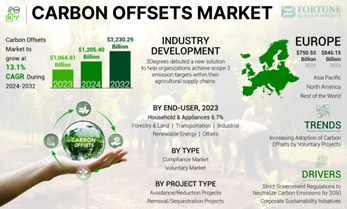
Port Harcourt — The carbon offsets market has experienced a significant slowdown since 2021, primarily due to scandals surrounding project quality and overstated impacts. Yet, with net-zero targets becoming non-negotiable for governments and corporates alike, demand is expected to rebound, driven by a shift toward high-quality, removal-based solutions and stricter market standards that could redefine the sector’s long-term growth trajectory, says GlobalData, a leading data and analytics company.
GlobalData’s latest Strategic Intelligence report, “Carbon Offsets,” reveals that 47 out of the 100 largest listed companies by market capitalization are purchasing carbon offsets, but the demand has been flat since 2021 due to concerns over offset quality.
Pinky Hiranandani, Strategic Intelligence Analyst at GlobalData, comments: “As a result, companies that remain in the market are focusing on obtaining high-quality offsets, often using carbon ratings agencies or shifting from avoidance to removal offsets. This is especially evident in the tech sector, where giants like Microsoft and Google are investing heavily in offsets to meet ambitious 2030 net-zero targets.”
According to the report, the long-term trajectory of the carbon offsets market will hinge on six pivotal factors: sustained corporate commitment to net zero targets amid growing anti-ESG sentiment; the scalability of carbon removal technologies; the ability of carbon ratings agencies to elevate market standards; advancements in monitoring, reporting, and verification (MRV) systems; the integration of offsets into emissions trading frameworks; and the establishment of international consensus on cross-border offset trading.
The energy and technology sectors are the largest buyers of carbon offsets, with Shell and Microsoft being prominent players. In particular, the demand for carbon removal offsets is gaining traction, with companies like Microsoft leading the charge. However, the high costs associated with these technologies pose challenges for scalability.
Hiranandani continues: “As the market evolves, there will be an increasing shift towards carbon removal technologies, which offer clear evidence of permanent climate benefits. Companies must navigate the complexities of offset quality while balancing their climate commitments.”
To reduce reputational and legal risks from low-quality offsets, companies can invest in carbon removal technologies like biochar, direct air capture, and enhanced rock weathering.
Hiranandani concludes: “They can also consider delaying near-term carbon-neutral or net-zero targets until high-quality offsets are more affordable. Focusing on widely available avoidance offsets while improving quality control can further mitigate offsetting risks.”