Precious Anga
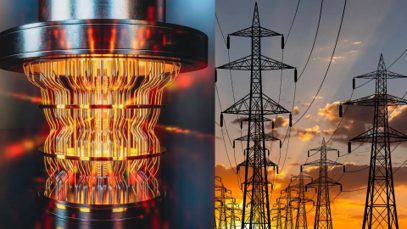
Lagos — China is testing quantum technology to improve power-grid reliability, as growing electricity demand and the rapid expansion of renewable energy place greater pressure on conventional grid infrastructure.
Researchers are piloting quantum sensors at a substation in Hefei, Anhui Province, to detect faults and equipment problems earlier, potentially preventing failures before they trigger power disruptions.
The trial reflects a broader effort by China to modernise its electricity network as power systems become more complex. The rapid growth of solar and wind generation, combined with rising electricity consumption from data centres and artificial intelligence, is creating new demands for faster monitoring and more accurate grid management.
The Hefei substation, commissioned in 2024, has hosted several quantum technology trials, including an 18-month test of quantum sensors. The sensors are designed to detect weak electrical signals as well as small changes in temperature and humidity within switchgear rooms.
Such early detection could allow grid operators to identify developing equipment faults before they escalate into outages. Researchers involved in the project said the technology could also reduce electricity measurement errors at the substation by more than 500,000 kilowatt-hours annually.
China is also examining quantum-secure communications and computing as part of the wider project. The objective is to address some of the weaknesses of conventional grid systems, including delayed equipment monitoring, measurement inaccuracies, data-security concerns and the growing computational burden involved in analysing complex electricity networks.
The development comes as countries around the world face the challenge of expanding electricity infrastructure while integrating larger volumes of intermittent renewable energy. Solar and wind generation can fluctuate according to weather conditions, increasing the need for accurate forecasting, rapid fault detection, flexible grids and technologies capable of managing electricity flows in real time.
For developing energy markets such as Nigeria, the significance extends beyond quantum technology itself. Nigeria continues to face challenges involving transmission capacity, distribution losses, equipment failures and the reliability of electricity supply. Technologies that improve monitoring and allow faults to be identified before they develop into major failures could become increasingly important as the country expands renewable generation and seeks to strengthen its power infrastructure.
The global interest in quantum applications is also extending into other areas of energy technology, including energy harvesting, advanced batteries and research into reducing energy losses. While many of these applications remain at an early stage, the growing investment reflects expectations that quantum science could eventually improve the efficiency and resilience of critical energy systems.
China’s experiment therefore points to a wider shift in the electricity industry: the future of reliable power will depend not only on building more generation capacity, but also on making the grids that transport electricity more intelligent, secure and responsive.