 *Made from non-recyclable plastic waste
Lagos — Clean Planet Energy has today released details of two new ultra-clean fuels manufactured to replace fossil fuels in the Marine industry, for use in any ship or vessel.
The products branded under the banner of “Clean Planet Oceans” can provide CO2e reductions of over 75 percent, and significantly reduce harmful air-pollutants by up to 1,500x. Both fuels are produced using non-recyclable waste plastics as the feedstock, therefore removing waste which would otherwise go to incineration, landfill or into our oceans.
“Ships using Clean Planet Ocean’s marine distillate fuel can reduce sulphur pollution by over 1500x, and CO2 emissions by 75%.”
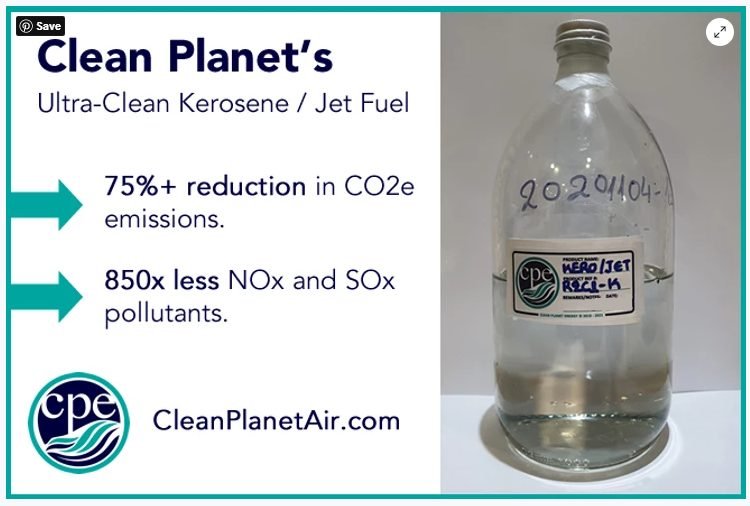
Following Clean Planet’s recent announcement of ultra-clean aviation fuel, Clean Planet Oceans includes an ultra-clean Marine Residual Fuel (also known as bunker fuel or fuel oil) meeting international ISO 8712 2017 standards, and also a premium Marine Distillate Fuel which matches the highest EN15940 Diesel specification.
In addition to the 75 percent CO2e reduction, a significant benefit of these new fuels is the notable decrease in NOx (Nitrogen Dioxide) and SOx (Sulphur Oxide) emissions. NOx and SOx are some of the most common air-pollutants from the burning of fossil fuels and are estimated to be globally responsible for 9,000 daily deaths (source: IHME). Clean Planet’s fuels can reduce sulphur emissions by 1,500x when compared to the latest, stringent IMO regulations.
“Air-pollutants such as sulphur are measured by ppm (parts per million). Under the IMO 2020 [International Maritime Organisation] regulations implemented last year, a ship with a scrubber installed onboard is allowed to emit 35,000ppm of sulphur into the sea when burning fossil marine fuel oil, whilst a ship without a scrubber is allowed to emit 5,000ppm of sulphur into the air”, said Clean Planet Energy’s CTO, Dr. Andrew Odjo.
“In contrast, Clean Planet Energy’s Marine Residual Fuel has a sulphur content of just 35ppm, and Clean Planet Energy’s Marine Distillate has a sulphur content of just 3ppm. This means that ships using Clean Planet Ocean’s marine distillate fuel can reduce sulphur pollution by over 1500x compared to ships using fossil fuel without a scrubber, and by more than 10,000x compared to ships with a scrubber”.
The UK based renewable energy company will produce these ultra-clean circular fuels inside their ecoPlants. A Clean Planet ecoPlant® can accept and convert non-recyclable waste-plastics, that would otherwise be heading to incineration, landfill, or worse – into the oceans.
According to data sourced by parties including the US EPA and the World Economic Forum, this year 203 million tonnes of plastic will become non-recyclable waste, meaning that the Clean Planet process not only reduces CO2e emissions and air pollutants, but also tackles the plastic crisis too.
“There is currently no legitimate and scaled alternative compared to using carbon-based fuels in the Marine and Aviation sector. Whereas cars are moving to electric, the lifespan of large vessels means we’ll be stuck using fossil fuel engines for many years to come. By using non-recyclable waste plastics as a feedstock for fuels in these industries, we can reduce the daily CO2e emissions by 75 percent, keep fossil-oil in the ground, and win valuable time in the world’s battle to hit net-zero carbon emissions”, added Dr. Odjo.
Currently Clean Planet have two ecoPlants in construction phase, with another 4 in development and have a mission to build ecoPlants to process over 1 million tonnes of waste plastics per annum. A standard Clean Planet ecoPlant can process 20,000 metric tonnes of waste plastics every year.