17 March 2015, Lagos – Thirty two farmers from rural communities got a new lease of life as their farming skills were transformed with modern ideas and knowledge on cassava production and value addition after two weeks of intensive training.
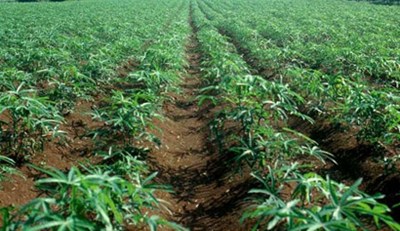
The farmers comprising 15 females and 17 males from oil bearing communities of Akwa Ibom, Imo and Rivers states where Addax Petroleum Nigeria Limited has its operations were selected under the company’s agriculture support scheme and trained at the National Root Crops Research Institute (NRCRI) Umudike, Abia state.
At the closing programme, the farmers displayed their new knowledge in cassava and sweet potato value chain by using cassava flour to produce cake, strips, chinchin, bread, among others. They also used sweet potato flour to produce bread, fritters, chips, salad cream, cakes, among others, thereby demonstrating their readiness to become entrepreneurial farmers.
In his address, the managing director of Addax Petroleum Nigeria Ltd, who was represented by the community relations manager, Emeka Obi said that the farmers who participated in the training programme were selected from the communities where Addax has its operational activities.
He said based on the policy of the company to be relevant to the communities where it operates, Addax had last year taken a decision “to help farmers” as farming is the main occupation of its host communities and lift them out of subsistent level of farming.
According to him, farmers are critical to the development and survival of the nation because apart from food security farming also provides foreign exchange earnings and massive employment opportunities. He said that Addax was indeed in the vanguard raising farmers for the impending agriculture revolution.
“You have to go home and establish yourself and make that bold statement that you are very important,” he charged the farmers, adding that it was expected that with their new knowledge and skills the farmers would become “the champions of the expected revolution in agriculture”.
“It is possible (because) you have the knowledge and methodology,” Obi said. He expressed the hope that large cassava farms would spring across the communities where the farmers come from and in the process enhance the economic and social status of the farmers.
Executive Director of NRCRI, represented by Dr. Anthony Ano commended Addax for showing interest in training of farmers to become big time entrepreneurs, adding that the company had also partnered the institute in remediating blighted land at Izombe in Imo state.
He said that the knowledge acquired by the farmers would have a chain reaction as they would not only employ people in their farms but also transfer the knowledge they acquired on new farming techniques.
The trained farmers could not hide their feelings as they relished and showcased their new skills after the “pragmatic and life changing initiative” they were exposed to. In their address presented by Cornelius Enwere the trained farmers said that the training “has added great value to our lives which will enable us to be employers of labour instead of seekers of employment”.
“We came here as ‘larvae and now going back as ‘butterflies’ with full potential to explore the agricultural world. We now have more knowledge and ideas about high yielding and disease resistant varieties of root and tuber crops like orange-fresh sweet potato, vitamin A yellow root cassava as well as food processing, packaging and marketing,” he said.
In a separate address the farmers from Mbo and Effiat communities of Akwa Ibom state acknowledged that the agricultural entrepreneurial trainings “were very important and relevant to our careers and livelihood”.
“We came here as subsistence farmers and now going back as modern and enterprise farmers ,” they said ,adding, “this training has given us new confidence and belief in ourselves that we can do many new things with our farming than before”.
– This Day