Oghenekevwe S. Ovbije
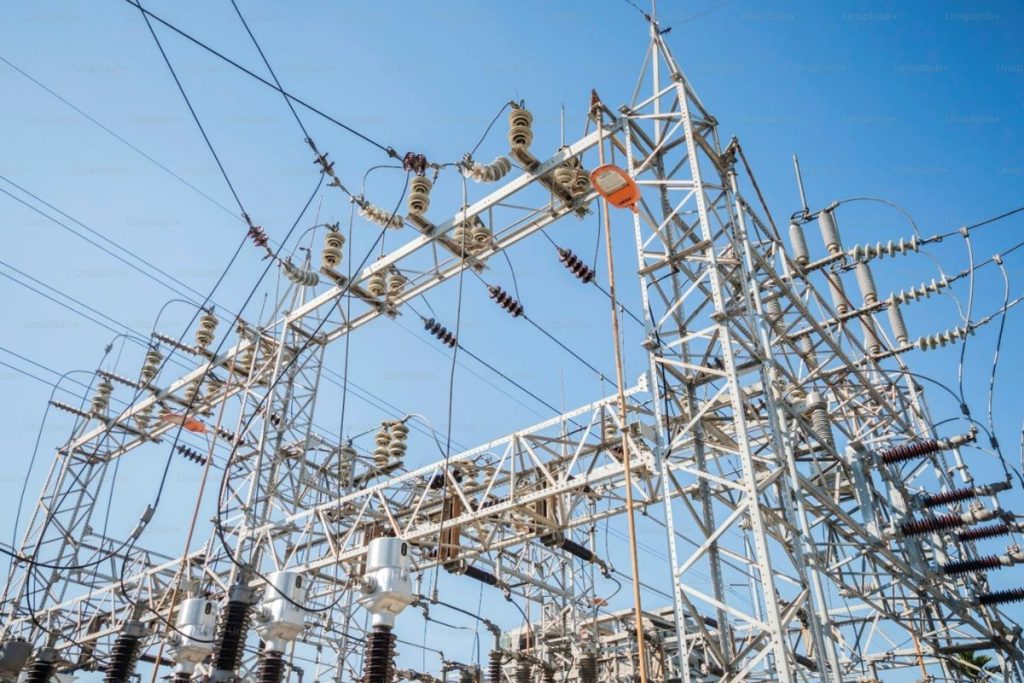
Lagos — Africa’s energy narrative is rapidly evolving from a focus on access to deeper conversations around resilience, diversification, and sustainability. With a population of over 1.4 billion and projections reaching 2.5 billion by 2050, the continent faces a growing urgency to build infrastructure that can support its economic and demographic growth. However, more than 600 million people across sub-Saharan Africa still lack access to electricity, and even those connected to the grid often experience unreliable supply, frequent blackouts, and severe voltage instability.
In several of the continent’s most populous countries, national grids consistently deliver only a fraction of the power needed, falling short of industrial demand and leaving commercial centers heavily reliant on diesel generators. In many urban and peri-urban areas, these generators now account for an estimated 40–60 % of the electricity consumed by businesses and institutions. While fossil fuels and hydropower continue to dominate Africa’s generation mix, with natural gas supplying approximately 42 %, hydropower 17 %, oil 19 %, and coal 13 %, modern renewables such as solar and wind still represent less than 10 % of the total electricity output. Despite this, momentum is building for sustainable solutions.
However, the reality remains that Africa’s energy infrastructure is fragmented, underbuilt, and overly dependent on diesel as a default backup. The path forward is not to replicate legacy grid systems from industrialized nations but to advance toward a new model built on geothermal integration, thermal field networks, and modular hybrid systems tailored to local realities.
The Case for a Systems-Level Energy Strategy
Traditional infrastructure models in Africa have centered on grid extensions and centralized power generation. While these elements remain essential, they are insufficient to address the demands of rapid urbanization, industrial growth, and climate resilience. A system-level design philosophy is needed, one that connects power, heat, fuel logistics, and industrial applications in a more integrated and distributed manner. In many off-grid and peri-urban areas, energy shortages are not just about generation; they are about delivery, reliability, and suitability. Industrial zones, university campuses, healthcare facilities, and manufacturing hubs require stable and thermally balanced energy sources. Diesel-based stopgaps are expensive and environmentally unsustainable. Thermal infrastructure and geothermal platforms offer a game-changing alternative.
Geothermal as a Base-Load Enabler
Africa’s geothermal potential is vast, particularly in the East African Rift, and promising gradients exist even in the underexplored parts of West Africa. Unlike solar and wind energy, geothermal energy provides continuous, round-the-clock base-load power, making it ideal for anchoring hybrid energy systems. In addition to electricity, geothermal systems can deliver heat for industrial processes, district heating, campus cooling, aquaculture, and food processing. When integrated with absorption chillers or heat recovery systems, they enable co- and tri-generation configurations that enhance efficiency while reducing emissions. Considering the design of intelligent thermal field networks, one can see how decentralized geothermal systems, when connected through smart microgrids or modular loops, can deliver both reliability and operational cost savings. In industrial parks or special economic zones, this translates to reduced diesel dependency, increased productivity, and extended asset life.
Thermal Networks for Urban and Industrial Resilience
As African cities continue to grow, they are often constrained by lagging infrastructure and inconsistent energy delivery. Thermal network centralized systems that distribute hot or cold water to multiple buildings have already been proven in global cities, and Africa is uniquely positioned to adapt them to its own needs. In urban and industrial contexts, these networks can provide heating, cooling, and steam services more efficiently than standalone diesel boilers or grid-tied HVAC units. They also reduce emissions, minimize operational costs, and create centralized maintenance points for the vehicles. When powered by geothermal, biomass, waste heat, or solar thermal collectors, thermal networks offer local energy sovereignty, enabling industrial parks, campuses, and healthcare facilities to operate reliably without exposure to fuel price shocks or grid instability.
Modular Hybrid Systems for Real-World Constraints
Africa’s energy landscape is defined by its diversity in terrain, population density, and economic activity. Therefore, modular hybrid energy systems are critical. Geothermal–solar–battery combinations can serve large industrial users. Solar–biomass hybrids are ideal for agro-processing. Diesel–battery microgrids are still necessary for remote communities where logistics make other systems infeasible. Innovation lies not only in the components but also in how they are managed. With digital twins, smart inverters, and real-time control platforms, operators can now orchestrate multi-source systems to maximize the uptime, reduce wear, and lower costs. These tools also allow countries to gradually scale their capacity, matching demand growth without waiting for full grid expansion.
Engineers Must Lead Beyond the Drawing Board
To achieve this advancement, engineers must play a broader role, moving beyond technical design into policy shaping, capacity building, and cross-sector planning. Designing thermal master plans, advising on right-sized energy packages, and integrating power planning with industrial and health infrastructure are no longer optional tasks. Governments must also adapt. Tariff structures should incentivize efficient thermal energy reuse. Policy incentives to support geothermal and hybrid adoption and national development strategies must link energy planning with industrial productivity, education, and healthcare. Most importantly, there must be sustained investment in technical capacity not only among utilities and private developers but also across municipalities, regulators, and engineering institutions.
A Platform for Prosperity
To achieve this advancement, engineers must play a broader role, moving beyond technical design into policy shaping, capacity building, and cross-sector planning. Designing thermal master plans, advising on right-sized energy packages, and integrating power planning with industrial and health infrastructure are no longer optional tasks. Governments must also adapt. Tariff structures should incentivize efficient thermal energy reuse. Policy incentives to support geothermal and hybrid adoption and national development strategies must link energy planning with industrial productivity, education, and healthcare. Most importantly, there must be sustained investment in technical capacity not only among utilities and private developers but also across municipalities, regulators, and engineering institutions.
A Platform for Prosperity
Africa can build energy systems that are not only low in carbon but also resilient, efficient, and tailored to the continent’s unique demands. Rather than chase outdated grid-centric models, African countries can leapfrog into a new energy paradigm that uses geothermal intelligence, thermal distribution, and modular hybrid systems to anchor industrial growth and human development. With the right design thinking, digital infrastructure, and policy commitment, Africa’s cities and industrial corridors can become global case studies in how to deliver infrastructure that does not just power lights but also powers prosperity.