Mkpoikana Udoma
Port Harcourt — Nigeria’s latest inflation report has triggered fresh public scepticism as the National Bureau of Statistics, NBS, announced a sharp drop in headline inflation to 16.05% in October 2025, even though businesses and households say economic hardship is worsening daily.
The new Consumer Price Index, CPI, released by the NBS shows the index rising from 127.7 in September to 128.9 in October, meaning prices still increased nationwide. Yet the Bureau insists inflation is easing due to movements in its updated methodology and base year.
Economic analysts say this technical decline in inflation does not reflect real-world economic pressures. Across markets, house rents, transportation, food, household goods and energy costs have continued their upward climb, contradicting the optimism in the NBS release.
According to the report, headline inflation dropped by 1.96 percentage points from September and fell by a massive 17.82 percentage points year-on-year compared to October 2024. But Nigerians say that while the numbers may be falling, their purchasing power is collapsing.
Urban inflation was reported at 15.65%, down from 36.38% a year earlier, and rural inflation at 15.86%, compared to 31.59% in 2024. However, the NBS also admitted that month-on-month inflation rose to 0.93%, meaning prices increased faster in October than in September.
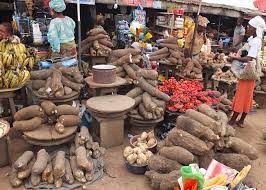
Food inflation, the most sensitive to households, was pegged at 13.12% year-on-year, far lower than the previous year’s 39.16%. But consumers say staple food items have not become cheaper in any market across the country.
Even the NBS cautioned that its food inflation drop is “technically due to the change in the base year,” acknowledging that the numbers may not reflect real-world conditions.
The month-on-month food inflation rate rose significantly to –0.37%, up from –1.57%, driven by higher prices of onions, fruits, shrimp, groundnuts, vegetables, and meat — contradicting the impression of easing pressure.
Core inflation stood at 18.69%, still one of the highest in Africa, despite the reported decline.
Across states, the inflation picture remains distorted: Ekiti (20.14%), Nasarawa (18.97%), and Zamfara (18.81%) posted the highest inflation, while Bauchi, Anambra and Gombe recorded the lowest; trends that do not match the uniform hardship reported by consumers nationwide.
Businesses say the NBS figures fail to mirror Nigeria’s broader economic reality: rapid currency depreciation, high energy costs, rising import dependency and shrinking disposable income.
For many Nigerians, the question is simple:
If inflation is falling, why are prices still rising?
The NBS may have offered a statistically cleaner picture, but on the streets, markets, house rents, energy depots, real estate and transport hubs, inflation remains as fierce as ever; and Nigerians are paying the price.