Goli Innocent
Lagos — Nigeria’s transition to cleaner transport is no longer a policy debate; it is now a practical decision shaped by infrastructure limits, fuel costs, and economic pressure. While electric vehicles dominate global headlines, the country’s present conditions suggest that compressed natural gas offers a more immediate and workable path.
The numbers are clear. Nigeria’s grid still delivers an average of 4,000 to 5,000 megawatts, according to data from the Transmission Company of Nigeria and the World Bank, for a population exceeding 200 million. The International Energy Agency estimates that a country of Nigeria’s size should be generating at least four times that capacity to support industrial growth and modern energy demand. In reality, supply remains unstable, with frequent system collapses and widespread reliance on self-generation.
This weak electricity base directly limits the viability of electric vehicles. Charging infrastructure depends on stable power, yet over 80 million Nigerians lack access to grid electricity, while millions more experience daily outages. Even in urban centres, households and businesses combine grid supply with petrol and diesel generators. In that setting, scaling EV adoption introduces a new layer of demand on an already stretched system.
By contrast, Nigeria’s gas position presents a different story. The country holds over 200 trillion cubic feet of proven natural gas reserves, according to the Nigerian Upstream Petroleum Regulatory Commission. Despite this, domestic utilisation remains low, with a significant portion either exported or flared. The Federal Government’s push towards compressed natural gas is built on the need to redirect this resource into the local economy.
Early adoption data from pilot schemes under the Presidential CNG Initiative shows that transport operators using gas are recording fuel cost reductions of between 40 and 60 per cent compared to petrol. With petrol prices rising sharply following subsidy removal, this shift is already gaining traction among commercial drivers and fleet operators.
The cost barrier further separates both options. BloombergNEF data shows that while global EV prices are declining, upfront costs remain significantly higher than internal combustion vehicles. In Nigeria, where most vehicles are imported used units, the price gap is even wider. An average electric vehicle still costs several times more than a petrol car, excluding the additional cost of setting up home or commercial charging systems.
CNG conversion, on the other hand, allows existing vehicles to switch fuel types at a fraction of that cost. This flexibility matters in a market where purchasing power is constrained and credit access remains limited.
Environmental impact also needs to be assessed within Nigeria’s energy mix. Electric vehicles produce zero emissions at the point of use, but Nigeria’s electricity generation is dominated by gas-fired plants. This means EVs shift emissions from the tailpipe to the power plant rather than eliminating them entirely. The World Bank notes that over 70 per cent of Nigeria’s grid power comes from thermal sources, primarily natural gas.
CNG still emits carbon, but significantly less than petrol and diesel. According to the International Gas Union, natural gas vehicles can reduce carbon dioxide emissions by up to 25 per cent compared to petrol, while also cutting particulate pollution, which is a major contributor to urban air quality problems.
Infrastructure rollout also favours gas in the short term. Nigeria currently has fewer than 200 public EV charging points, based on industry estimates, compared to a rapidly expanding network of CNG stations supported by government and private investment. Building charging infrastructure requires both capital and stable electricity, while gas stations can be deployed more quickly within existing fuel distribution frameworks.
That does not remove the long-term case for electric vehicles. Global EV sales surpassed 14 million units in 2023, accounting for nearly one in five cars sold worldwide, according to the International Energy Agency. Battery costs continue to fall, and countries investing early in EV ecosystems are positioning themselves for future industrial growth.
Nigeria cannot ignore that shift, but it cannot import it blindly either.
A realistic transition must align with domestic capacity. In the short term, CNG offers immediate relief by lowering transport costs, reducing emissions, and utilising a resource Nigeria already has in abundance. It does not depend on fixing the national grid before delivering impact.
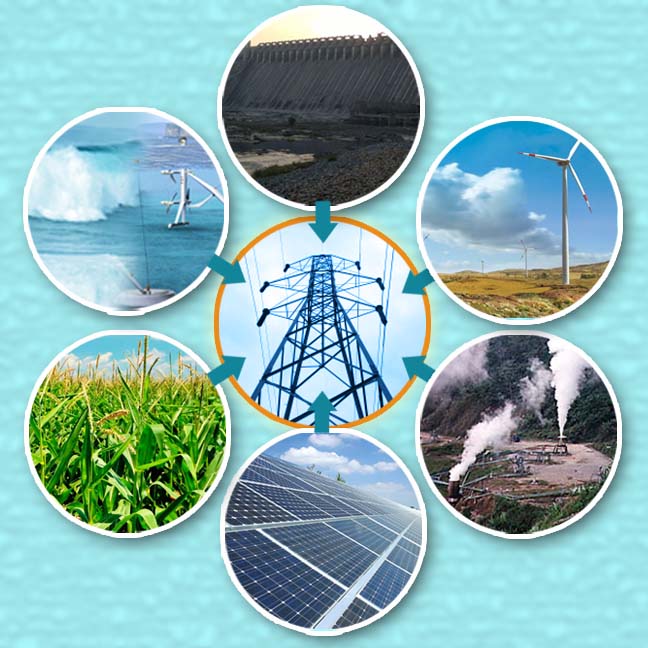
Electric vehicles remain the long-term destination, but reaching that point requires a stronger electricity system, expanded renewable energy capacity, and a functioning distribution network. Until those foundations are in place, large-scale EV adoption will remain limited to niche segments.
What Nigeria faces is not a choice between two technologies, but a question of timing. Right now, the data points in one direction: gas can carry the transition, while electricity systems are rebuilt to support what comes next.