Precious Anga
Lagos — The Federal Government and the National Assembly have reaffirmed their commitment to building a unified and coordinated electricity market as Nigeria advances the decentralisation of the Nigerian Electricity Supply Industry (NESI) under the Electricity Act, 2023.
The assurance was given at a stakeholders’ workshop in Abuja on Legal, Policy and Regulatory Harmonisation between Federal and State Institutions on the Decentralisation of the Nigerian Electricity Supply Industry, where policymakers, regulators and industry stakeholders examined the need for stronger collaboration between federal and state electricity regulators.
The workshop focused on the implementation of the Electricity Act, 2023, which empowers states to establish and regulate electricity markets within their jurisdictions. Stakeholders, however, emphasised that the transition must be supported by clear legal, policy and operational coordination to prevent regulatory overlaps, market fragmentation and investment uncertainty.
Special Adviser to the President on Power and Chairman of the Presidential Task Force on Power Sector Reset and Restoration, Rilwan Lanre Babalola, described electricity as a critical driver of industrialisation, economic competitiveness, employment generation and national development. He urged federal and state institutions to embrace the ongoing reforms as a collective national project rather than viewing the emerging regulatory landscape through the lens of competing jurisdictions.
According to Babalola, Nigeria’s power sector reforms will only deliver the desired outcomes if all regulatory institutions work within a harmonised framework that supports market stability, encourages private investment and guarantees efficient electricity service delivery across the country.
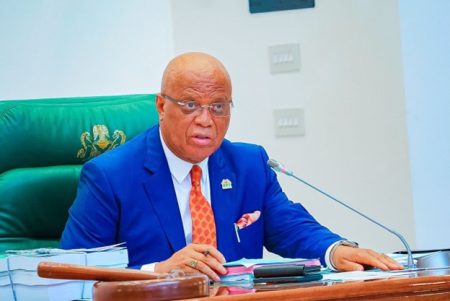
Chairman of the Senate Committee on Power, Senator Enyinnaya Abaribe, also reaffirmed the National Assembly’s commitment to strengthening the legal framework required for effective collaboration between the Nigerian Electricity Regulatory Commission (NERC) and State Electricity Regulatory Commissions.
Abaribe noted that the success of electricity decentralisation should not be measured solely by the number of states that establish independent electricity markets or obtain regulatory transfer orders, but by the ability of the country to maintain an integrated, efficient and investor-friendly electricity market capable of delivering reliable power to consumers.
The Minister of Power, Joseph Tegbe, and Chairman of NERC, Dr Musiliu Oseni, equally stressed the importance of harmonising regulatory policies, operational procedures and market rules as more states assume greater responsibilities in electricity generation, distribution and market regulation.
They maintained that sustained cooperation between federal and state institutions would be essential to preserving market confidence, attracting investment, improving operational efficiency and ensuring that electricity sector reforms translate into better power supply and long-term economic growth.