Bamako — A militant-imposed blockade has left Mali’s capital reeling from fuel shortages, as authorities scramble to restore supplies and residents face mounting hardship.
In the sweltering October heat of Bamako, Mali’s capital, the city’s streets have been transformed by a crisis that few residents saw coming: a severe fuel shortage triggered by a militant blockade. What began as a distant threat in the country’s northern deserts has now reached the heart of Mali, upending daily life, crippling businesses, and testing the resilience of a nation already battered by years of instability.
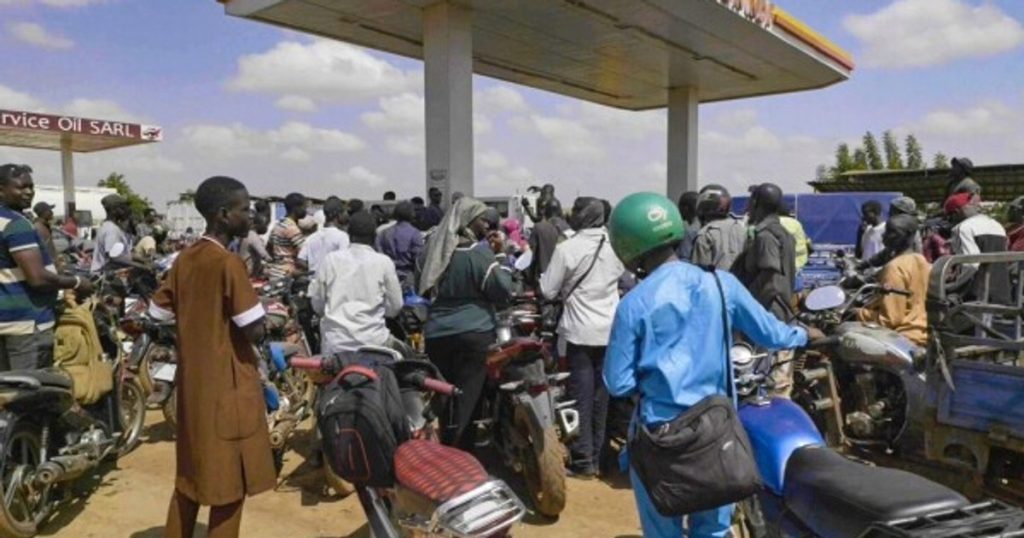
Long lines of cars, motorcycles, and desperate residents with jerry cans have become the new normal at gas stations across Bamako. Some stations have shuttered entirely, while others ration the little fuel they have—often supplying only diesel. The shortages, which intensified in early September 2025, are the direct result of an aggressive blockade on fuel imports imposed by Jama’at Nusrat al-Islam wal-Muslimin (JNIM), a militant group affiliated with al-Qaeda. According to Reuters, the blockade was announced in a video by a JNIM spokesperson, who warned, “We are telling all traders who import diesel and gasoline into Mali, whether from Ivory Coast, Guinea, Senegal, or Mauritania, to stop doing so until further notice.”
The impact was immediate and severe. As reported by the Associated Press, residents began to feel the pinch as soon as the blockade took effect, with lines stretching for blocks and tempers flaring as people fought for a place at the pump. Bakary Coulibaly, a small-scale gas reseller, lamented, “It is only a few stations that have it.” For many, like motorcycle taxi driver Douga Barry, the crisis is a test of endurance. “We know we are at war, whatever the situation, and we are ready to take it on. Even if we have to stop our motorcycles to walk, we are ready for it,” Barry told reporters.
It is not just Bamako feeling the pain. Videos circulating on social media, cited by Reuters, show similar scenes in other cities, including Segou, Mopti, and San. The blockade has cut off Mali’s economic oxygen, as analysts put it, and threatens to paralyze both commerce and daily life. The timing could hardly be worse: Mali, despite being one of Africa’s top gold producers, remains the sixth least developed country in the world, with nearly half its population living below the national poverty line, as noted by the Associated Press.
The militants’ strategy is clear. By targeting fuel convoys from neighboring countries—Senegal and Ivory Coast in particular—they aim to isolate Bamako and ramp up pressure on Mali’s military-led government. The blockade, according to The Globe and Mail, is “an explicit economic strategy to cut off and isolate Bamako.” In mid-September, the stakes were raised when insurgents ambushed a convoy of more than 100 vehicles under military escort, destroying at least 40 fuel tankers. Since then, no convoys have entered from Senegal, and the risk to supply lines has only grown.
The Malian authorities, under mounting pressure, have scrambled to respond. The army began escorting fuel convoys on the perilous roads between Bamako and the borders with Senegal and Ivory Coast. On October 6, the army announced it had destroyed the hideouts of JNIM fighters responsible for a recent attack near Kolondiéba, close to the Ivory Coast border. Prime Minister Abdoulaye Maiga, according to Reuters, convened a disaster management committee to safeguard future supply convoys—a sign of just how dire the situation has become.
Relief finally arrived, at least temporarily, on October 7, when a heavily armed military convoy escorted more than 250 fuel tankers from Ivory Coast into Bamako. The sight of the convoy was met with cheers and raised fists from exhausted motorcyclists and motorists, as reported by The Globe and Mail. Many stations in the city reopened, and fuel began to flow again, albeit unevenly. The arrival offered a reprieve, but not a solution; the blockade’s grip remains tight, and the threat of further disruption looms large.
The economic fallout has been widespread and severe. Soaring prices and fuel scarcity have forced businesses to scale back or shut down. Diarra Transport, a major Malian transportation company, halted activities entirely after threats from insurgents. Its general director, Neh Diarra, apologized for the disruption, acknowledging that thousands—including employees now without salaries—were affected.
Industries beyond transportation have also felt the strain. Several Canadian mining companies, such as Barrick Mining Corp. and B2Gold Corp., are among Mali’s largest private investors. Randall Chatwin, B2Gold’s senior vice-president, told The Globe and Mail, “We are certainly aware of the issues relating to fuel shortages in Mali, both in Bamako and at some industrial operations, including mines. We are continuously working with our fuel supply partners to ensure the ongoing fuel deliveries remain on schedule.” Yet, even these companies have not been immune: around 70 fuel trucks destined for the Sadiola gold mine, about 650 kilometers from Bamako, were halted last week due to the blockade, as reported by Reuters.
The broader context is grim. Mali’s military regime, which seized power in coups in 2021 and 2022, has struggled to contain the insurgency and deliver on promises of improved security. Far from abating, militant violence has doubled over the past year, with rebels now capable of striking anywhere in southern Mali with relative ease, according to the U.S.-based Africa Center for Strategic Studies. The blockade is just the latest escalation in a conflict that has steadily crept from the remote north into Mali’s populous south, threatening the very stability of the transitional authorities.
Ordinary Malians are bearing the brunt. Power outages, food shortages, paralyzed transportation, and disruptions to hospitals have all been reported. Some towns have endured days without fuel, forcing residents to walk or cycle long distances. At many stations, hundreds queue from dawn, often leaving empty-handed. Authorities have even cracked down on retailers accused of price gouging, but the measures have offered little consolation to those waiting in line.
Analysts warn that if the shortages persist, the risk of social and political unrest will only increase. As Hassane Koné of the Africa-based Institute for Security Studies put it, “If the fuel shortage in some areas persists, it could trigger social and political unrest, destabilizing Mali’s transitional authorities.”
For now, the people of Bamako and beyond are left to navigate a crisis that shows no signs of abating. The arrival of fuel convoys from Ivory Coast has provided temporary relief, but the underlying threat remains. As militants tighten their grip and the government scrambles to respond, Mali’s fuel crisis has become a stark symbol of the country’s deepening turmoil and the resilience of its people in the face of adversity.