Goli Innocent
Lagos — Nigeria is not just losing trees, wetlands, and wildlife we are steadily eroding the very systems that sustain our lives and economy. After more than two decades of observing environmental trends and policy failures across the country, one truth stands out: biodiversity loss in Nigeria is no longer a warning sign; it is a full-blown crisis unfolding in plain sight.
The numbers are damning. The Food and Agriculture Organization confirms that Nigeria has lost over 96 per cent of its original forest cover weekenda staggering figure that places the country among the worst globally. Data from Global Forest Watch shows that between 2001 and 2023, Nigeria lost more than 1.5 million hectares of tree cover. These are not abstract statistics; they represent vanished ecosystems, displaced species, and weakened environmental resilience.
Urbanisation, particularly in Lagos, Port-Harcourt and Abuja, has been both aggressive and careless. Wetlands nature’s flood control system are being swallowed by concrete. Lagos alone has lost over 40 per cent of its wetlands, exposing millions to increased flooding and heat stress. What we call development has, in many cases, been nothing more than environmental neglect dressed up as progress.
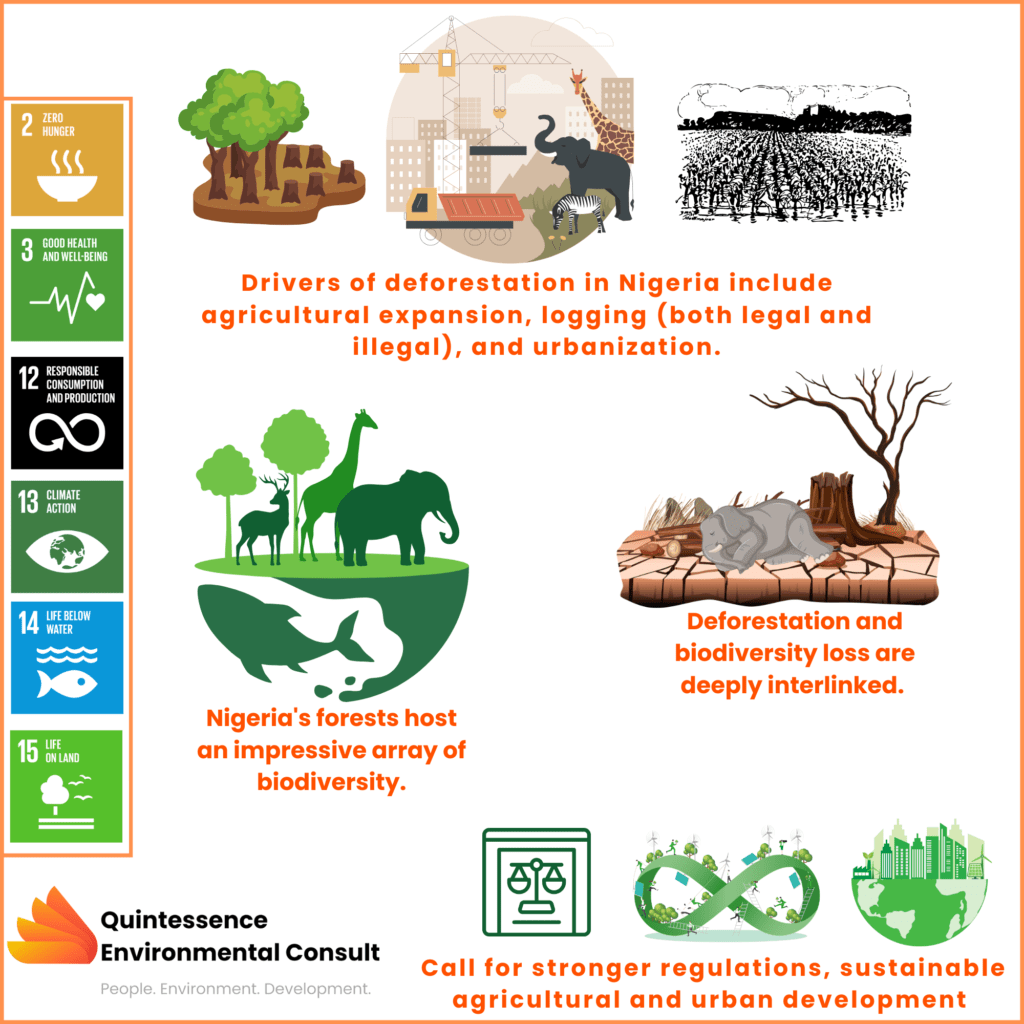
Deforestation tells an even harsher story. The World Bank estimates that Nigeria loses between 350,000 and 400,000 hectares of forest every year. This is driven by a mix of poverty, policy failure, and dependence on firewood, which still accounts for nearly 80 per cent of household energy use, according to the International Energy Agency. The consequence is predictable: forests disappear, carbon storage declines, and biodiversity collapses. Species that once defined our ecological identity are now on the brink.
Then there is pollution perhaps the most visible sign of systemic failure. In the Niger Delta, oil spills have destroyed mangroves and poisoned waterways for decades. The United Nations Environment Programme estimates that restoring polluted areas like Ogoniland could take 25 to 30 years. Across the country, plastic waste of over 2.5 million tonnes annually clogs drainage systems and suffocates aquatic life. These are not isolated incidents; they are symptoms of weak enforcement and a disregard for environmental accountability.
The environmental consequences are already severe. Without forests and wetlands, Nigeria is losing its natural defence systems. Floods are becoming more frequent and more destructive, while desertification continues to creep across the north. Soil fertility is declining, and ecosystems are losing their ability to recover from shocks.
For human health, the impact is direct and unforgiving. Polluted air and water are driving respiratory illnesses and waterborne diseases. The World Health Organization continues to link environmental degradation to rising health risks across developing countries.
At the same time, as habitats shrink, humans are forced into closer contact with wildlife, increasing the risk of disease transmission. We are, quite literally, engineering new health crises.
Economically, the implications are just as stark. Agriculture responsible for about a quarter of Nigeria’s GDP depends on stable ecosystems. When biodiversity declines, crop yields fall, fisheries weaken, and rural livelihoods collapse. What follows is a chain reaction: food insecurity, rising prices, and deepening poverty.
Let us be clear this trajectory is not inevitable. It is the result of choices. Weak enforcement of environmental laws, poor urban planning, and a failure to invest in sustainable alternatives have brought us here. Reversing the damage will require more than policy statements; it demands political will, institutional discipline, and public awareness.
Nigeria still has a chance to change course, but that window is narrowing. Protecting biodiversity is not an environmental luxury it is a national necessity. If we continue on this path, the cost will not just be ecological; it will be economic, social, and ultimately existential.
This is not a problem for tomorrow. It is a crisis for today and it demands action now.