 Precious Anga
Lagos — Pipeline Infrastructure Nigeria Limited (PINL) has credited improved pipeline security and stronger collaboration with host communities for Nigeria’s recent rise in crude oil production, which saw the country exceed its OPEC quota for the first time in 2026.
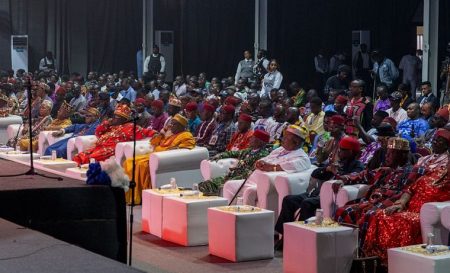
Speaking at a stakeholders’ engagement forum in Yenagoa, the company’s General Manager for Community and Stakeholder Relations, Akpos Mezeh, said enhanced surveillance and community participation had played a critical role in protecting oil infrastructure and boosting output.
Mezeh, who was represented by PINL’s Head of Community Relations, Andrew Ebikeme, cited data from the Nigerian Upstream Petroleum Regulatory Commission showing that Nigeria’s total oil production increased by 2.2 per cent in May to about 1.70 million barrels per day.
According to him, crude oil production averaged 1.53 million barrels per day during the month, representing 102 per cent of Nigeria’s OPEC production allocation.
“This achievement reinforces Nigeria’s position as Africa’s leading oil producer and represents the highest combined production level recorded since July 2025,” Mezeh said.
He attributed the improvement to enhanced pipeline security measures, stronger engagement with stakeholders, increased community involvement and a collective commitment to tackling crude oil theft, pipeline vandalism and illegal refining activities.
Despite the gains, Mezeh expressed concern over an attack on the Trans-Niger Pipeline on June 15 along the Odau axis of Abua/Odual Local Government Area in Rivers State.
“This unfortunate incident has been promptly escalated to the relevant security authorities for urgent intervention and necessary action,” he said, warning that attacks on critical oil infrastructure pose significant environmental and economic threats.
The PINL executive reaffirmed the company’s commitment to host communities, noting that scholarship payments and women empowerment grants previously promised by the firm had been fulfilled. He also disclosed plans to roll out a structured youth training programme across communities within its operational areas.
Mezeh commended traditional rulers, youth groups and civil society organisations for their growing support, pointing to the recent declaration by the Hydrocarbon Pollution Remediation Project that Ogoniland is free of active illegal refining sites.
“These developments provide hope for a cleaner environment, healthier communities and a more prosperous future for the Niger Delta region,” he said.
Also speaking, a representative of the Nigerian National Petroleum Company Limited, Engr. Akponime Omojewvhe, urged host communities to deepen cooperation with security agencies and industry stakeholders to prevent future attacks on oil assets.
In separate remarks, the Paramount Ruler of Joinkarama IV Community in Rivers State, King Sunny Jacob, and the Bayelsa State Governor’s Technical Adviser on Ijaw National Affairs, Oyinfie Jonjon, praised PINL’s empowerment programmes and called for sustained support for pipeline surveillance operations.
They stressed that continued community engagement, youth development initiatives and economic empowerment programmes remain essential for protecting oil infrastructure, sustaining production growth and promoting lasting peace across the Niger Delta.