Mkpoikana Udoma
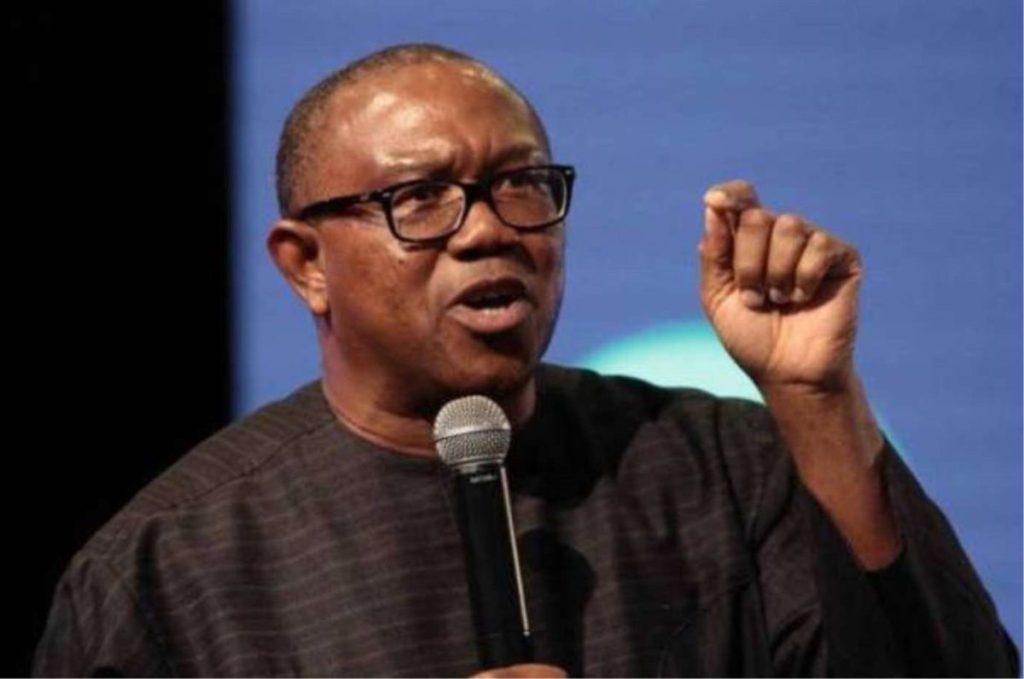
Port Harcourt — Former presidential candidate, Mr. Peter Obi, has warned that India’s emergence as the world’s fourth-largest economy underscores Nigeria’s deepening economic decline, despite years of rising government revenue, subsidy savings and heavy borrowing.
In a statement Obi cited International Monetary Fund, IMF, estimates showing that India has overtaken Japan in nominal Gross Domestic Product, GDP, with India projected at about $4.187 trillion in 2025, narrowly ahead of Japan’s $4.186 trillion. India is now targeting Germany, the world’s third-largest economy, with a GDP of about $4.74 trillion.
While describing India’s rise as “remarkable,” Obi said the development presents a sobering contrast for Nigeria, which once shared a comparable economic trajectory with the Asian economy.
“This milestone is a stark reminder of how far Nigeria has fallen,” Obi said. “There was a time when Nigeria was ahead of India in key economic indicators.
He referenced World Bank data showing that in 2007, Nigeria’s nominal GDP per capita stood at about $1,816, significantly higher than India’s $1,022 at the time. By 2015, Nigeria had maintained its lead, with GDP per capita of about $2,586, compared to India’s $1,584.
However, IMF projections now suggest a dramatic reversal.
“By 2025, India’s nominal GDP per capita is estimated at about $2,878, while Nigeria’s is projected to crash to around $807,” Obi said.
“This is not just a statistic; it reflects declining living standards and lost opportunities.”
Obi expressed concern that Nigeria’s weak performance has persisted despite what he described as unprecedented fiscal resources in recent years.
“Between 2023 and 2025, Nigeria recorded combined revenues of about N200 trillion, roughly $135 billion, alongside subsidy savings and borrowing levels higher than all previous governments combined from 1999 to 2023,” he said. “Yet there is no meaningful improvement in healthcare, education or poverty reduction.”
According to him, worsening social and economic conditions continue to erode business confidence, particularly among small and medium-sized enterprises.
“Businesses are shutting down daily, electricity remains erratic and expensive, and the cost of food, transport and rent has gone beyond the reach of ordinary Nigerians,” Obi said. “Poverty, insecurity and unemployment are rising, not falling.”
He called for a fundamental reset of Nigeria’s economic governance, urging the emergence of a national leadership consensus anchored on competence, compassion and character.
“Nigeria must invest deliberately in healthcare, education, infrastructure, agriculture and technology,” he said. “We must cut waste, reduce the cost of governance, and ensure full transparency so citizens can track progress.”
Obi stressed that economic empowerment, job creation, reliable energy supply and food security must form the core of any recovery strategy.
“Only through accountable leadership and united collective action can Nigeria close the gap with countries like India and turn its vast resources into prosperity and security for all,” he said.
He concluded with a note of optimism, insisting that recovery remains possible if urgent reforms are pursued.
“Other nations are already setting the pace,” Obi said. “Nigeria must act now, catch up, and reclaim its potential. A new Nigeria is possible.”