Mkpoikana Udoma
Port Harcourt — The Nigerian Content Development and Monitoring Board, NCDMB, has challenged operators and service companies in the oil and gas industry to invest in domestic manufacturing and research and development, declaring that Nigeria’s next local content frontier lies beyond engineering and fabrication.
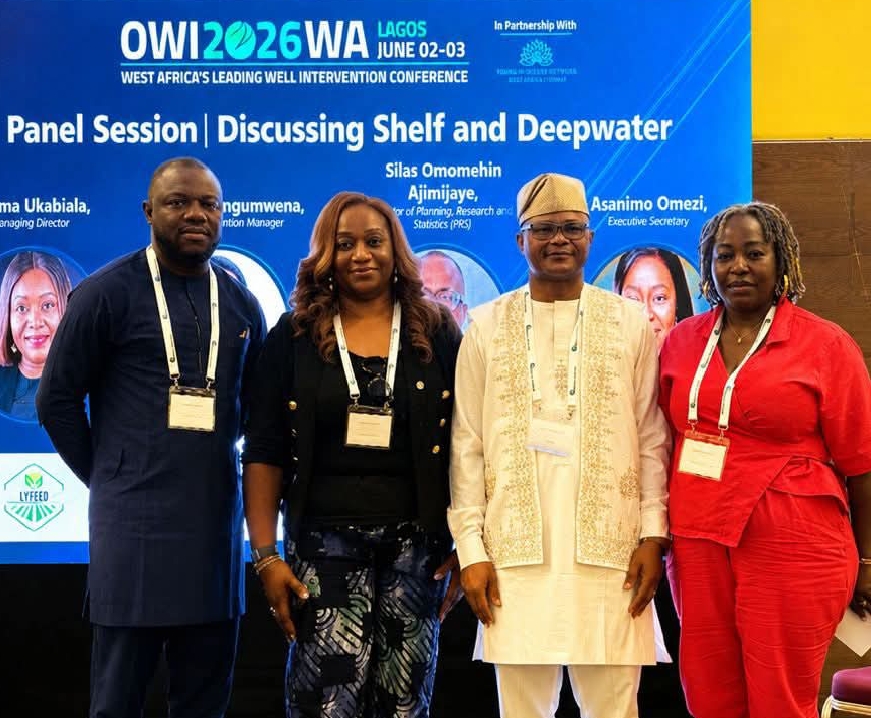
The Board made the call at the Offshore Well Intervention, OWI West Africa 2026 conference in Lagos, where it reaffirmed its commitment to deepening local capabilities and advancing new delivery models in the offshore oil and gas sector.
Representing the Executive Secretary of NCDMB, Engr. Felix Omatsola Ogbe, the Director of Planning, Research and Statistics, Mr. Silas Omomehin Ajimijaye, said Nigeria had made significant progress under the local content regime but must now focus on retaining more value within the country through manufacturing and innovation.
Speaking on the panel session titled, “Local Capability, Leadership and New Delivery Models, and Execution in West Africa,” Ajimijaye said the country had already achieved about 80 percent local content in engineering and fabrication.
“Nigeria is no longer content merely to participate in the oil and gas industry; we are building the capacity to lead it. We have reached around 80 per cent local content in engineering and fabrication, and our focus now is on closing the manufacturing and research gap so that more value is retained in the country,” he stated.
He explained that the Board’s current policy direction is anchored on the Nigerian Oil and Gas Industry Content Development, NOGICD, Act of 2010, as well as Executive Orders and Presidential Directives issued in 2024 to reduce contracting costs, shorten project delivery timelines and strengthen compliance with local content requirements.
According to him, manufacturing activities in Nigeria still largely revolve around assembly operations, while research and development remains underdeveloped, making both areas critical to achieving the Board’s target of 70 percent local content retention by the end of 2027.
Ajimijaye stressed that local content should not be viewed as a regulatory burden but as a strategic partnership capable of driving industrial growth and competitiveness.
“Local content is a partnership, not a barrier. We are asking the industry to build genuine capability with us, to invest in local research and development, and to engage the Board early so that Nigerian content is designed into every project from the start,” he said.
The NCDMB director highlighted ongoing investments in human capital development, including industry-focused training programmes delivered in collaboration with operators such as Renaissance Africa Energy and Seplat Energy, as well as initiatives aimed at preparing young Nigerians through partnerships with universities.
He also noted that the Board had established centres of excellence with academic institutions to support research, innovation and industry problem-solving, while expanding access to finance through the Nigerian Content Intervention Fund operated in partnership with the Bank of Industry.
Ajimijaye further disclosed that NCDMB had introduced a dedicated financing window for women-led businesses in the oil and gas sector as part of efforts to broaden participation and stimulate enterprise growth.
He said the Board’s participation at OWI West Africa 2026 aligns with its broader strategy to consolidate gains recorded over the past decade and position Nigerian oil and gas companies to compete beyond the domestic market.
According to him, NCDMB’s long-term vision is to transform Nigerian firms into regional champions capable of exporting technical expertise, products and services across West Africa and other international markets.