– Environmentalists say 70 years of oil extraction delivered pollution instead of prosperity
Mkpoikana Udoma
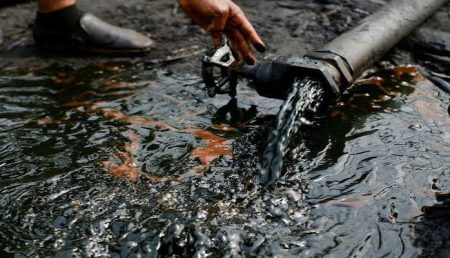
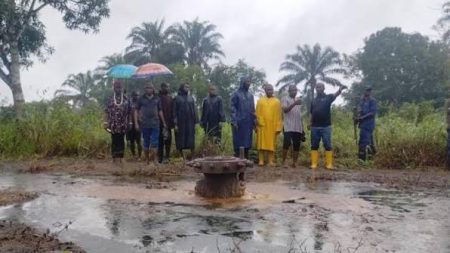
Port Harcourt — Environmental activists, climate justice advocates and civil society organisations have renewed calls for an end to new oil exploration in the Niger Delta, insisting that seven decades of petroleum extraction have left the region with widespread environmental devastation, worsening poverty and deepening climate risks rather than development.
The demand was the central message at the Niger Delta Climate Conference Week held in Port Harcourt, organised by the Lekeh Development Foundation with support from Health of Mother Earth Foundation, HOMEF, Oilwatch International, Coalition for Social Ecological Transition, COSET, Friedrich Ebert Stiftung and other partners.
Executive Director of HOMEF, Rev. Nnimmo Bassey, declared that the era of expanding oil production in the Niger Delta should end, arguing that the region had paid an unbearable environmental price for Nigeria’s oil wealth.
“Seven decades of oil extraction has brought no benefit to the Niger Delta. It’s brought only negative impacts on the communities. The government may have derived a lot of money, but the people have got nothing,” Bassey said.
He argued that the cost of restoring the devastated environment could exceed the revenues Nigeria had earned from crude oil production.
“In fact, after seven decades of massive environmental degradation, if all the money the government has earned from oil extraction is to be used in cleaning up the Niger Delta, it may not be enough. It has been a negative investment.”
Calling for a shift in national energy policy, Bassey urged the Federal Government to stop licensing new oil wells while decommissioning ageing facilities and accelerating environmental remediation.
“Don’t open any new oil wells. The ones that have outlived their life expectancy should be decommissioned, the facilities removed and the environment cleaned up.”
He added that large-scale environmental restoration could become one of the region’s biggest employment opportunities.
“If the government decides to clean the Niger Delta, it will be the biggest job creation programme because thousands of people will be needed for remediation, mangrove restoration and environmental recovery.”
Rejecting arguments that ending fossil fuel dependence would cripple Nigeria’s economy, Bassey maintained that crude oil had become more of a burden than a blessing.
“Nigeria was a nation before oil became a major income earner. Nigeria has collapsed right now because of oil,” he said.
“Show me one community in the Niger Delta that has been developed because of oil extraction.”
Also speaking, Mr Ken Henshaw of We The People, said the Niger Delta currently hosts about 178 gas flare sites, explaining that gas flaring had increased following the divestment of international oil companies.
“The IOCs divested to evade responsibility from decades of environmental destruction caused by their operations. We need to see the sale agreements between the IOCs and the local companies,” he said.
According to Henshaw, communities must continue demanding environmental restoration, reparations and climate justice.
“We must defeat extractivism, demand reparations, demand environmental restoration and demand climate debt.”
Coordinator of Oilwatch International, Kentebe Ebiaridor, said the conference focused on practical solutions to climate change and environmental degradation confronting the Niger Delta.
“Climate change is here. Communities are disappearing on a daily basis. Conflicts are also arising from climate change. We cannot continue to live in denial.”
He argued that decades of pollution had fundamentally altered livelihoods and social relations across oil-producing communities.
“Extraction is not normal. Extraction needs to stop because the Niger Delta must heal from all these kinds of pollution that have been going on for the past 70 years.”
Ebiaridor urged Nigeria to diversify its economy beyond petroleum.
“They should leave the oil in the soil. We should stop depending on fossil fuel and think of other aspects of the economy. Agroecology is the way forward. Oil does not bring development.”
Climate justice campaigner and convener of the event, Mr Friday Nbani, called on governments to accelerate the transition from fossil fuels to renewable energy.
“We need to act fast on this transition from dirty energy to renewable energy that is sustainable and good for our environment.”
He said communities should emulate the environmental resistance demonstrated by the Ogoni people, noting that similar movements had emerged globally.
“The strength of resistance shown by the Ogoni people is what we expect other communities to build upon. We are not supporting oil resumption in Ogoni. What we need now is healing.”
Referencing recent comments that aquatic life was returning to Ogoni waterways, environmental activist, Dr. Celestine Akpobari argued that the recovery was largely due to the suspension of oil production in the area for more than three decades.
“You cannot put on the tap while mopping the floor. If we’re cleaning Ogoniland, we don’t need to reopen oil wells to repollute the land we are cleaning,” he said.
Speaking on oil spill accountability, Mark Dummett of Amnesty International urged affected communities to continue documenting pollution incidents to strengthen legal actions against oil companies.
He also referred to recently reported leaked internal Shell documents which allegedly indicated that inadequate pipeline maintenance contributed to repeated oil spills, stressing that credible evidence remained essential in holding operators accountable.
Participants at the conference concluded by urging the Federal Government to prioritise environmental restoration, accelerate the transition to cleaner energy sources and place the welfare of Niger Delta communities above continued fossil fuel expansion.