Oritsegbubemi Omatseyin
Lagos — The African Union has reported significant progress in member-states’ contributions to its 2025 Regular Budget, with Nigeria playing a key leadership role in championing sustainable financing.
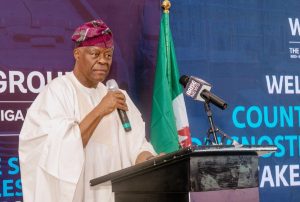
This was disclosed by Nigeria’s Minister of Finance and Coordinating Minister of the Economy, Mr. Wale Edun, at the 47th Ordinary Session of the AU Executive Council, held at the Sipopo Conference Centre, Malabo where he presented the Report of the Joint-Sitting of the Ministerial Committee on Scale of Assessment and the Committee of Fifteen Ministers of Finance, F15.
The report highlights that $146.22 million has been collected, representing 73% of the approved $200 million Regular Budget, by June 30, 2025. This marks a significant improvement, with 30 member states now fully up to date with payments, compared to 20 in 2024. Arrears collections have also reached $14.99 million, accounting for 19% of outstanding arrears. Additionally, $131.8 million has been disbursed by partners for 2025 programmes and peace-support operations.
However, the report notes a US $3.82 million discrepancy flagged in Libya’s arrears write-off, emphasizing the need for swift implementation of the auditors’ recommendations.
The Minister, who was represented by the Minister of State for Finance, Dr Doris Uzoka-Anite, emphasised the importance of timely payments, stating: “These figures show that political will is translating into timely payments. We urge remaining members to clear their balances so the Union can plan with certainty and reduce its dependency on partner funding.”
The Minister also reiterated Nigeria’s stance, stating that Africa must finance its own priorities first. He further highlighted the benefits of meeting obligations in full and on time, stating: “When we meet our obligations in full and on time, we unlock greater bargaining power, accelerate Agenda 2063 and show our citizens that the AU delivers tangible value.”
The presentation aligns with President Bola Ahmed Tinubu’s vision for a financially resilient African Union and complements Abuja’s domestic reforms on revenue mobilisation, fiscal transparency, and debt sustainability.
With this progress, the African Union is poised to achieve its goals and deliver tangible benefits to its citizens. Nigeria’s leadership role in championing sustainable financing demonstrates its commitment to a stronger and more self-sufficient continent.
The Executive Council is composed of Foreign Affairs Ministers and other ministerial representatives of AU member states and prepares decisions and policies for adoption by the Assembly of Heads of State and Government. The 47th session, convened recently in Malabo, precedes the 7th Mid-Year Coordination Meeting between the AU, Regional Economic Communities and Regional Mechanisms.