Mkpoikana Udoma
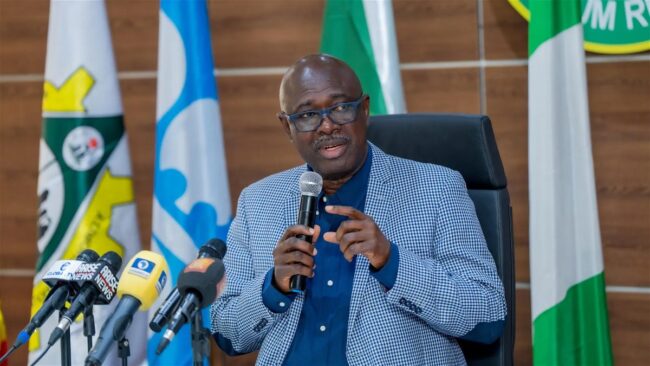
Port Harcourt — Nigeria has continued to maintain crude oil production within its OPEC quota while simultaneously expanding its production capacity, positioning the country to take advantage of future market opportunities, Minister of State for Petroleum Resources (Oil), Senator Heineken Lokpobiri, has said.
Lokpobiri disclosed this after participating as head of the Nigerian delegation at the 41st OPEC and non-OPEC Ministerial Meeting, the 66th Joint Ministerial Monitoring Committee, JMMC, meeting, and the 193rd OPEC Conference.
According to the minister, participating countries reaffirmed existing crude oil production levels under the Declaration of Cooperation, DoC, framework, which will remain in force until December 31, 2026, as agreed at the 38th OPEC and non-OPEC Ministerial Meeting.
Tweeting on his official X handle, he said the meetings focused on sustaining market stability, transparency and long-term growth in the global energy industry.
“During these engagements, we reaffirmed the overall crude oil production levels for OPEC and non-OPEC Participating Countries under the Declaration of Cooperation (DoC), as agreed at the 38th OPEC and non-OPEC Ministerial Meeting, with the framework remaining in place until 31 December 2026,” Lokpobiri stated.
The minister noted that member countries also reviewed progress on the Maximum Sustainable Capacity, MSC, assessment, which will serve as the benchmark for determining future production baselines from 2027.
“We also noted the importance of completing the Maximum Sustainable Capacity (MSC) assessment for all DoC countries, which will serve as the reference point for determining production baselines from 2027,” he said.
Lokpobiri explained that the discussions underscored the collective commitment of oil-producing nations to maintaining a balanced market while ensuring sustainable long-term investments in the energy sector.
“These deliberations reflect our shared commitment to ensuring market stability, transparency, and long-term sustainability within the global energy sector,” he added.
For Nigeria, however, the minister said the more significant development was the country’s ability to comply with its OPEC obligations while strengthening production capabilities through ongoing reforms and investment inflows.
“For Nigeria, it is particularly noteworthy that we have consistently maintained production within our OPEC quota while simultaneously strengthening our capacity to produce more,” he stated.
He said the strategy places Nigeria in a stronger position to respond to future increases in demand without compromising market stability or national economic objectives.
“This balanced approach positions us to respond effectively to future opportunities while safeguarding the best economic interests of our people and supporting national development objectives,” Lokpobiri said.
Nigeria has in recent months intensified efforts to raise crude oil production through regulatory reforms, enhanced security around oil assets and increased collaboration with industry operators, as the government seeks to maximise revenue from the petroleum sector while remaining compliant with OPEC production targets.