Precious Anga
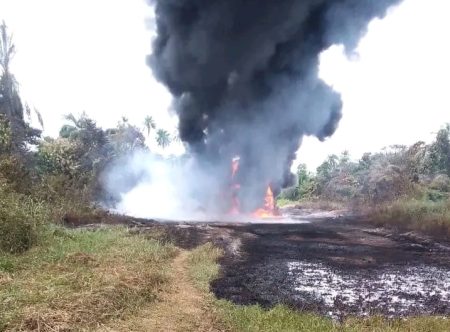
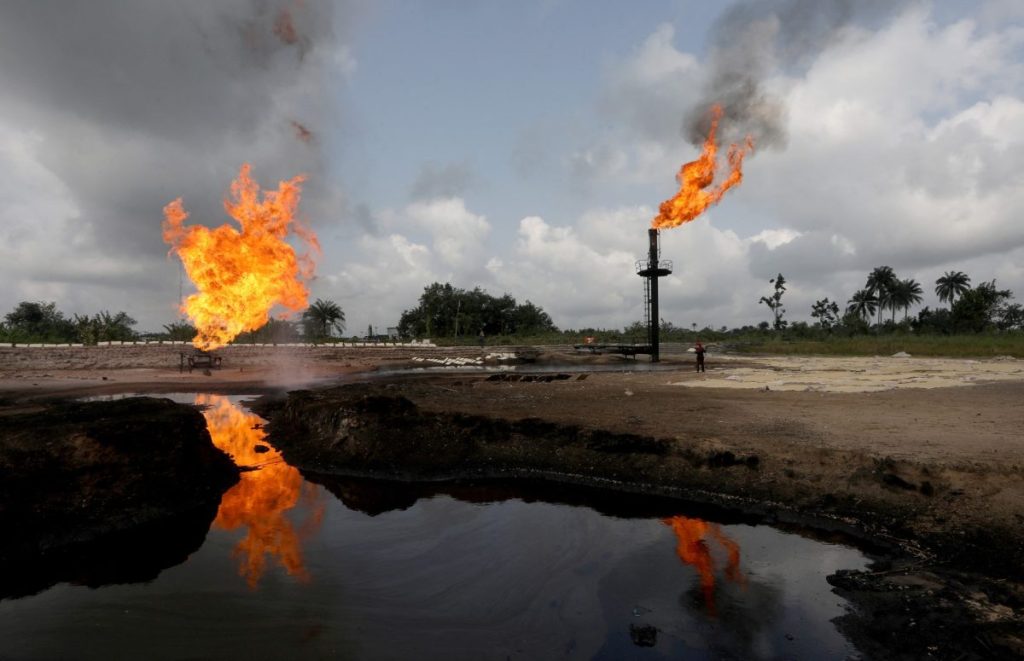
Lagos — Nigeria flared about 76.92 billion standard cubic feet (scf) of natural gas between January and May 2026, despite rising cooking gas prices and growing concerns over domestic energy shortages, according to data from the Nigerian Upstream Petroleum Regulatory Commission (NUPRC).
An analysis of the commission’s monthly gas production reports showed that oil and gas operators flared a combined 76,919.78 million standard cubic feet of gas during the five-month period. The wasted volumes could have been utilised for electricity generation, industrial operations, compressed natural gas (CNG) projects and domestic liquefied petroleum gas (LPG) supply.
Data from the NUPRC showed that 17.17 billion scf of gas was flared in January, representing 7.1 per cent of total production. The figure declined to 14.09 billion scf in February and 15.58 billion scf in March, accounting for 6.44 per cent and 6.4 per cent of output respectively. In April, 14.52 billion scf was flared, while May recorded about 15.58 billion scf, with the flare rate standing at 6.9 per cent.
The continued gas wastage comes as households and businesses battle rising energy costs. Industry sources noted that cooking gas prices, which averaged about ₦1,000 per kilogramme at the start of the year, have surged to as high as ₦2,400 per kilogramme in recent weeks.
Operators also attributed supply pressures to lower LPG volumes entering the domestic market. A source familiar with the development said the decline in LPG supply from the Dangote Petroleum Refinery was linked to internal utilisation rather than exports.
“The recent decline in LPG supply from the Dangote refinery, which has created a crisis in the domestic market, isn’t because of exports but is due to their internal utilisation for enhancing petroleum production capacity,” the source said.
Although Nigeria holds more than 200 trillion cubic feet of proven gas reserves, the largest in Africa, a significant volume of associated gas produced alongside crude oil continues to be flared. Energy analysts have argued that reducing flaring would improve gas availability and support the Federal Government’s Decade of Gas initiative.
Despite the flare volumes, the NUPRC reported that average daily gas production rose to 7.93 billion cubic feet per day in May, reflecting increased upstream activity. The regulator also maintained that the 6.9 per cent flare rate demonstrates progress towards Nigeria’s target of ending routine gas flaring by 2030.
The Federal Government has repeatedly pledged to eliminate routine gas flaring through initiatives such as the Nigerian Gas Flare Commercialisation Programme (NGFCP), which seeks to convert wasted gas into commercially viable products including LPG, CNG and feedstock for power generation and industrial use.
In December 2025, the NUPRC issued permits to successful bidders under the NGFCP, with projects expected to attract about $2 billion in investments and capture between 250 million and 300 million standard cubic feet of gas daily that would otherwise be flared.
Commenting on the development, Professor of Energy at the University of Lagos, Dayo Ayoade, expressed concern that gas flaring remains widespread despite years of policy reforms.
“It is always disappointing when the government sets up policies and laws to address a problem, but those laws do not seem to work effectively,” Ayoade said.
He noted that Nigeria has introduced several measures, including the Petroleum Industry Act (PIA), the Decade of Gas initiative, the National Gas Policy and the NGFCP, all aimed at reducing flaring and promoting gas utilisation.
“Although the law did not expressly ban gas flaring, it was structured to eliminate it gradually by encouraging gas utilisation and imposing penalties for flaring. When you combine those provisions with other government initiatives, you would have expected far greater progress than what we are currently seeing,” he stated.
Ayoade identified inadequate infrastructure as one of the major barriers to ending flaring, noting that many oilfields still lack the pipelines, processing facilities and transportation networks needed to commercialise associated gas.
“Building the infrastructure required to capture and commercialise gas from these various locations can be extremely challenging and capital-intensive,” he said.
The energy expert stressed that while Nigeria has largely put the right policies in place, stronger regulatory enforcement, increased investment and sustained political commitment are needed to unlock the country’s vast gas resources, improve energy security and reduce environmental damage in oil-producing communities.