Mkpoikana Udoma
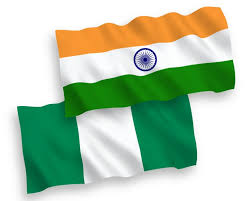
Port Harcourt — Former presidential candidate, Peter Obi, has drawn a sharp contrast between Nigeria and India, arguing that leadership quality, not population size or resources, explains the widening governance and technology gap between the two democracies.
In a statement titled “A Tale of Two Nations,” Obi referenced a message by Indian Prime Minister Narendra Modi celebrating citizens’ leadership in artificial intelligence, describing it as evidence of a nation focused on innovation and the future.
“Today, Indians woke up to a tweet from their Prime Minister, Narendra Modi, thanking citizens for standing at the forefront of artificial intelligence,” Obi said. “He expressed confidence that the outcomes of the AI Summit would help shape a future for their children that is progressive, innovative, and opportunity-driven.”
Obi contrasted this with what he described as Nigeria’s misplaced political priorities.
“Yet in Nigeria, we wake up thinking about how to rig local government elections, how to exploit and impoverish the poor, and how to use the very children we should be nurturing for the future as tools for manipulation and election malpractice,” he stated.
Elections: India vs Nigeria
Citing electoral statistics, Obi pointed to India’s scale and efficiency as a benchmark.
According to him, India, the world’s largest democracy, has over 960 million registered voters, more than one million polling stations, and conducts elections with technology that enables electronic transmission of results within days.
“India remains a model,” he said. “The country has over one million polling stations and thousands of political parties, conducting elections using technology that enables electronic transmission of results within days, and operating a voter-friendly ballot system that displays party symbols and candidate photographs.”
By comparison, Obi noted that Nigeria, with about 93 million registered voters and significantly fewer polling units and political parties, continues to struggle with credible elections and timely result transmission.
“With fewer than 20% of the polling stations and only about 1% of the political parties compared to India, it is deeply troubling that we still struggle to conduct elections,” he said.
“Sadly, Nigeria still remains unable to consistently deliver free, fair, and credible elections or transmit results promptly.”
Leadership Question
For Obi, the divergence boils down to leadership culture and institutional commitment.
“The difference is leadership,” he declared. “In India, political leaders, legislators and judiciary work tirelessly for the welfare of their people and the future of their children, to do the right thing for the betterment of society.”
He argued that Nigeria’s abundant talent and resources are undermined by governance failures.
“Nigeria is rich in talent, resources, and promise, yet we allow bad governance, greed, and selfishness to define our reality,” Obi said. “What we are today is far from what we ought to be.”
Calling for systemic change, he urged Nigerians to demand accountable governance.
“It is time for Nigerians to demand leadership imbued with compassion, commitment, and character, leadership that works not just for a few, but for all, and that transforms promise into progress,” he said.
Concluding on a hopeful note, Obi reiterated his long-standing message: “A New Nigeria is Possible.”