Goli Innocent
Lagos — Nigeria has secured $83 million in fresh financing to expand off-grid electricity supply, a move that signals a stronger shift towards decentralised power solutions as the country struggles with persistent grid limitations.
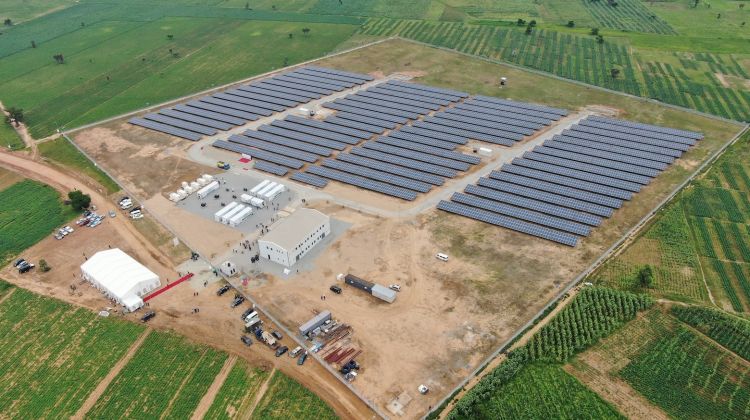
The funding, backed by the International Finance Corporation under the Distributed Access through Renewable Energy Scale-Up programme, is targeted at private developers deploying solar mini-grids and standalone systems in rural and underserved communities. The agreement was signed during the 2026 Spring Meetings of the World Bank Group and IMF in Washington, marking a transition from small pilot projects to large-scale execution.
This intervention comes at a critical time. According to the World Bank, about 85 million Nigerians roughly 40 per cent of the population still lack access to electricity. Even among those connected to the grid, supply remains unreliable. National output continues to hover between 4,000 and 5,000 megawatts, a level widely considered inadequate for an economy of Nigeria’s size.
The Head of the Nigeria Electrification Programme, Olufemi Akinyelure, made it clear that the market is evolving beyond experimentation. “This marks a shift from programme design to execution at scale. Distributed renewable energy in Nigeria is now a bankable market, not a pilot segment,” he said.
The structure of the financing reflects that ambition. The $83 million facility is designed as a revolving debt model, combining concessional and commercial funding to provide long-term capital to developers. This approach reduces risk, improves access to finance, and allows projects to scale across multiple locations without repeated funding bottlenecks.
In practical terms, the first phase will support companies such as Darway Coast, PriVida Power, Prado Power, GVE Projects and StarTimes Smart Energy, while another group of developers is already lined up for the next round. The goal is simple: deploy power faster to communities that have waited decades for reliable electricity.
The broader programme carries even bigger targets. Backed by a $750 million World Bank facility, the initiative aims to reach over 17.5 million Nigerians by 2028 and deliver about 465 megawatts of distributed renewable energy capacity. Current data from the Nigeria Electrification Programme shows that more than 4.1 million people have already benefited, alongside the installation of over 175 mini-grids and 1.1 million solar home systems.
For many rural communities, this is not just about lighting homes. It directly affects small businesses, healthcare delivery, and education. Traders can extend operating hours, clinics can preserve vaccines, and students can study beyond daylight. In areas where petrol and diesel generators dominate, the shift to solar also cuts fuel costs and reduces exposure to volatile energy prices.
The International Finance Corporation sees the model as a template for other developing markets. Its Managing Director, Makhtar Diop, pointed to the role of blended finance in unlocking scale, noting that the structure helps address long-standing barriers within the energy ecosystem.
Government officials are also tying the investment to wider economic goals. Representing the Minister of Finance, Sanyade Okolie said the focus remains on attracting capital that delivers measurable improvements in living standards. “For Mr President, the priority is to transform the Nigerian economy in a way that lifts people out of poverty. People must feel the difference,” she said.
Minister of Communications, Innovation and Digital Economy, Bosun Tijani, linked the programme to Nigeria’s ambition of building a one trillion-dollar economy, stressing that infrastructure particularly power and digital systems will determine how fast that target can be reached.
Despite the optimism, the scale of the challenge remains significant. Nigeria’s electricity deficit continues to weigh on productivity, with businesses spending heavily on self-generation. The International Energy Agency estimates that unreliable power supply costs the country billions of dollars annually in lost economic output.
This is why off-grid solutions are gaining urgency. They bypass the constraints of the national grid and deliver power directly where it is needed. While they cannot replace the grid entirely, they are proving to be the fastest route to closing the access gap.
What the $83 million financing represents, beyond the headline figure, is growing investor confidence in Nigeria’s renewable energy space. More importantly, it shows that the country is beginning to shift from policy promises to measurable delivery one community at a time.