Mkpoikana Udoma
Port Harcourt — The Federal Government has intensified efforts to attract private capital into Nigeria’s troubled electricity sector, declaring that it has settled N333.12 billion in verified legacy debts owed to power generation companies as part of sweeping financial reforms aimed at restoring investor confidence.
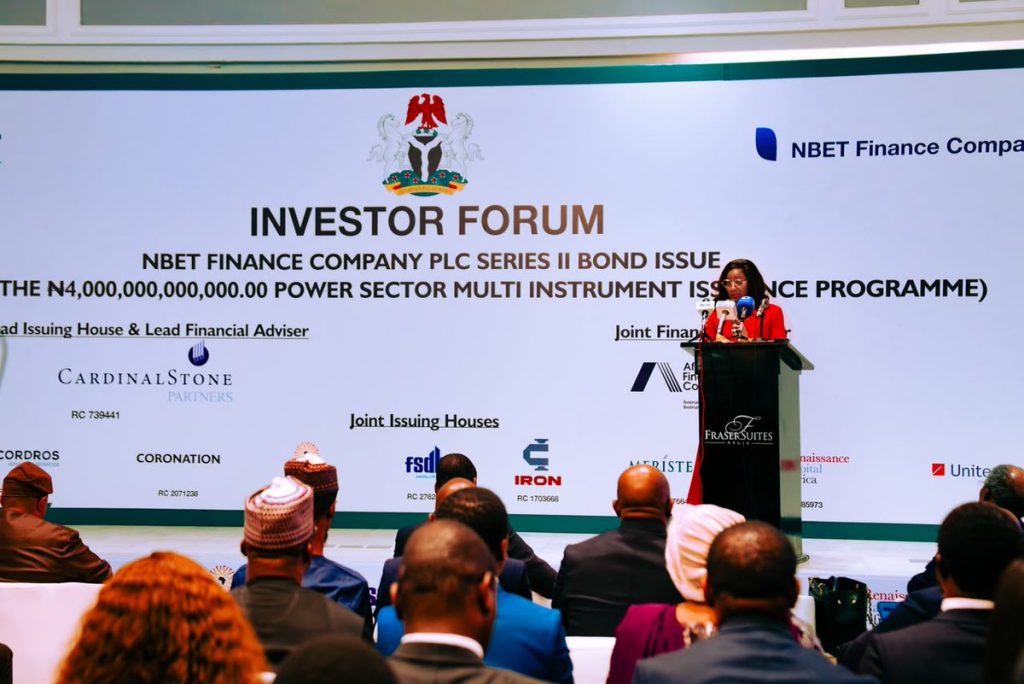
Speaking at the Investor Forum for the Presidential Power Sector Financial Reforms Programme, PPSFRP, Series II Bond Issuance, the Special Adviser to the President on Energy, Olu Verheijen, said the Tinubu administration was rebuilding confidence in the power sector by honouring financial obligations before seeking fresh investments.
“Every successful capital market tells the same story: investors return where governments keep their promises. Today’s forum is about exactly that,” Verheijen said.
She noted that the government was transforming the power sector from a financially distressed industry into a bankable investment destination.
“We are converting yesterday’s liabilities into today’s liquidity and tomorrow’s investment capacity,” she stated.
According to her, the first phase of the programme delivered approximately N501 billion, comprising N300 billion in cash and about N201 billion in non-cash bond instruments, settling roughly 22 per cent of obligations under executed settlement agreements.
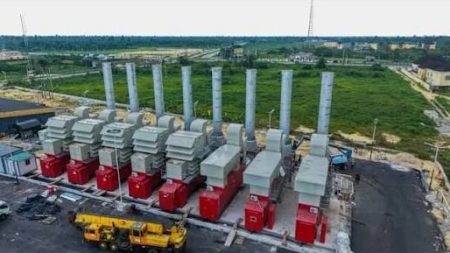
She disclosed that N333.12 billion had already been paid to eight generation companies operating 17 power plants, while the balance of the legacy debts would be addressed through the Series II bond issuance and subsequent tranches.
“We met our obligation on schedule. The first Series I coupon of about N63.5 billion was paid in full on 14 July 2026,” she said.
Verheijen stressed that government credibility was now driving renewed investor confidence in Nigeria’s electricity market.
“Governments that expect private capital to invest must first demonstrate that their own commitments will be honoured. Bankability does not begin in financial markets. It begins with governments that honour contracts, meet obligations and create predictable rules. Capital follows credibility.”
She explained that improved liquidity had enabled participating generation companies to meet obligations to gas suppliers, lenders and operations and maintenance contractors, strengthening the entire electricity value chain.
Describing the next bond issuance as a critical phase of the reform programme, Verheijen said Series II would deepen sector liquidity, improve payment discipline and provide the financial foundation needed to unlock long-term private investment.
“Series I proved the model. Series II scales it,” she said.
“By participating, you are not simply purchasing a financial instrument. You are investing in a reform programme designed to restore payment discipline, strengthen sector cash flows, crowd in private capital and accelerate Nigeria’s economic transformation.”
She further said the Presidential Power Sector Financial Reforms Programme remained a key pillar of the Federal Government’s strategy to resolve the long-standing liquidity crisis in Nigeria’s electricity industry, improve power supply and attract sustained private sector investment into generation, transmission and distribution.