Goli Innocent
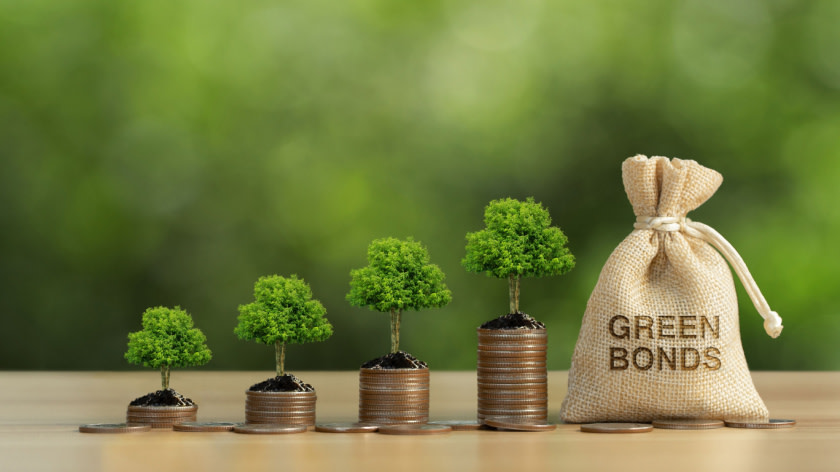
Lagos — Nigeria is preparing to raise ₦516 billion through its fourth sovereign green bond, signalling a stronger shift towards financing climate action with domestic resources rather than waiting on uncertain international funding. The planned issuance, disclosed by the Minister of Environment, Balarabe Abbas Lawal, reflects a more aggressive approach to funding renewable energy, sustainable infrastructure, and climate-resilient development.
Speaking in Abuja at the Nigeria Green Investment Dialogue and Capacity Building Workshop, Lawal made it clear that the government is no longer content with slow-moving external climate finance commitments. Instead, the focus is now on mobilising local capital at scale to meet Nigeria’s growing environmental and economic needs.
Nigeria’s green bond journey has been gradual but deliberate. Since the country issued Africa’s first sovereign green bond in 2017, it has returned to the market multiple times, including a ₦50 billion issuance in 2025. The proposed ₦516 billion raise represents a sharp increase in ambition, both in size and expected impact, especially at a time when energy costs and climate risks are rising simultaneously.
Lawal framed climate action not just as an environmental obligation but as a clear economic opportunity. According to him, sectors such as renewable energy, waste management, and the circular economy are capable of generating billions of naira while addressing pressing environmental concerns. This dual focus economic return and environmental protection is what makes green bonds increasingly attractive to both government and investors.
At the policy level, Nigeria already has a framework in place. Vice President Kashim Shettima, represented by Mustapha Adamu, pointed to instruments such as the Climate Change Act and the Energy Transition Plan as evidence that the country has laid the groundwork for a low-carbon economy. However, he admitted that policy alone does not solve the problem.
The real challenge, he noted, lies in converting these policies into bankable and scalable projects that can attract investment and deliver measurable results. This has been a long-standing gap in Nigeria’s climate strategy strong policy direction, but limited execution at scale.
To close that gap, the government is pushing initiatives like Industrial Green Energy Zones and the Parliamentarians for Climate Finance Programme. These are designed to build a pipeline of investment-ready projects that meet international standards, making it easier to attract both local and foreign capital.
From an industry perspective, the urgency is obvious. According to the United Nations Industrial Development Organization (UNIDO), many Nigerian industries still rely heavily on diesel for power generation, significantly increasing operating costs. With diesel prices remaining volatile, manufacturers are under pressure to find cheaper and more stable energy alternatives.
Cleaner options such as solar power, hydropower, and emerging solutions like green hydrogen are increasingly seen as viable substitutes. Beyond cost savings, these alternatives also reduce emissions and improve the competitiveness of Nigerian industries, particularly as global markets tighten environmental standards.
UNIDO’s Nigeria representative, Philbert Abaka-Johnson, highlighted that developing structured, investment-ready climate projects will not only benefit Nigeria but could position the country as a model for sustainable industrial growth across Africa.
Still, the success of the proposed ₦516 billion bond will depend on more than investor appetite. Transparency in fund utilisation, clear project selection, and measurable outcomes will be critical. Previous issuances were relatively small, making monitoring easier. At this scale, scrutiny will be higher, and expectations even higher.
What is clear, however, is that Nigeria is gradually moving from climate ambition to financial commitment. If properly executed, this green bond could bridge the gap between policy and action, fund critical infrastructure, and reduce the country’s dependence on fossil fuel-driven growth.