Mkpoikana Udoma
Port Harcourt — Minister of State for Petroleum Resources (Gas), Dr. Ekperikpe Ekpo, says Nigeria’s ambitious 4,000-kilometre high-speed rail project will be powered by the country’s vast gas reserves, positioning gas as the backbone of industrial and infrastructural transformation.
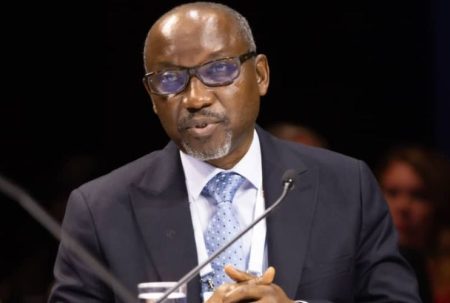
Speaking at the International Railway Conference 2025 in Abuja, organised by the Federal Ministry of Transportation in collaboration with De-Sadel Nigeria Limited, Ekpo said the integration of gas into rail infrastructure would not only revolutionize transportation but also drive industrial growth across Africa.
“Nigeria is poised to leverage gas as a clean, affordable, and reliable energy source to power rail infrastructure,” Ekpo declared.
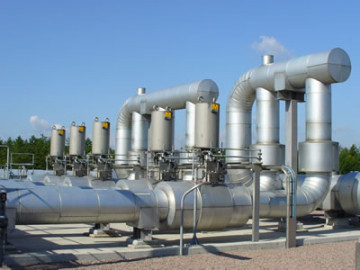
“Beyond powering trains, gas-to-power projects will sustain electricity for stations, industrial hubs, and urban centres, while cleaner fuels like GTL and LNG will reduce carbon emissions and enhance cost efficiency.”
The Minister explained that, for decades, Nigeria relied almost exclusively on crude oil while gas resources remained underutilized. However, under the Decade of Gas Initiative championed by President Bola Ahmed Tinubu, gas has been repositioned as the centrepiece of the nation’s energy strategy.
“With 210 trillion cubic feet of proven reserves and an upside of 600 trillion cubic feet, Nigeria is turning gas from a mere by-product of oil into the foundation of our economic and industrial future,” Ekpo stated.
He highlighted that the 4,000 km, 350 km/h rail network will create new industrial corridors, unlocking opportunities for fertilizer plants, petrochemical complexes, methanol projects, and compressed natural gas, CNG, hubs.
“The high-speed rail will open new corridors for fertilizer plants, petrochemicals, methanol projects, and CNG hubs, transforming rail-linked cities into industrial centres of growth,” the Minister said.
According to Ekpo, the initiative will also tie into opportunities under the African Continental Free Trade Area, AfCFTA, helping Nigeria strengthen its role as the industrial and energy hub of West and Central Africa.
He added that the synergy between energy and infrastructure development was a core pillar of the Renewed Hope Agenda of President Tinubu.
“This vision aligns squarely with Mr. President’s Renewed Hope Agenda: to industrialize Nigeria, create jobs, and lift millions out of poverty through sustainable energy and infrastructure development,” Ekpo affirmed.
The conference brought together global stakeholders in railway and energy development, underscoring the nexus between clean energy and large-scale infrastructure projects in Africa.