 Mkpoikana Udoma
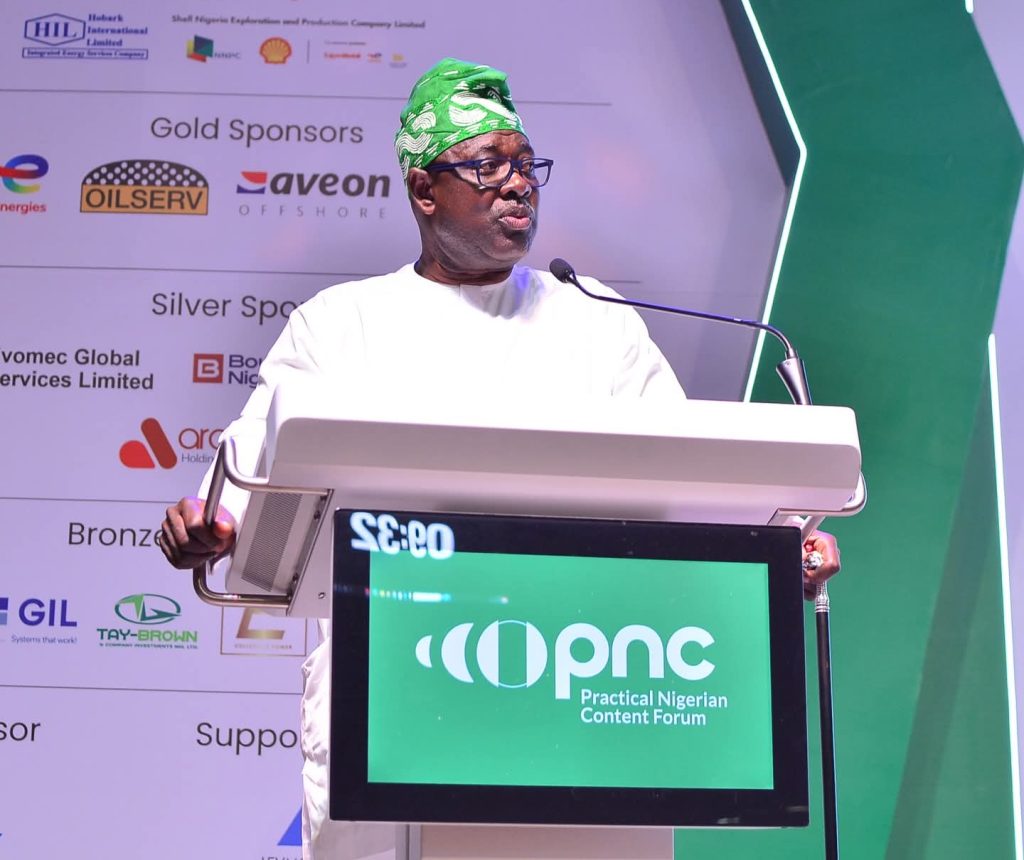
Yenagoa — Nigeria is aggressively repositioning its oil sector to attract global investors, boost local capacity, and ensure sustainable energy growth, according to Senator Heineken Lokpobiri, Minister of State for Petroleum Resources (Oil), at the ongoing PNC 2025 Forum.
Addressing industry leaders, Lokpobiri said the nation’s regulatory clarity and legal reforms are restoring investor confidence and repositioning Nigeria as a competitive oil and gas hub.
“Ten years ago, investment in Nigeria’s oil sector was nearly non-existent,” he said. “Misapplication of local content laws and regulatory inconsistencies deterred serious investors. Today, the passage of the Petroleum Industry Act (PIA) 2021 is a turning point that signals policy stability and business readiness.”
The Minister highlighted that Nigeria must now prove itself as a globally attractive investment destination, comparing the environment to established energy hubs like Houston, Paris, and London.
“Our investors demand certainty,” Lokpobiri stressed. “We are benchmarking taxation, fees, and regulatory standards to ensure Nigeria is competitive with Ghana, Angola, and other African peers. Consistency, predictability, and transparency are the currencies of global capital.”
He also addressed challenges in deepwater projects and local contractor participation, noting that misunderstandings around local content laws had inflated project costs.
“Middlemen have added inefficiencies that burden both investors and government. We are committed to direct engagement with local contractors, ensuring competition and accountability,” he said.
Lokpobiri further called for improved collaboration with the National Assembly, stressing that a coherent regulatory approach is crucial for attracting long-term investment.
“Multiple committees and overlapping processes create bottlenecks. We must streamline communication and policy enforcement to retain global players and foster indigenous growth,” he said.
On local content, the Minister reaffirmed its role in enhancing indigenous capacity, technology transfer, and Africa-wide leadership.
“Local content laws are more than statutory requirements—they set standards for the continent,” he said. “Nigeria must lead by example, ensuring our companies grow to compete globally, and export services across Africa.”
He concluded with a warning that misapplied local content laws could inflate costs, erode investor confidence, and slow sectoral growth, urging all stakeholders to embrace efficiency, accountability, and cooperation.
“We have the resources, the expertise, and the mandate. Now, we must ensure Nigeria is a destination for smart, sustainable investment,” Lokpobiri stated.