Precious Anga
Lagos — Nigeria’s electricity sector continues to grapple with a widening metering challenge, with more than five million electricity consumers still without prepaid meters despite ongoing efforts by regulators and distribution companies, DisCos, to close the gap.
Latest industry data from the Nigerian Electricity Regulatory Commission, NERC, shows that 5.13 million of the country’s 12.46 million active electricity customers remain unmetered, leaving about 41 per cent of consumers exposed to estimated billing and persistent disputes over electricity charges. The figures indicate that 7.32 million customers have been metered, translating to a national metering rate of 59.69 per cent.
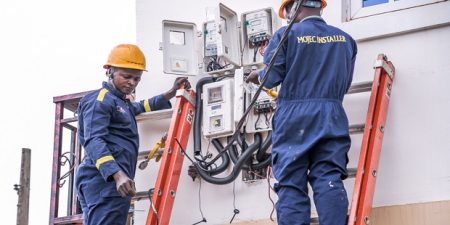
Although the sector recorded fresh progress in March and April 2026, with DisCos installing more than 227,000 new meters within the two-month period, the pace of deployment remains inadequate to eliminate the country’s long-standing metering deficit.
Industry analysts warn that unless meter deployment accelerates significantly, Nigeria may struggle to achieve the Federal Government’s target of universal metering, a critical component of ongoing electricity market reforms aimed at improving transparency, reducing commercial losses and restoring consumer confidence.
The latest NERC figures show considerable differences in metering performance among electricity distribution companies. Eko Electricity Distribution Company recorded the highest metering rate at 88.78 per cent, closely followed by Ikeja Electric with 87.93 per cent, while Abuja Electricity Distribution Company achieved 80.08 per cent. However, several other DisCos continue to operate with substantial numbers of unmetered customers, fuelling complaints over estimated billing.
For many consumers, the absence of prepaid meters remains one of the biggest frustrations in Nigeria’s electricity market. Without meters, customers are billed based on estimated consumption rather than actual energy used, a practice that has generated years of public criticism and regulatory interventions.
The Federal Government has repeatedly identified universal metering as a prerequisite for creating a fair electricity market where consumers pay only for the energy they consume. Successive initiatives, including the National Mass Metering Programme, NMMP, and the Meter Asset Provider, MAP, scheme, were introduced to accelerate meter deployment and eliminate estimated billing. While both programmes have delivered millions of meters since inception, demand continues to outstrip supply due to funding constraints, foreign exchange challenges and rising customer numbers.
The metering debate has gained renewed prominence following discussions on electricity tariff reforms. Although the Federal Government has dismissed reports of an immediate nationwide tariff increase, officials have maintained that any future pricing adjustments must be supported by improved service delivery and wider metering coverage.
Minister of Power Joseph Tegbe recently reaffirmed the administration’s commitment to achieving universal metering, stressing that consumers should only pay for electricity actually consumed. He also emphasised that improving electricity supply remains central to the government’s power sector reform agenda.
However, prominent human rights lawyer Femi Falana, SAN, has criticised any proposal to increase electricity tariffs before resolving the country’s chronic power supply challenges. According to him, Nigerians should not be compelled to pay higher tariffs while enduring unreliable electricity and prolonged outages.
Falana argued that the government must first fulfil its commitment to providing stable electricity before asking consumers to bear additional financial obligations. He also questioned the effectiveness of the current privatisation framework, suggesting that government should consider stronger intervention if distribution companies fail to deliver improved service.
Former Managing Director of the Transmission Company of Nigeria, TCN, Usman Mohammed, attributed the country’s persistent electricity challenges to weak policy implementation, poor planning and institutional inefficiency. According to him, successive governments have repeatedly pursued reforms without adequately addressing structural weaknesses across generation, transmission and distribution.
Nigeria currently generates between 3,000 megawatts and 6,000 megawatts of electricity for a population estimated at more than 230 million people, significantly below the country’s actual demand. Frequent grid disturbances, inadequate transmission infrastructure, ageing distribution networks and widespread energy theft continue to constrain the sector’s performance despite ongoing investments.
Energy experts believe closing the metering gap could significantly improve revenue collection, reduce commercial losses and encourage greater investment across the electricity value chain. Accurate billing would also strengthen consumer confidence while reducing the growing number of disputes between customers and electricity distribution companies.
As Nigeria pursues broader electricity market reforms under the Electricity Act and seeks increased private sector investment, stakeholders insist that accelerating meter deployment must remain a national priority. Without universal metering, they warn, efforts to improve cost recovery, attract investment and deliver reliable electricity may continue to face significant public resistance.
For millions of Nigerian households and businesses, access to a prepaid meter remains more than a billing issue; it represents fairness, transparency and the assurance that they will only pay for electricity actually consumed.