 Goli Innocent
Lagos — As crude prices surge amid the Iran conflict, Nigeria’s energy resilience has come under renewed scrutiny. Despite the Dangote Refinery operating at near-full capacity, the nation remains exposed to international oil market shocks, with fuel prices fluctuating in tandem with global benchmarks. This paradox underscores a critical point: domestic refining alone cannot guarantee energy security. Solar power, however, offers a locally generated, price-stable alternative.
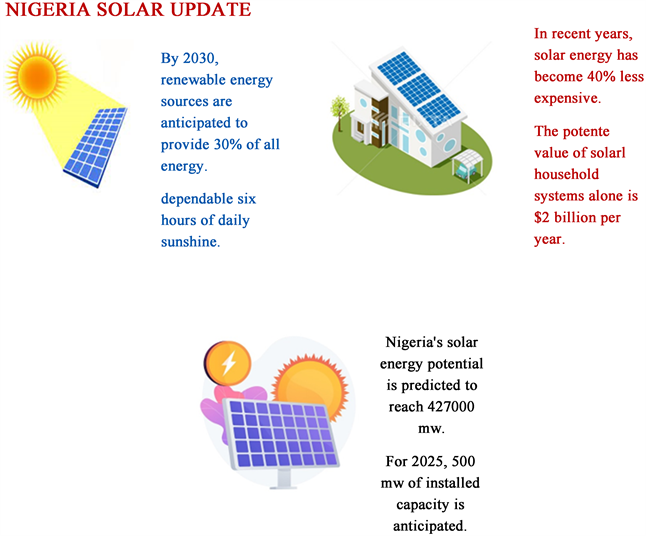
Geographically, Nigeria sits entirely within the tropics, between 4° N and 14° N latitude, granting it year-round high solar exposure. Satellite data and meteorological studies indicate daily solar irradiation of 4.2–7.0 kWh/m²/day, with peak sun hours averaging 5–7 per day, translating to approximately 2,600–3,000 bright sunshine hours annually. Northern states such as Sokoto, Kano, and Kaduna boast the highest irradiation, while central and southern regions maintain sufficient solar intensity to support utility-scale and off-grid solar deployment.
The ongoing Iran war highlights the fragility of fossil fuel dependence. The Strait of Hormuz, a global energy chokepoint, has faced repeated disruptions, pushing crude above US $100 per barrel. Rising insurance, shipping, and logistics costs compound the strain on Nigerian fuel supply. “Even Africa’s largest refinery cannot shield the country from global price swings,” notes an energy sector analyst. “This elevates solar from an environmental choice to a strategic imperative.”
Nigeria’s solar endowment also promises economic and industrial dividends. Widespread deployment reduces reliance on diesel generators, curbs foreign exchange outflows, and stimulates local value chains encompassing manufacturing, installation, operation, and maintenance. Transitioning to solar provides predictable long-term energy costs and shields businesses and households from volatile global fuel markets.
Regionally, solar potential is compelling. Northern Nigeria enjoys 6–7 peak sun hours daily, the central belt 5.5–6.5, and southern/coastal regions 4.5–6. Even in the south, solar irradiation is robust enough for hybrid and grid-connected solar solutions, reinforcing Nigeria’s comparative advantage for renewable energy investment.
Climate and development considerations further strengthen the case. Solar reduces carbon emissions, aligns with global climate targets, and supports the Federal Government’s broader energy diversification agenda. “Renewable energy, particularly solar, creates resilience, enhances supply security, and stimulates industrial growth,” affirms a senior renewable energy strategist.
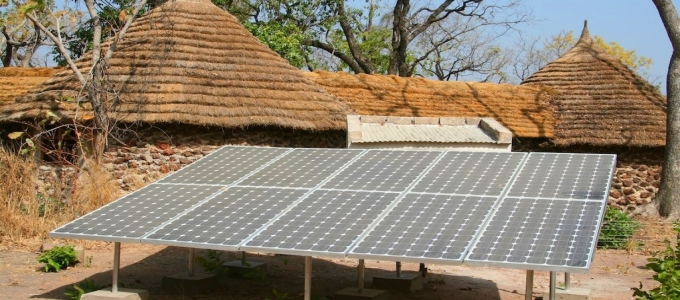
In practical terms, Nigeria’s solar infrastructure potential is unmatched in West Africa. With appropriate policy support, financing mechanisms, and public-private partnerships, the country can scale deployment across off-grid and underserved communities while laying the foundation for a domestically controlled, sustainable energy ecosystem.
Ultimately, Nigeria’s solar advantage is more than geographic it is strategic, economic, and transformative. By capitalising on abundant sunlight, Nigeria can mitigate fuel price shocks, accelerate industrialisation, and secure a reliable energy future for businesses and households alike.