Oritsegbubemi Omatseyin
Lagos — The Nigerian Midstream and Downstream Petroleum Regulatory Authority, NMDPRA, has outlined a bold roadmap to accelerate Nigeria’s transition toward a cleaner and more sustainable energy future.
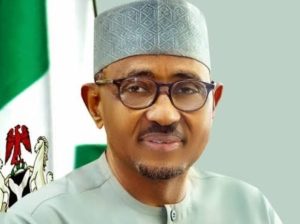
Speaking at the Association of Energy Correspondents of Nigeria, NAEC, Conference 2025 in Lagos, the Authority Chief Executive, Engr. Farouk A. Ahmed, represented by the Director, Public Affairs Department, Dr. George Ene-Ita, highlighted major milestones including significant reductions in gas flaring and the transformative role of the Dangote Refinery in strengthening local petroleum supply and boosting national self sufficiency.
The NMDPRA revealed that the Dangote refinery contributes an average of up to 20 million litres of petrol to the national supply daily.
“Without a shadow of doubt, the operation of the 650,000 barrels per day Dangote refinery has changed the supply dynamics with an average daily contribution of up to 20 million litres, undoubtedly with potential for future ramp up, which we all hope we will see as we go along,” Ahmed said.
He noted that Nigeria’s national daily consumption stands at around 50 million litres of PMS daily. “We need to encourage the biggest refinery to do all it can to begin to shape up in order for us to have local consumption and supply ramped up,” he added.
Ahmed further stressed the need to strengthen energy security, saying: “To further strengthen our energy security, we must operationalize petroleum product stock in line with the provisions of the PIA 2021 to provide a buffer against major supply disruptions.”
He however raised concern over the country’s slow pace in developing compressed natural gas infrastructure, saying there are fewer than 50 compression stations across Nigeria.
“It is important to note that the number of LPG filling plants in the country is less than 3,000, while the CNG compression station is less than 50 for a country of over 200 million citizens,” he stated.
He lamented that despite the government’s push for gas as a transition fuel, infrastructure gaps remain wide.
According to him, closing these gaps is critical to achieving sustainable economic growth, job creation and energy security.
“A constructive approach to developing our other energy sources would have the potential to enable sustained growth in our economy, create jobs and expand the country’s revenue base,” he added.
He said Nigeria must urgently increase investment in gas infrastructure and broaden its energy mix beyond the traditional dependence on fossil fuels.
Engr. Ahmed said the Authority’s vision is anchored on four strategic pillars – leveraging gas as a bridge fuel, strengthening energy security through refining and storage, promoting decentralized clean power, and ensuring people centered regulation. These pillars together aim to deliver affordable, reliable, and sustainable energy for Nigeria while attracting investment and fostering economic growth.
He reaffirmed that transparency, collaboration, and private sector participation remain central to unlocking Nigeria’s vast energy potential and sustaining investor confidence.
Reiterating NMDPRA’s drive to make Nigeria an energy hub for Africa, the NMDPRA Chief Executive noted that ongoing reforms and strategic partnerships are already reshaping the sector.
“From cleaner fuels and improved infrastructure to job creation and industrial growth, the Authority’s focus is to deliver reliable, affordable, and sustainable energy for all Nigerians,” he stated.