Mkpoikana Udoma
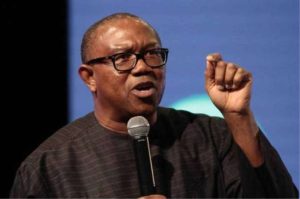
Port Harcourt — Nigeria’s former presidential candidate, Mr. Peter Obi, has urged the European Union, EU, to strengthen economic cooperation with Africa, warning that Europe’s own long-term stability and markets depend on a secure and economically viable Nigeria.
Speaking after a series of high-level engagements at the European Parliament in Strasbourg, Obi said Europe must view Nigeria not only as a political partner but as a critical economic frontier whose population, resources, and youth capacity can drive global productivity if properly supported.
“Africa is a continent of immense potential, richly endowed with natural resources and powered by a vast youthful demographic,” Obi told EU lawmakers. “Yet it remains the face of global poverty largely because of bad leadership and entrenched corruption, a reality clearly reflected in Nigeria.”
Obi held meetings with members of key committees, including Foreign Affairs, Civil Liberties, Transport and Tourism, Development, and the Africa-EU Delegation, pushing for deeper EU support for Nigeria’s governance and economic sectors.
At the core of his message was the link between good governance, economic reforms, and foreign investment confidence.
Tweeting on X, Obi said, “I urged them to support the development of Africa, particularly Nigeria, by advancing good governance. This includes supporting our democratic processes in ways that promote the emergence of competent leaders with the capacity and integrity to transform our nations.”
Obi stressed that resolving Nigeria’s economic bottlenecks, insecurity, unreliable power supply, weak education and healthcare systems, would not only enhance domestic productivity but also secure Europe’s long-term energy, trade, and migration interests.
“Our success as a nation and the success of Africa have a direct benefit to Europe,” he noted, emphasizing the strategic economic interdependence.
He made a strong pitch for targeted investments in Nigeria’s youth population, describing them as the country’s biggest productive asset.
“Nigerian youths have an immense desire and drive for entrepreneurship and productivity, if well supported,” he said. “But they are now facing despair due to limited opportunities.”
Obi told European policymakers that fostering innovation hubs, funding vocational training, and expanding capital access for young entrepreneurs could unlock new value chains across agriculture, tech, manufacturing, and creative sectors.
“A New Nigeria is possible,” he concluded, insisting that Africa’s economic revival would strengthen global markets, enhance European supply chains, and reduce irregular migration pressures.