Goli Innocent
Lagos — In a clear signal that Nigeria’s off-grid energy market is gaining financial depth, the Rural Electrification Agency (REA) has stepped up capital deployment, releasing fresh funding to accelerate mini-grid projects across underserved communities. The move reinforces a growing shift towards structured, performance-backed financing in the renewable energy space.
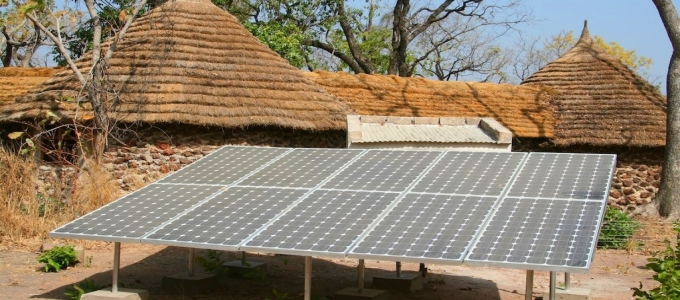
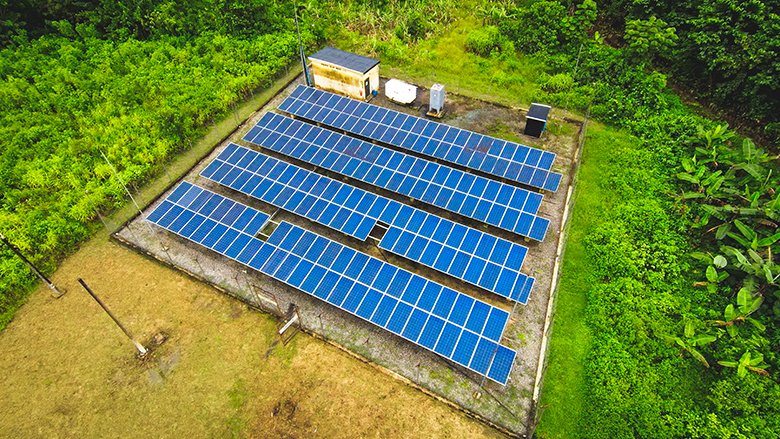
In its latest disbursement cycle, the agency approved ₦7.95 billion for Havenhill Synergy Limited to support four mini-grid projects spanning Taraba, Kwara, and Kogi States. In parallel, ₦1.056 billion was allocated to Faraday & Otstred Limited for deployments across three sites in Niger State, targeting communities with limited or no grid access.
This round of funding builds on earlier allocations, including ₦7.4 billion to Ventura Logistics Services and ₦3.2 billion to Zanoplus, signalling what industry players now describe as a consistent capital flow into Nigeria’s decentralised energy market rather than isolated interventions.
The financing structure is anchored on the Distributed Access through Renewable Energy Scale-up (DARES) programme, specifically its Performance-Based Grant (PBG) framework. Under this model, developers are incentivised based on verified delivery, ensuring accountability while de-risking investments for both financiers and project operators.
Crucially, the funding is tied to a recently signed ₦100 billion Memorandum of Understanding with Lotus Bank, marking a significant shift towards local currency financing in Nigeria’s renewable sector. This is a major development in a market often constrained by foreign exchange risks and limited access to long-term capital.
REA’s Managing Director, Dr Abba Aliyu, emphasised the importance of continuity in funding flows. “What is particularly encouraging here is the consistency; this is not one-off. It is a pattern of capital being deployed, projects moving forward, and confidence in the system continuing to grow.”
He further noted the broader market implications. “For developers, this means access to the equipment and financing needed to deliver. For communities, it means faster timelines for reliable power. And for the market, it reinforces the point that local financing is stepping up in a significant way.”
Aliyu also underscored the strategic intent behind the initiative, adding that “this is exactly the kind of energy we hoped to unlock where Nigerian financial institutions take the lead in powering Nigeria’s renewable infrastructure, backed by strong, performance-based framework.”
From an industry standpoint, the implications are significant. Increased funding for mini-grids not only expands electricity access but also strengthens distributed generation capacity, reduces reliance on diesel, and supports productive-use energy demand in rural economies.
For communities in Taraba, Kwara, Kogi, and Niger States, the impact will be immediate more reliable electricity, improved business activity, and reduced energy costs over time. For the sector, however, the bigger story is unfolding: Nigeria’s clean energy transition is gradually being anchored on bankable structures, local capital, and scalable off-grid solutions.