Precious Anga
Lagos — Nigeria’s off-grid electricity market is undergoing a major transformation from small community-based projects to utility-scale renewable energy systems following regulatory reforms introduced by the Nigerian Electricity Regulatory Commission, NERC, the Managing Director of the Rural Electrification Agency, REA, Abba Aliyu, has said.
Aliyu disclosed this in Abuja while receiving a delegation from the Zanzibar Utilities Regulatory Authority, ZURA, on a knowledge-exchange visit, noting that the new regulatory framework has significantly improved the commercial viability of mini-grid investments across the country.
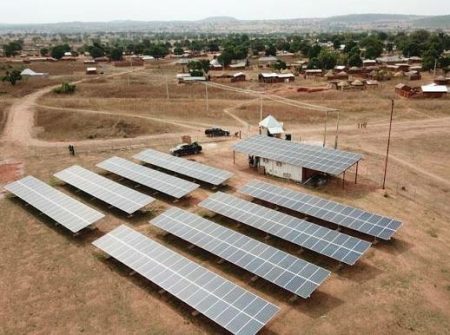
He said the reforms have enabled the development of 48 interconnected mini-grid projects across 19 states, covering the operational areas of 10 electricity distribution companies, DisCos, under the Interconnected Mini-Grid, IMG, framework established by NERC.
According to him, the projects are expected to provide 252,505 new and improved electricity connections, supported by 213.3 megawatts-peak, MWp, of solar photovoltaic generation capacity, 166.1 megawatt-hours, MWh, of battery storage and 82.5 megawatts of peak electricity demand.
Aliyu explained that the transformation followed NERC’s decision to review its mini-grid regulations after the REA demonstrated that larger renewable energy systems would improve project economics and attract more investment.
“The previous mini-grid regulations limited projects to one megawatt. After presenting the economic and technical evidence to the regulator, the rules were amended. Today, developers can build interconnected mini-grids of up to 10 megawatts and isolated mini-grids of up to five megawatts,” he said.
He noted that the revised regulations have fundamentally changed Nigeria’s off-grid electricity market, allowing developers to execute larger projects capable of operating as sustainable utility businesses rather than isolated rural electrification schemes.
“Initially, most operators functioned as contractors. They built projects and moved on. Once we created the right regulatory environment, they evolved into developers. Today, with over 1,350 mini-grids deployed nationwide, we are encouraging them to become utility-scale companies capable of managing large electricity portfolios,” Aliyu stated.
The REA boss disclosed that the agency currently works with more than 150 Renewable Energy Service Companies, RESCOs, some of which already manage electricity portfolios of around 30 megawatts and are expanding beyond Nigeria’s borders.
Beyond regulatory reforms, Aliyu said the agency has adopted a data-driven planning strategy to improve the efficiency of rural electrification programmes across the country.
According to him, REA has digitally mapped more than 700,000 communities, 51,022 healthcare facilities, 11,129 markets, 170 schools, 7,979 factories, 407 operational mini-grids, 57 dams and 2,194 electricity feeders operated by distribution companies.
He explained that the extensive database enables the agency to determine the most cost-effective electrification solution for every location, whether through solar home systems, isolated mini-grids, interconnected mini-grids or conventional grid extension.
“What you see is more than a map of Nigeria. Behind it are multiple layers of data that guide where, when and how we intervene. We no longer adopt a one-size-fits-all approach to rural electrification,” he said.
Aliyu observed that Nigeria’s electricity access rate currently stands at 61.2 per cent, leaving about 80 million Nigerians without access to electricity, while millions of others remain underserved with fewer than six hours of electricity daily.
He stressed that the agency’s mandate now extends beyond expanding electricity access to improving supply reliability for communities already connected to the national grid.
The REA chief linked inadequate electricity supply to the decline of industrial activities across several parts of the country, particularly in the South-West and North-West, where he said manufacturing capacity had reduced significantly over the past four decades.
According to him, regions that once hosted between 250 and 300 factories in the 1980s now have only 40 to 70 operational factories, with unreliable electricity contributing to declining industrial productivity and employment.
Aliyu also warned that electricity demand would continue to rise as population growth, industrial expansion, digitalisation, electric mobility and artificial intelligence accelerate globally.
He said Nigeria must begin preparing for that future by strengthening its renewable energy infrastructure and domestic manufacturing capacity.
As part of that strategy, Aliyu disclosed that Nigeria is on course to expand local solar photovoltaic manufacturing capacity to 3.7 gigawatts by 2027, while locally assembled solar panels are already being exported to Ghana.
According to him, the government’s long-term objective is to reduce dependence on imported solar equipment, attract international manufacturers to establish factories in Nigeria and build a competitive domestic renewable energy value chain.
He added that the mini-grid expansion programme remains central to Nigeria’s ambition of achieving universal electricity access by 2060, while positioning the country as a regional leader in decentralised renewable energy development.
Speaking on behalf of the visiting delegation, William Gboney, a World Bank consultant supporting ZURA, said the visit was organised to enable Zanzibar’s electricity regulator to study Nigeria’s experience in grid management, system dispatch, renewable energy regulation and the implementation of interconnected mini-grid projects.
He noted that Nigeria’s evolving off-grid electricity framework provides valuable lessons for other African countries seeking to expand electricity access through decentralised renewable energy systems while maintaining grid stability and long-term market sustainability.