Precious Anga
Lagos — Stakeholders in Nigeria’s power sector have urged the Federal Government to prioritise electricity investments that stimulate enterprise, agriculture and rural industries, arguing that access to power should be measured by its ability to create jobs and grow local economies rather than the number of electricity connections delivered.
The position was presented at the National Stakeholders Engagement Workshop organised by the Rural Electrification Agency (REA) in Abuja in collaboration with the Economic Community of West African States (ECOWAS) and the Global Off-Grid Lighting Association (GOGLA). The event, themed “Unlocking and Scaling the Sustainable Adoption of Productive Use of Energy Technologies Across Nigeria: Harmonising Financing Opportunities and Policy Frameworks,” focused on expanding electricity access that supports income-generating activities.
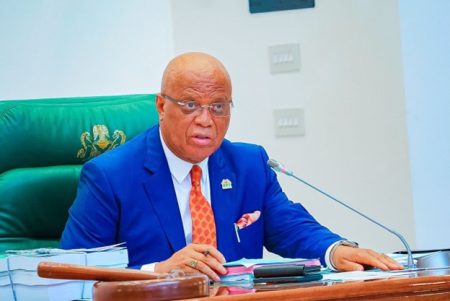
Speaking at the workshop, the Minister of Power, Joseph Tegbe, said the Federal Government was repositioning its rural electrification agenda to ensure electricity becomes a driver of economic growth rather than merely a social intervention.
“Our approach to energy diversification under the administration of President Bola Ahmed Tinubu reflects a simple but profound truth: rural electrification is no longer about extending wires into communities. It is about extending opportunity. It is about creating prosperity. It is about enabling enterprise. It is about transforming electricity from a social service into an economic catalyst,” Tegbe said.
The minister stressed that the real success of electricity projects should be assessed by the businesses they sustain and the livelihoods they improve.
“When we speak about electricity, we often measure success by megawatts generated, kilometres of distribution lines constructed, or the number of households connected. Those are important indicators, but they are not the ultimate objective. The true measure of success is what electricity enables,” he said.
He noted that reliable electricity should empower farmers to irrigate more land, processors to add value to agricultural produce, cold room operators to preserve food, and rural entrepreneurs to establish businesses capable of creating sustainable employment.
According to Tegbe, Nigeria continues to lose significant economic value because inadequate electricity limits agricultural processing, cold storage and rural industrialisation.
“We lose crops because there is insufficient cold storage. We lose income because processing capacity remains inadequate. We lose jobs because raw produce leaves our farms without value addition. We lose competitiveness because production costs remain unnecessarily high,” he stated.
Managing Director of the Rural Electrification Agency, Dr Abba Aliyu, called for stronger collaboration among government institutions, development partners and the private sector to build lasting systems rather than isolated projects.
“Projects are managed, delivered and closed. What we are trying to build today is something different: a system. Systems do not end when the funding cycle closes. They endure because the institutions that make them work have authority, political backing and a coordination mechanism that holds them together over time,” Aliyu said.
He explained that the agency’s objective was to connect smallholder farmers and micro, small and medium-sized enterprises to productive energy solutions capable of strengthening food security, increasing local production and supporting long-term economic development.
“Our job is to build the system that takes their individual, fragmented output and connects it into something the nation can count on. This workshop is designed to allocate responsibilities across institutions with one purpose delivering sustainable impact that continues long after donor funding ends,” he added.
Also speaking, Senior Adviser and Coordinator of the ECOWAS Regional Off-Grid Electricity Access Project, Elhadji Sylla, said renewable energy, particularly solar power, would play a critical role in expanding electricity access across West Africa. He emphasised that electricity investments should be tied directly to productive economic activities capable of reducing poverty and strengthening rural economies.
As part of efforts to accelerate productive energy deployment, the REA signed Memoranda of Understanding with seven organisations, including Agricultural Agenda Nigeria Initiative, Federal Housing Authority Energy Distribution Limited, Meyana Energy Ltd, MOPO Nigeria Ltd, NG Electometer Ltd, Ubuntu Energy and the Youth Sustainable Development Network, to promote productive use of electricity and expand economic opportunities in underserved communities.