Mkpoikana Udoma
Port Harcourt — As Nigeria grapples with dwindling oil revenues and growing calls for economic restructuring, a louder and more persistent demand echoes from the creeks and communities of the Niger Delta – resource control.
To many in the oil-bearing region, it is more than a policy demand; it is the unfinished chapter in Nigeria’s long and painful struggle for equity, justice, and true federalism.
In Port Harcourt, the National President of the Ijaw National Congress, INC, Prof. Benjamin Okaba, reignited the conversation, calling for full control of the region’s natural resources by its people. According to him, the current 13 percent derivation formula is nothing more than a token, a “monopolistic allocation” that falls short of addressing the decades of exploitation and environmental degradation in the Niger Delta.
“We must insist on genuine resource control, not the monopolistic 13 percent derivation,” Prof. Okaba said. “Our people have suffered enough. Oil exploration has brought us poverty, pollution, and pain, yet the wealth it generates builds cities elsewhere.”
He spoke during the swearing-in ceremony of the newly elected Executive Committee of the INC Eastern Zone, where he urged the Ijaw nation and other Niger Delta peoples to embrace a new approach, shifting from militancy to constructive engagement and intellectual advocacy.
“This executive has agreed on a paradigm shift from militancy to intellectualization of the struggle,” he explained. “The strongest weapon now is the pen, which is more dangerous than the sword.”
A Long History of Agitation
The struggle for resource control is as old as Nigeria’s oil economy itself. From the discovery of crude in Oloibiri in 1956 to the boom of the 1970s, the Niger Delta has remained the goose that lays the golden egg — but one that rarely tastes its own riches.
In the early years of independence, the 1960 and 1963 constitutions allowed regions to retain up to 50 percent of revenues derived from their resources. But following the civil war and the advent of military rule, decrees gradually centralized control of mineral wealth under the federal government. The 1969 Petroleum Act became the legal instrument that stripped the regions, especially the Niger Delta, of their economic sovereignty.
By the 1980s and 1990s, this centralization of wealth and neglect of host communities fueled a new wave of resistance. The late Ken Saro-Wiwa and the Movement for the Survival of the Ogoni People, MOSOP, brought global attention to the environmental devastation caused by oil spills and gas flaring. His eventual execution in 1995 marked a turning point — transforming resource control from a local agitation into a continental human rights issue.
The Era of Militancy and Amnesty
The late 1990s and early 2000s saw the rise of militant groups such as the Niger Delta People’s Volunteer Force, NDPVF, and the Movement for the Emancipation of the Niger Delta, MEND. Their attacks on oil installations crippled Nigeria’s production capacity and forced the federal government into negotiations that eventually birthed the 2009 Amnesty Programme.
While the programme succeeded in restoring relative peace and boosting oil output, critics argue that it only treated the symptoms, not the disease. The underlying issues of ownership, equity, and self-determination remain unresolved.
“We have seen peace bought with stipends, but not with justice,” said an INC delegate at the event. “Until resource control is real and communities take charge of their destiny, peace will always be fragile.”
Environmental Ruins and Unkept Promises
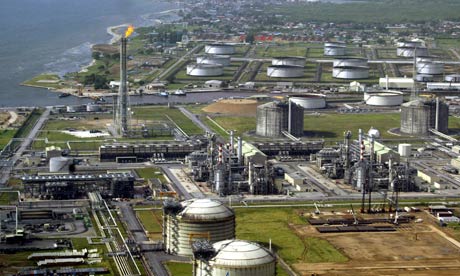
For the people of the Niger Delta, the scars of oil extraction are visible everywhere, polluted rivers, devastated farmlands, and health challenges linked to decades of gas flaring. Billions of dollars have been spent through interventionist agencies such as the Niger Delta Development Commission, NDDC, and the Ministry of Niger Delta Affairs, yet basic infrastructure remains a dream.
Prof. Okaba lamented that even the much-celebrated Petroleum Industry Act, PIA, has not delivered the expected empowerment.
“The PIA’s Host Community Fund is a welcome idea, but what we need is full ownership, not charity,” he said. “We want to move from being victims to stakeholders.”
A Call for Census and Unity
Beyond the political rhetoric, the INC President urged Ijaw people to see population data as another tool of empowerment. He called on them to actively participate in the forthcoming national population census, noting that numbers matter in national representation and resource distribution.
“Let every Ijaw man and woman be counted,” he said. “We can’t continue to complain about marginalization if we don’t show up in the numbers that shape national policy.”
The Road Ahead: From Oil to Ownership
For many Niger Deltans, the demand for resource control is not merely about revenue; it is about dignity, self-determination, and justice. It is a call for the restoration of the old federal balance where regions had a fair share of their wealth and the right to shape their development.
In his acceptance speech, the newly elected Chairman of the INC, Eastern Zone, Mr. Peterside Batram, promised that the new leadership would advance the cause of the Ijaw nation through transparency, accountability, and innovation.
“This is the beginning of a new chapter for us,” Batram said. “We will lead with purpose and ensure that the Ijaw voice continues to be heard loud and clear.”
Reflections: A Fight Older Than Oil
The demand for resource decontrol is perhaps the longest-running conversation in Nigeria’s political economy; one that has survived governments, conflicts, and constitutional reforms. To some, it is the unfinished business of true federalism; to others, it is the only way to save the federation from its internal contradictions.
The Niger Delta has paid the highest price for Nigeria’s oil wealth. Yet, as Prof. Okaba and others remind the nation, the struggle is no longer about guns or barricades; it is about ideas, policy, and moral clarity.
If the pen truly becomes mightier than the sword in this struggle, the next chapter of the Niger Delta story may finally be written in ink, not in oil.