Goli Innocent
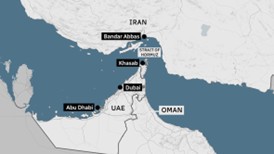
Lagos — The Strait of Hormuz blockage has halted about one-fifth of global oil and gas trade, creating the largest supply disruption in history. Yet, the world isn’t facing the economic shock it might have decades ago.
“There is little sign that the war with Iran will cause the kind of economic pain experienced about a half-century ago, when oil met almost half of the world’s energy needs,” reported the New York Times.
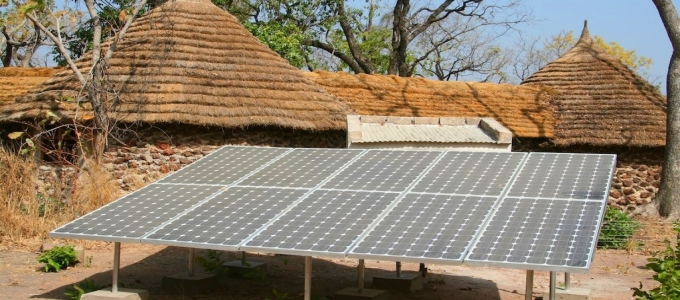
Solar energy is a key reason. Global solar capacity exploded from 228 GW in 2015 to 2,919 GW in 2025, now supplying roughly 9% of the world’s electricity and overtaking nuclear. Analysts expect this figure to reach 9,000 GW by 2030.
“The energy source is still growing exponentially, and if it continues at current rates, global capacity could hit 9,000 GW by 2030 enough to meet more than 20% of the world’s energy demand,” Deutsche Welle said.
Researchers in Finland modelled the most cost-efficient global energy system. “76 percent of the world’s energy would come from solar, with another 20 percent from wind and the remainder from hydropower, biomass, and geothermal.”
China dominates solar panel production, making over 80% of global supply. Europe, the U.S., and developing nations are rapidly adding capacity, reducing dependence on fossil fuels and boosting energy independence.
A recent Oxford study notes that emerging markets could gain around 10% in GDP from renewable adoption. Already, 63% of emerging economies in Africa, Asia, and Latin America now source more power from solar than the United States.
“Some countries are pulling off stunningly fast energy transitions, adding solar so rapidly, it’s become a major source of electricity over the course of years not decades,” CNN reported.
Pakistan is a prime example, adopting small-scale solar battery systems that are cheaper and more reliable than the national grid.
David Frykman of Norrsken explains the strategic advantage: “Wind and solar cannot be embargoed, blockaded, or shut off by a foreign power. Every terawatt-hour of domestic renewable generation is a terawatt-hour that no adversary can weaponize.”
The Strait of Hormuz crisis highlights a new reality: fossil fuels remain vulnerable, while solar and other renewables are increasingly stabilizing the global energy system. Countries investing in clean energy are gaining both security and resilience.