Goli Innocent
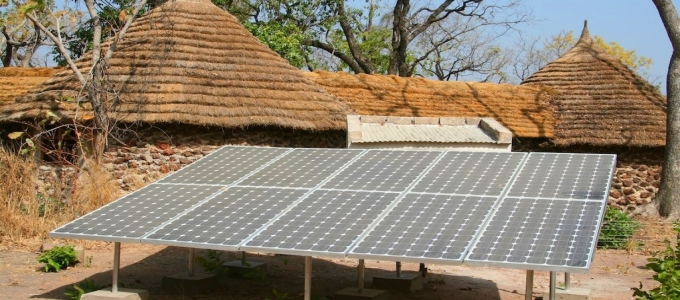
Lagos — In today’s Nigeria, electricity is no longer just a utility it is survival. From Lagos to Kano, the quiet hum of inverters is steadily replacing the roar of generators. Solar has moved from aspiration to necessity. Yet beneath this transition lies a harder truth: while demand is accelerating, affordability remains deeply constrained.
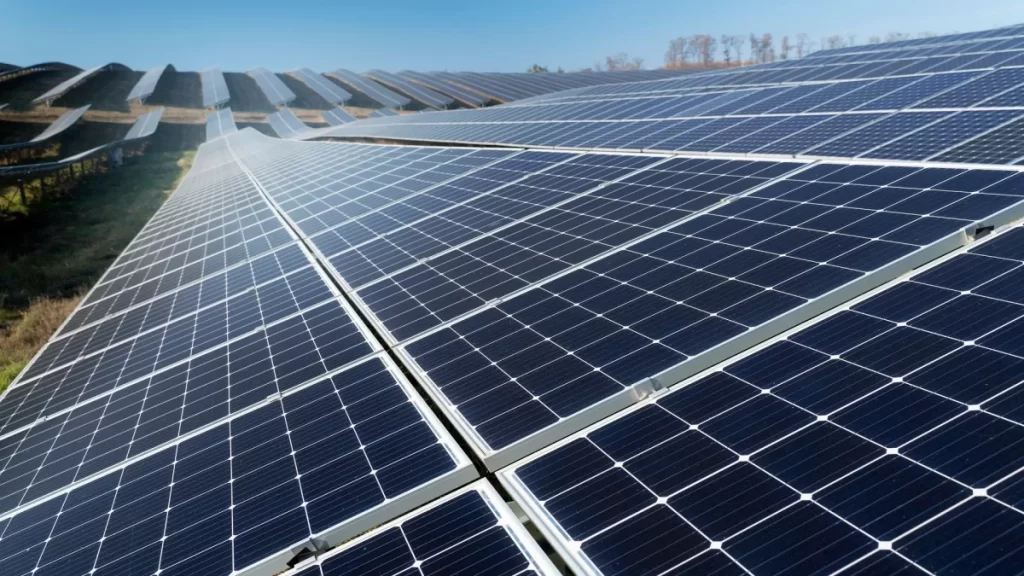
At current market rates, a standard residential solar system comprising photovoltaic panels, lithium-ion batteries, hybrid inverters, and balance-of-system components ranges between ₦1.5 million and ₦5 million for mid-tier households. For higher load profiles, particularly in urban centres with multiple appliances, system sizing can push capital expenditure beyond ₦7 million.
This places solar firmly in the category of high upfront energy investments.
Now juxtapose that with income realities. With Nigeria’s minimum wage currently pegged at ₦70,000 which barely covers basic living costs, while many entry-level private sector workers earn between ₦80,000 and ₦150,000 monthly. Even at the upper band, the energy affordability ratio is severely stretched. A young graduate would need several years of disciplined savings an unrealistic expectation in a high-inflation environment.
This is further compounded by the broader cost-of-living crisis. Recent UN-backed assessments on Nigeria’s standard of living highlight declining real incomes, rising multidimensional poverty, and increasing energy insecurity. Simply put, most households are operating with little to no disposable income, making capital-intensive energy transitions difficult to achieve.
However, the economics of energy tell a more nuanced story. While solar appears expensive upfront, it offers a strong lifecycle cost advantage. With petrol prices volatile and diesel costs elevated, self-generation using fossil fuels continues to erode household income. Over time, solar delivers a lower levelised cost of electricity (LCOE), positioning it as a financially rational though initially inaccessible solution.
Recognising this gap, financing mechanisms are gradually evolving. The Nigeria Electrification Project (NEP), implemented by the Rural Electrification Agency (REA) with World Bank support, provides capital subsidies and performance based grants to reduce system costs. In parallel, pay-as-you-go (PAYG) and lease-to-own models introduced by solar providers are redefining access, allowing users to amortise costs over 12 to 36 months.
Commercial banks are also testing the waters. Institutions such as Access Bank, First Bank, and Sterling Bank now offer green energy financing windows, typically structured as asset backed loans. These facilities often require initial equity contributions, with repayment tied to fixed tenors. However, high interest rates and stringent credit requirements continue to limit uptake among low and middle-income earners.
Beyond banks, development finance institutions and impact-driven organisations are expanding the ecosystem. Programmes supported by the World Bank and other multilaterals are scaling mini grid and distributed energy solutions, particularly in underserved and peri urban communities. In some cases, bundled packages covering panels, batteries, and installation are deployed under results based financing frameworks, easing entry barriers.
Even so, structural challenges persist. Limited access to credit, foreign exchange volatility affecting component pricing, and weak consumer financing frameworks continue to slow adoption.
The market is growing, but not yet at the scale required to deliver energy equity.
In the final analysis, solar financing in Nigeria sits at a critical inflection point. The technology is viable, the demand is undeniable, and the long-term economics are compelling. But until financing becomes more inclusive and income levels improve, solar will remain at least for now a solution many Nigerians need, but cannot yet fully afford.