Precious Anga
Lagos — US President Donald Trump’s $3bn push to expand domestic critical minerals production could strengthen the country’s electric vehicle and clean energy industries, despite his administration’s broader retreat from several green-energy incentives.
The investment, unveiled during an industry roundtable at the US State Department, is aimed primarily at reducing America’s dependence on China for minerals considered essential to defence, technology and manufacturing supply chains.
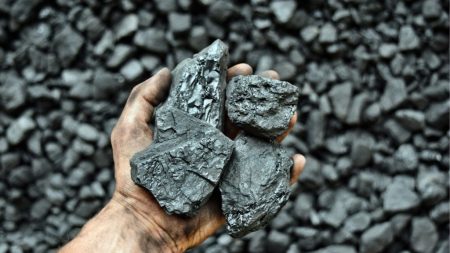
However, the scale of the investment could also accelerate the production of electric vehicles, batteries, wind turbines and other clean-energy technologies that depend heavily on lithium, cobalt, nickel, graphite and other critical minerals.
A major beneficiary is Sila Nanotechnologies, which has secured a $1.4bn conditional loan from the Pentagon’s Office of Strategic Capital to expand its battery-materials facility in Moses Lake, Washington.
The funding will support a fivefold expansion of the plant, which produces silicon-carbon anode materials used in advanced batteries. Sila plans to increase production to levels capable of supplying more than 100,000 electric vehicles and other technology applications.
Canada-based Lithium Americas has also received the first $435m drawdown from a $2.23bn US Department of Energy loan for its Thacker Pass lithium project in Nevada.
The project is designed to produce about 40,000 tonnes of battery-grade lithium carbonate annually in its first phase, enough to supply batteries for roughly 800,000 electric vehicles each year when fully operational.
Other projects are also receiving federal backing. Westwater Resources secured $25m from the US Export-Import Bank to develop a graphite deposit in Alabama, while Niron Magnetics received a conditional commitment for a loan of up to $150m for a commercial-scale plant producing rare-earth-free iron-nitride permanent magnets.
The investment comes as Washington seeks to reduce its exposure to China’s dominance of global critical mineral supply chains. The administration launched Project Vault earlier this year, a proposed $12bn public-private initiative designed to build strategic reserves of critical minerals and rare earth elements.
The programme is expected to cover more than 50 minerals classified as critical by US authorities, including lithium, nickel, cobalt, copper, uranium and rare earth elements. The strategy is intended to protect American manufacturers from supply disruptions and sharp price swings.
Although the Trump administration’s immediate focus is national security, defence manufacturing and supply-chain independence, the new investments could create a broader industrial base for technologies that rely on the same minerals.
For the US clean-energy industry, therefore, the minerals strategy could prove significant: even as Washington reduces direct incentives for electric vehicles, strengthening domestic supplies of battery and renewable-energy materials could make it easier for manufacturers to scale production within the country.