Washington — The U.S. on Thursday imposed the first sanctions on owners of tankers carrying Russian oil above the G7 price cap of $60 a barrel, one based in Turkey and one in the United Arab Emirates, in an effort to close loopholes on the mechanism designed to punish Moscow for the war in Ukraine.
The U.S., other G7 countries and Australia imposed the cap last year, seeking to reduce Russia’s revenues from seaborne oil exports as part of sanctions for its invasion of Ukraine.
The cap bans Western companies from providing maritime services, including insurance, finance and shipping, for Russian seaborne oil exports sold above $60 a barrel, while seeking to keep oil flowing to markets. Caps also were imposed on Russian fuel exports.
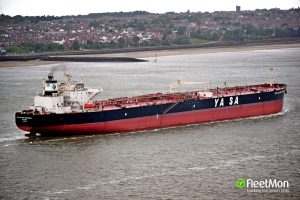
U.S. President Joe Biden’s administration placed sanctions on Turkey-based Ice Pearl Navigation SA, owner of the Yasa Golden Bosphorus, which the Treasury said carried Russian ESPO crude priced above $80 a barrel after the cap took effect in December last year.
Both tankers, which conducted port calls in Russia, used U.S.-based service providers while transporting the Russian origin oil, the Treasury said.
“Because of the actions we’re announcing today, and the further actions we will take in the coming weeks and months, these costs will continue to rise and Russia’s ability to sustain its barbaric war will continue to weaken,” a senior Treasury official, speaking on condition of anonymity, told reporters in a call.
Yasa added the company had necessary documentation from major London insurers for it to carry Russian origin cargoes and that it has been company policy for more than a year to not carry Russian crude.
Global oil prices have risen to around $85 a barrel in recent months on production cuts and thin world spare production capacity. That has helped to limit the efficacy of the cap, but actions to toughen enforcement will make it more effective, according to people who advised the Treasury.
The cap has forced Russia and traders who want to participate in the Russian oil trade to invest in what the industry refers to as a ghost fleet of old tankers vulnerable to leaks and oil spills. Those vessels are undertaking long voyages to deliver crude to refiners in China and India, which have become the largest buyers of Russian crude. Neither country has imposed sanctions on trade with Russia.
U.S. Treasury Secretary Janet Yellen on Wednesday said the price cap had sharply reduced Russian revenues over the past 10 months, and that it was critical to keep imposing severe and increasing costs on Russia over its war in Ukraine.
Just before the U.S. sanctions were announced, French Finance Minister Bruno Le Maire told reporters at IMF-World Bank annual meetings in Marrakech, Morocco, that the cap has been efficient in reducing Russia’s revenues but that there are loopholes. “We have to address that question, to fix that question and to have an efficient enforcement of the oil cap.”
Reporting by Timothy Gardner and Daphne Psaledakis; additional reporting by David Lawder, Editing by Will Dunham, Chizu Nomiyama, Jonathan Oatis and Marguerita Choy – Reuters