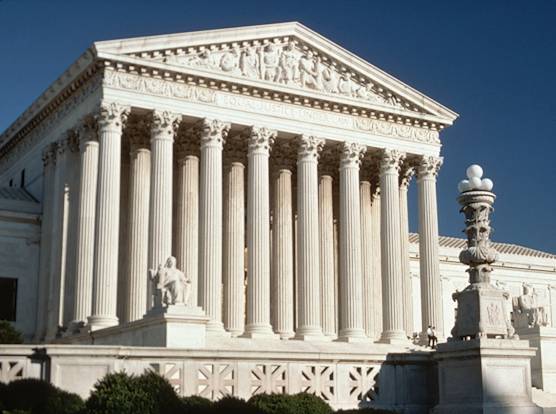
 29 February 2012, Sweetcrude, WASHINGTON – The US Supreme Court is expected to issue its decision in a lawsuit accusing Royal Dutch Shell of human rights abuses by the end of its current session in June or July.
The Court heard arguments Tuesday in the lawsuit that could make corporations liable for acts of torture or genocide overseas.
The plaintiffs — relatives of seven Nigerians killed by the country’s former military regime — sued the Anglo-Dutch energy giant and other firms for apparently enlisting the government to suppress resistance to oil exploration in the Niger Delta in the 1990s.
The case will test the potential liability of corporations — including multinationals with a US presence — under the Alien Tort Statute, a US law dating back to 1789 which scholars say was meant to assure foreign governments that the United States would help prevent breaches of international law.
“The international human rights norms that are at the basis of this case for the plaintiffs — crimes against humanity, torture, prolonged arbitrary detention, extrajudicial executions — all of those human rights norms are defined by actions,” plaintiffs’ lawyer Paul Hoffman told the court Tuesday.
“They’re not defined by whether the perpetrator is a human being or a corporation or another kind of entity,” he said.
Kathleen Sullivan, representing Shell, countered that all major international treaties refer to “individual liability” rather than corporate responsibility.
She also pointed to the International Criminal Tribunal, which does try corporations, as well as the post-World War II case of German industrialist Alfred Krupp, who was tried in Nuremberg “as a person.”
Edwin Kneedler, representing the US government, sided with the plaintiffs, saying that under the Alien Tort Statute “the plaintiff must be an alien — it does not identify who the defendant may be.”
The 12 Nigerian plaintiffs charge Shell with “complicity in human rights violations committed against them in the Ogoni region of the Niger Delta in Nigeria between 1992 and 1995.”
“These violations included torture, extrajudicial executions and crimes against humanity,” they said, according to their complaint.
Shell, they alleged, “aided and abetted the Nigerian government in committing human rights abuses,” and added: “For the victims of human rights violations such cases often provide the only opportunity to obtain any remedy for their suffering.”
The case of Kiobel versus Royal Dutch Petroleum is being heard by the highest court in the United States alongside a new torture case, Mohamad versus Rajoun, which involves the family of an American who died in 1995 from injuries inflicted by Palestinian Authority officers.
A US appeals court in New York ruled in both cases that corporations or political organisations were immune to such liability.
The Supreme Court’s nine justices — who appeared divided on Tuesday — will expectedly issue their decision on the cases by the end of its current session in June or July.
“What business does a case like that have in the courts of the United States?” Associate Justice Samuel Alito asked Tuesday. “There’s no connection to the US whatsoever.”
But his colleague, Justice Ruth Bader Ginsburg, said: “I think most countries in the world have such a notion that corporations are responsible for the acts of their agents.”
The Kiobel case was part of a broader set of legal complaints by Nigeria’s Ogoni people, who argued that Royal Dutch Shell was complicit in murder, torture and other abuses committed by the former military government.
The victims included Nigerian writer and activist Ken Saro-Wiwa and others executed in 1995 in what plaintiffs said was a campaign of repression backed by the oil giant.
Saro-Wiwa had led a non-violent campaign to protest environmental destruction and abuses against the Ogoni people in the Niger Delta before he was hanged along with other activists after his trial in a military court.
In 2009, Shell agreed to pay out $15.5 million to relatives of the victims, in what it hoped would be the end of a long legal battle and avoidance of a potentially embarrassing court case.
Shell maintained its innocence throughout, saying the settlement was a “humanitarian gesture” to help the Ogoni, but human rights lawyers in New York two years ago hailed the agreement as a precedent for holding Shell and other oil giants responsible for activities in countries with repressive governments.