Mkpoikana Udoma
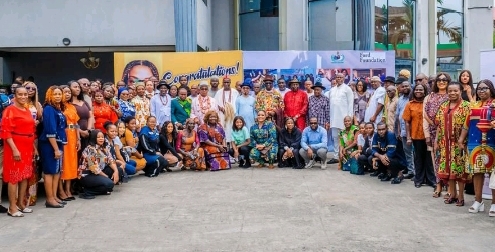
Port Harcourt — Communities and civil society groups have hailed the Ford Foundation’s development footprint in West Africa, describing the organisation’s 65-year investment as a catalyst for stronger community governance, climate justice, gender equity and natural resource accountability across Nigeria.
Speaking in Port Harcourt during the Host Communities’ Appreciation Day held as part of Ford Foundation’s 65th anniversary celebrations, Spaces for Change, S4C, said the foundation’s long-term commitment has built durable systems and strengthened the capacity of Niger Delta communities to demand accountability from extractive industries and government institutions.
Speaking, the Executive Director of Spaces for Change, Victoria Ibezim-Ohaeri, noted that Ford Foundation’s partnership in Nigeria has empowered oil-bearing communities to confront issues relating to extractive industries, environmental degradation, and economic exclusion.
“For over six decades, the Ford Foundation has stood as a beacon of justice and inclusion,” she said. “Its support has enabled organisations like ours to amplify the voices of marginalized populations across West Africa, challenge entrenched inequalities and drive systemic change.”
“We have seen firsthand how Ford’s support has empowered communities to demand accountability, to organize collectively, and to shape development outcomes,” she added.
Ibezim-Ohaeri highlighted the symbolism of the event, stressing that it provided a “rare and powerful platform” for communities to narrate their own stories.
“This occasion brings together not just institutions and stakeholders, but the very heartbeat of our work, the women, men, youth, traditional leaders, persons living with disabilities and grassroots advocates from Nigeria’s oil-bearing communities,” she said.
Program Officer for Natural Resources and Climate Justice at Ford Foundation, Emmanuel Kuyole, stated that the foundation has, over the decades, awarded more than 2,700 grants to over 1,008 partners, totaling over half a billion dollars in support across West Africa.
“In the 1960s, when the office was opened, the focus was really to support leadership and development, and the capacity building of newly independent states,” he said.
He added that significant investments went into scholarships, public service development and the establishment of institutions such as the University of Ibadan, University of Ghana and the International Institute for Tropical Agriculture, IITA.
Kuyole explained that Ford Foundation’s strategy has evolved over time, shifting in the last five years toward resource governance and gender-based violence.
“What we have realised is that even though CSOs, youth groups and communities play vital roles, we needed to ensure that when we say ‘communities’, we are referring to the real people whose lives and livelihoods are affected, not just their representatives,” he said.
The Ibenanaowei of Ekpetiama Kingdom, King Bubaraye Dakolo, while commending the foundation’s efforts, lamented the scale of wealth lost from Africa.
“The stolen wealth from the African continent is worth about $400billion, and what comes back, including what Ford Foundation is bringing, amounts to about $50billion,” he said. “No wonder despite your interventions we are still far from our destinations.”
Dakolo described the Niger Delta story as one of survival. “I’m here as a proud survivor, a proud representative of the communities in my part of the world,” he said, thanking Ford Foundation and its grantees for pushing climate justice, women’s rights and environmental justice.
The Port Harcourt gathering featured discussions on gender equality, disability inclusion, extractive governance, FPIC, remediation, local content, climate governance and youth innovation, with participants citing ways Ford Foundation’s support has strengthened community responses to long-standing development challenges.