Mkpoikana Udoma
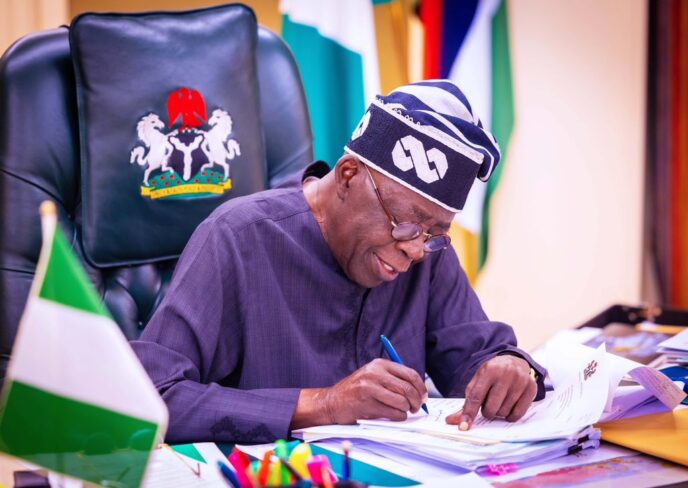
Port Harcourt — The President Bola Tinubu-led Federal Government has launched the plotting of coordinates for disputed and newly drilled oil and gas wells, a critical process that could redefine derivation revenue flows and fiscal entitlements among Nigeria’s oil-producing states.
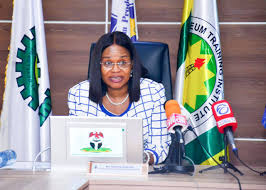
The exercise, formally flagged off by the Revenue Mobilisation Allocation and Fiscal Commission, RMAFC, in Abuja, with the Commission’s Chairman, Dr. Mohammed Bello Shehu, describing it as a constitutional necessity rather than a political choice.
“This is not optional; it is a constitutional obligation,” Dr. Shehu said. “The Constitution provides that 13 per cent of revenue from minerals, especially crude oil and gas, should be paid to the states where they are produced, and this is why the verification and plotting of coordinates of the new and disputed oil and gas wells must be done transparently and correctly.”
Shehu disclosed that the Inter-Agency Technical Committee, IATC; comprising the National Boundary Commission, NBC; Office of the Surveyor-General of the Federation, OSGoF; Nigerian Upstream Petroleum Regulatory Commission, NUPRC; and RMAF, has completed the verification phase and is now moving to the plotting stage.
“The IATC has verified the coordinates, and the next phase is to plot them, which will lead to resolving the location of the disputed oil and gas wells and properly attributing newly drilled wells to their rightful owners,” Shehu said.
Revenue Stakes Across Oil-Producing States
According to the RMAFC chairman, the exercise covers Akwa Ibom, Cross River, Bayelsa, Ondo, Rivers, Delta and offshore locations, where overlapping claims frequently emerge whenever new oil fields come on stream.
“Disputes arise when new fields are developed, because multiple states may lay claim,” he explained. “But it is the facts on ground that will reveal who actually owns what, and where ownership must be shared.”
Drones, Offshore Surveys, Transparency
To guarantee credibility, Shehu revealed that the Commission conducted extensive fieldwork between September 2025 and January 2026, covering creeks, high seas and offshore terrains.
“We went to the field ourselves, and where we could not physically access, we deployed drones to take the coordinates,” he said. “All data collected were witnessed by representatives of the affected states.”
He assured that RMAFC would remain neutral throughout the process.
“RMAFC will be an unbiased umpire and will deploy justice, equity and fairness for which it is known,” he stated.
Institutional Backing
The Secretary to the Commission, Joseph Okechukwu Nwaze, said the exercise reflects strong inter-agency cooperation.
“This process reinforces confidence in RMAFC as a neutral institution committed to fairness in revenue administration and fiscal federalism,” he said.
The Director, Crude Oil Department, Dr. Khadija Kumo, described the initiative as “timely and critical to the future of energy governance in Nigeria,” adding that “data-driven decision-making must now define oil and gas administration.”
Coordinator of the IATC, Prince Folorunsho Aderinwala, lauded the Commission for providing full institutional support, noting that it enabled the committee to successfully complete verification across difficult terrains.
Background
The plotting exercise follows the October 2025 flag-off of verification in the Niger Delta, triggered by petitions from governors of Anambra, Delta, Imo, Edo, Ondo and Rivers states, seeking clarity on ownership and boundaries of oil and gas resources.
With derivation revenue, federal allocations and state finances at stake, the mapping of coordinates is expected to become one of the most consequential fiscal governance exercises in Nigeria’s oil and gas sector in recent years, potentially redrawing the economic map of the Niger Delta.